BETA reported completing five days of Utah flights with Alpine Air under eIPP on 7 October. The runway-operated ALIA CTOL campaign examines medical-cargo logistics; measured cost and reliability results remain unpublished.

5 days — Utah flight campaign, company-reported 3 airports — Salt Lake City, Provo and Logan-Cache on BETA’s programme page
Time-sensitive medical cargo offers a concrete test of electric aviation. Its value depends on dependable door-to-door delivery and charging logistics as well as aircraft performance.
Route-level results for dispatch reliability, charging, weather availability, costs and total delivery time, with payload and operating conditions stated.
BETA Technologies reported on 7 October 2026 that it had completed five days of flight operations in Utah with Alpine Air Express under the federal eVTOL Integration Pilot Program (eIPP).
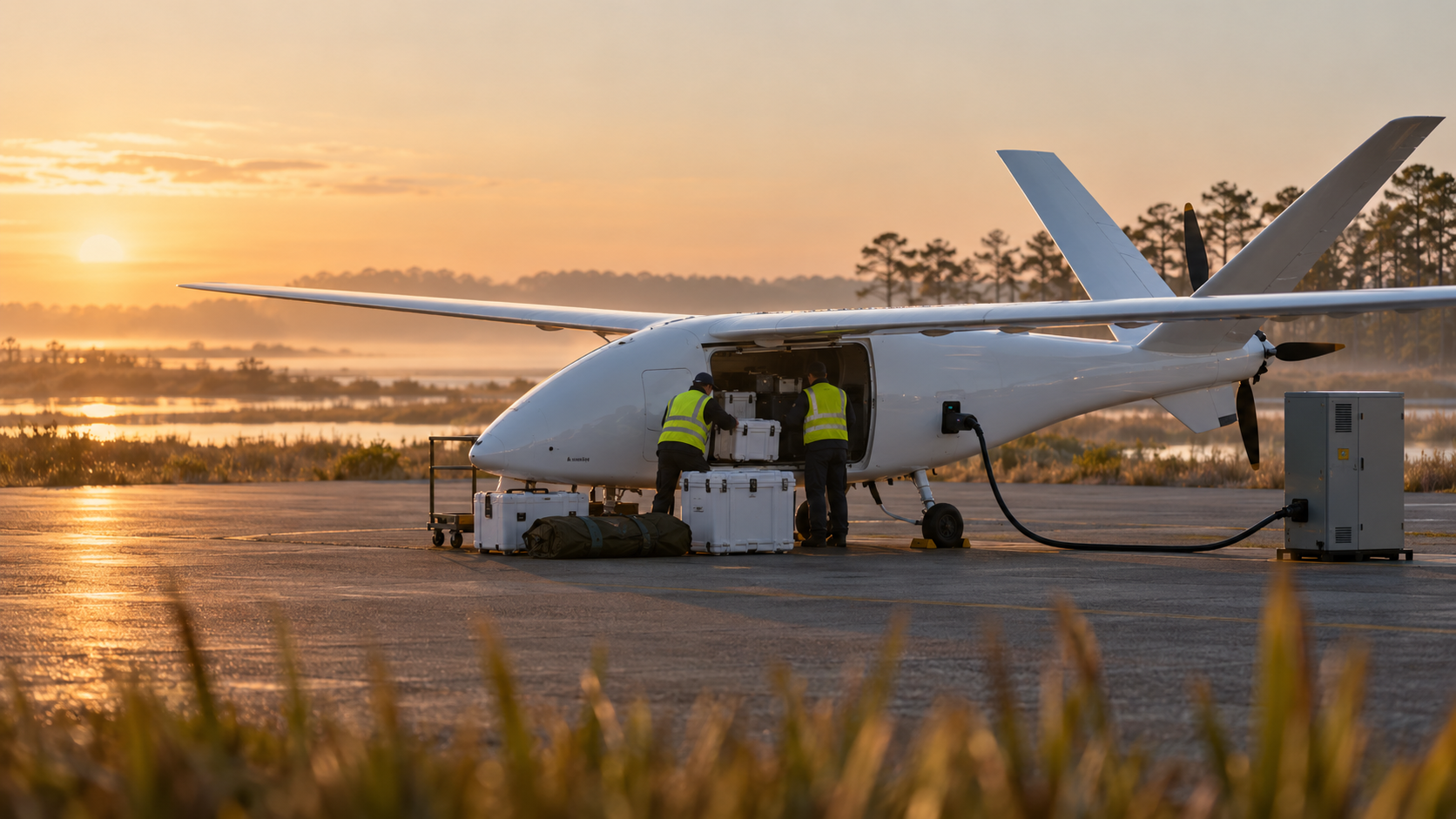
The campaign used the runway-operated ALIA CTOL / CX300 to examine time-sensitive medical-cargo logistics. BETA’s Utah programme page identifies routes between Salt Lake City International, Provo and Logan-Cache airports.
The company places radiopharmaceutical transport at the centre of the proposed use case. It identifies flight time, dispatch reliability, charging and turnaround, weather, performance and cost as evaluation measures. The announcement does not provide quantified savings or establish that a routine electric radiopharmaceutical service has started.
This Utah update adds a distinct campaign to the North Carolina and Texas work previously covered by PropulsionWatch. The eIPP programme name includes eVTOL, but this aircraft uses conventional takeoff and landing.
PropulsionWatch analysis: a shorter flight is useful only if the shipment reaches its destination reliably. Loading, ground transfers and charging queues can consume the time saved in the air. Evaluation should compare complete delivery journeys with the existing transport option, using equivalent payloads and dispatch requirements.
Representative weather and reserve-energy assumptions also matter. A successful demonstration establishes that a mission can be flown under the tested conditions; recurring service needs evidence of availability when demand arises. Published route-level results, including disrupted operations and turnaround constraints, would make the economic case assessable.
Image: BETA’s official context photograph of CX300 over Park City, Utah. The snowy image’s capture date is unspecified; it does not document an October medical delivery. Credit: BETA Technologies.