Amprius has introduced a second-generation SiCore silicon-anode cell rated at 500 Wh/kg at 1C continuous discharge and designed for conventional lithium-ion manufacturing equipment. Q4 2026 availability is a company target, and the figure is cell-level rather than pack-level.
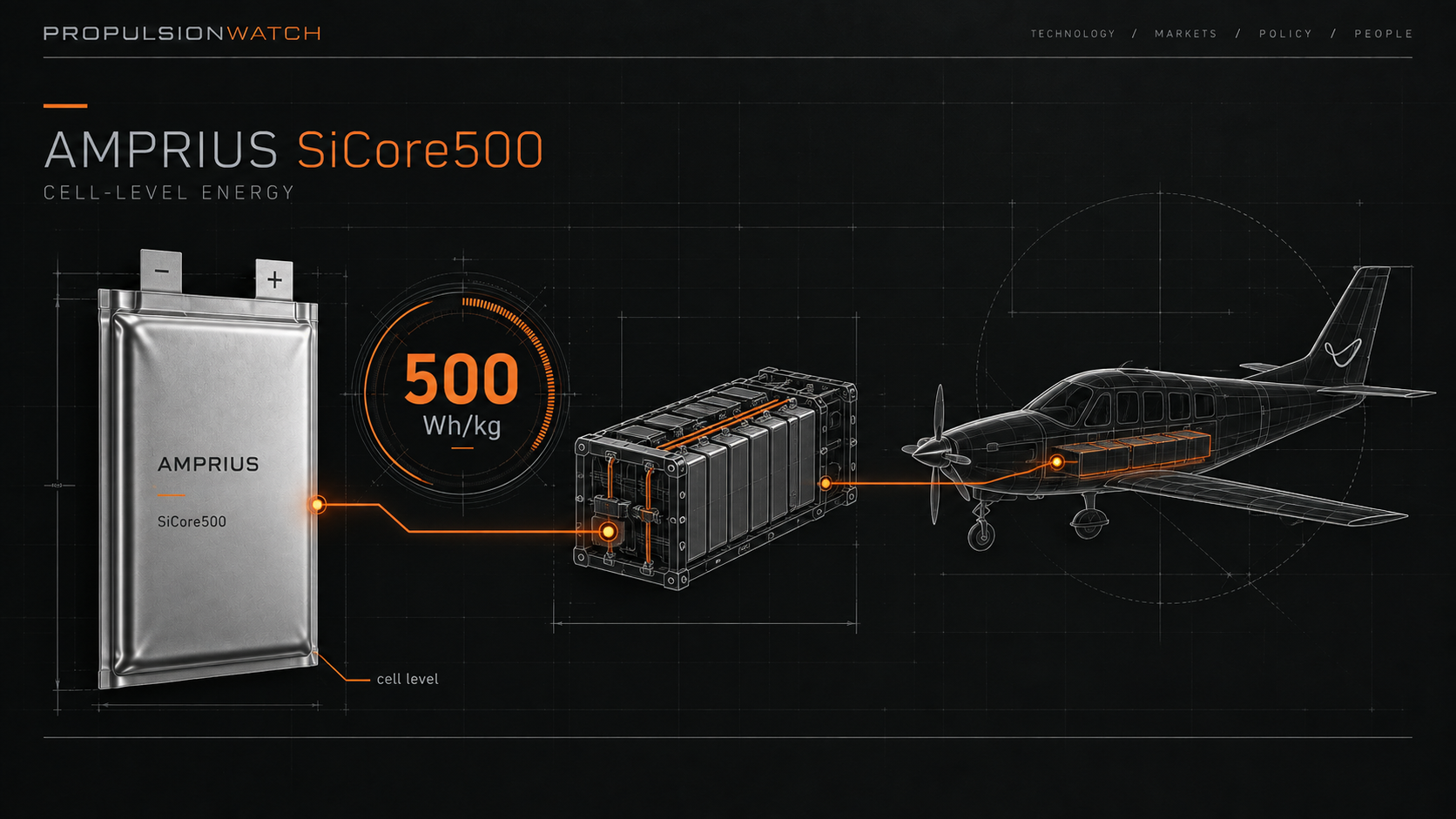
500 Wh/kg — company-reported cell-level specific energy 1C continuous discharge — announced operating point Q4 2026 — company target for commercial availability
The technical signal is not only 500 Wh/kg but the attempt to reach it on conventional lithium-ion manufacturing equipment. That could improve the path from high-energy demonstration cells to customer qualification and volume production.
Customer sampling, cycle-life and abuse-test data for this exact cell, production yield, performance at temperature, pack-level specific energy and any evidence that the design can serve higher-power piloted-electric-aircraft duty cycles.
Amprius Technologies has introduced a second-generation SiCore silicon-anode lithium-ion cell that the company rates at 500 Wh/kg at a 1C continuous discharge rate. Unlike Amprius’ earlier highest-energy SiMaxx cells, the new SiCore platform is designed to be produced using conventional lithium-ion manufacturing equipment and standard cell formats.
Aviation Week and Aviation International News both reported the launch in September. Amprius says initial commercial availability is targeted for the fourth quarter of 2026, with production beginning in Fremont and intended to scale through contract-manufacturing partners.
500 Wh/kg is not new as a laboratory or limited-production headline for Amprius. The company has previously demonstrated cells at or above that level using more specialized processes. The change with second-generation SiCore is the attempt to pair that specific energy with manufacturing infrastructure closer to conventional lithium-ion production.
For aviation, the distinction matters. A chemistry that reaches a high specific-energy point but cannot be produced consistently, economically and in qualified customer formats is less useful than a slightly lower-energy cell with repeatable yield and stable performance. Moving a 500 Wh/kg design onto standard equipment could narrow the gap between a demonstrated cell and a product that customers can actually sample and qualify.
The announced value applies to the cell. Aircraft packs require interconnects, containment, monitoring, contactors, current collection, cooling, structural support and fire or propagation protection. Those elements reduce pack-level specific energy relative to the bare cell.
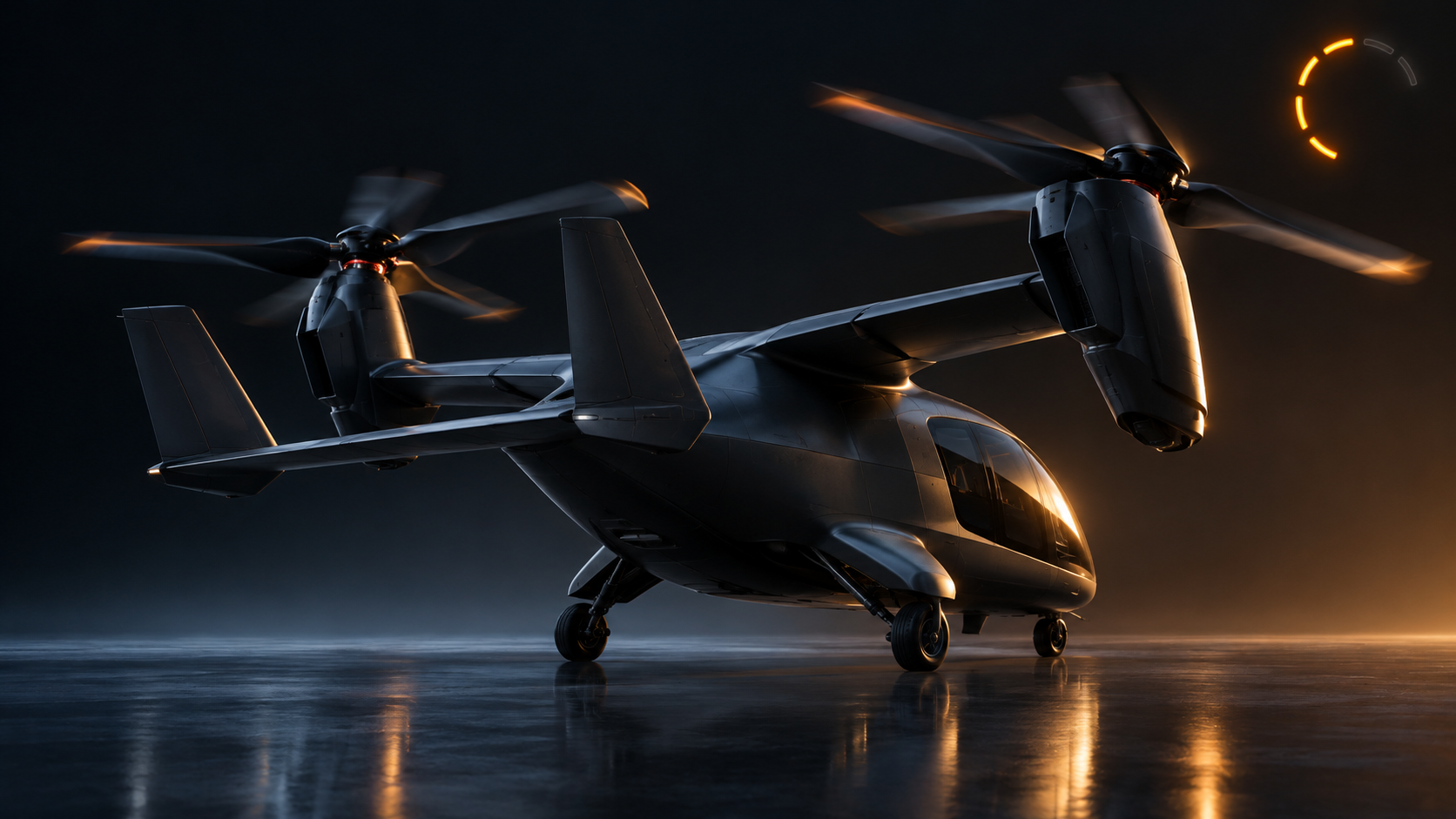
The announced 1C continuous discharge rating also indicates the mission the cell is aimed at. Amprius explicitly targets High-Altitude Platform Stations, fixed-wing drones and other long-endurance aircraft where sustained energy storage is more important than very high burst power. That is a different duty cycle from an eVTOL aircraft that may demand high C-rate power during vertical takeoff, landing or contingency manoeuvres.
Amprius has not, in the launch material reviewed by PropulsionWatch, published a full cycle-life, charge-rate, thermal, swelling or abuse-test dataset for this exact second-generation 500 Wh/kg SiCore cell. The company’s own forward-looking risk language is unusually useful here: it explicitly notes the possibility that energy density, cycle life, safety and other characteristics achieved in testing or limited quantities may not be reproduced at commercial volume or in customer-specific formats.
That does not negate the announcement; it defines the next evidence threshold. The aviation value of SiCore500 will depend on whether the specific-energy claim survives repeated cycling, temperature extremes, charge constraints, production variation and pack-level safety architecture.
Long-endurance fixed-wing aircraft are a credible early market because their propulsion demand is comparatively steady and their mission economics are highly sensitive to stored-energy mass. Amprius already supplies cells into the high-altitude platform sector, giving the company an application environment where incremental specific energy can translate directly into endurance or payload.
For larger piloted electric aircraft, the relevance is longer term and more conditional. Designers need the complete energy-power-safety envelope, not one specific-energy number. A 500 Wh/kg cell that can be manufactured conventionally is an important input; it is not by itself evidence of a 500 Wh/kg certified aviation battery pack or of an eVTOL range breakthrough.
Evidence note: 500 Wh/kg at 1C continuous discharge, conventional-equipment manufacturability and Q4 2026 availability are Amprius-reported specifications and targets. Independent aviation outlets have reported the product launch, but volume-production performance remains to be demonstrated.
Sources: Aviation Week, 8 September 2026; Aviation International News, 10 September 2026; Amprius, 2 September 2026.