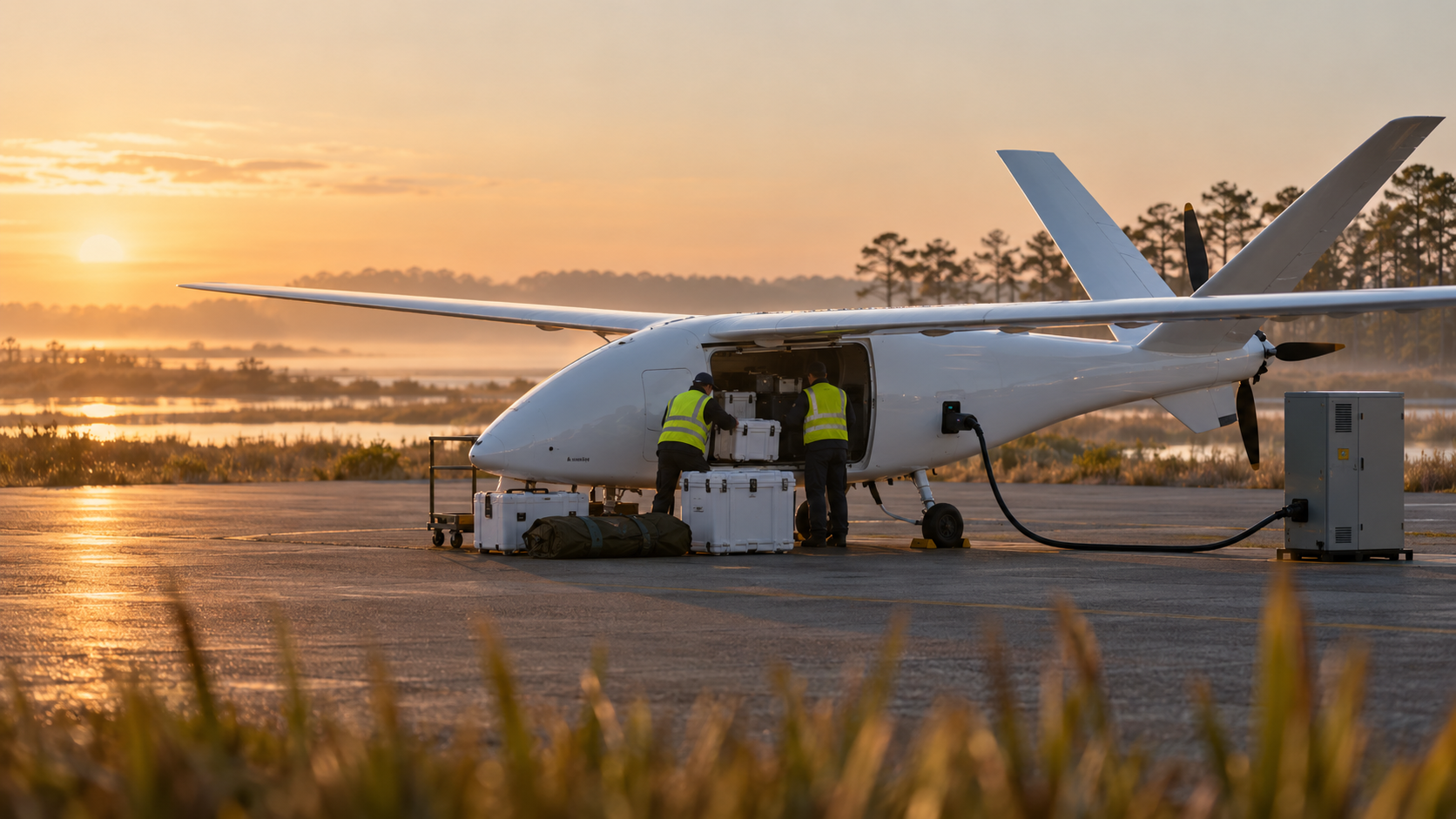
Elroy Air has increased the PIPE behind its SPAC merger to $175 million, with $75 million already funded and Lockheed Martin Ventures joining. The money goes into Kratos-built production of Chaparral, an uncrewed hybrid-electric VTOL cargo aircraft, with the first production aircraft targeted for late 2026.

$175M — PIPE commitments (up from >$165M in June) $75M — already funded ahead of closing ~$1.0B — post-transaction enterprise value (June announcement) 500+ lb / 450 mi — manufacturer-published Chaparral payload and range
Chaparral is one of the few hybrid-electric VTOL cargo aircraft heading for series production. Committed private capital and a defense-backed investor list reduce the funding risk of a SPAC listing while the aircraft moves from prototypes to a Kratos production line.
SPAC closing and redemption levels, the first Kratos-built production aircraft in late 2026, published full-payload range and reserve data, and conversion of Bristow reservations into firm orders.
Elroy Air has increased the private investment (PIPE) backing its planned stock-market listing to $175 million. Lockheed Martin Ventures joined as a new investor, according to the company announcement on 24 September 2026. Elroy said $75 million of the commitment was already funded before the merger closes. The money will go into scaling production of the Chaparral, an uncrewed hybrid-electric VTOL cargo aircraft that Kratos Defense & Security Solutions will build in Sacramento, California.
The PIPE supports Elroy's merger with the special-purpose acquisition company (SPAC) Inflection Point Acquisition Corp. VII, formerly Columbus Circle Capital Corp. II (Nasdaq: IPXG). When Elroy announced the deal in June, it put the pre-money equity value at $800 million and the post-transaction enterprise value at about $1.0 billion. PIPE commitments then stood at more than $165 million, and closing was expected in the fourth quarter of 2026 under the planned ticker ELRY.
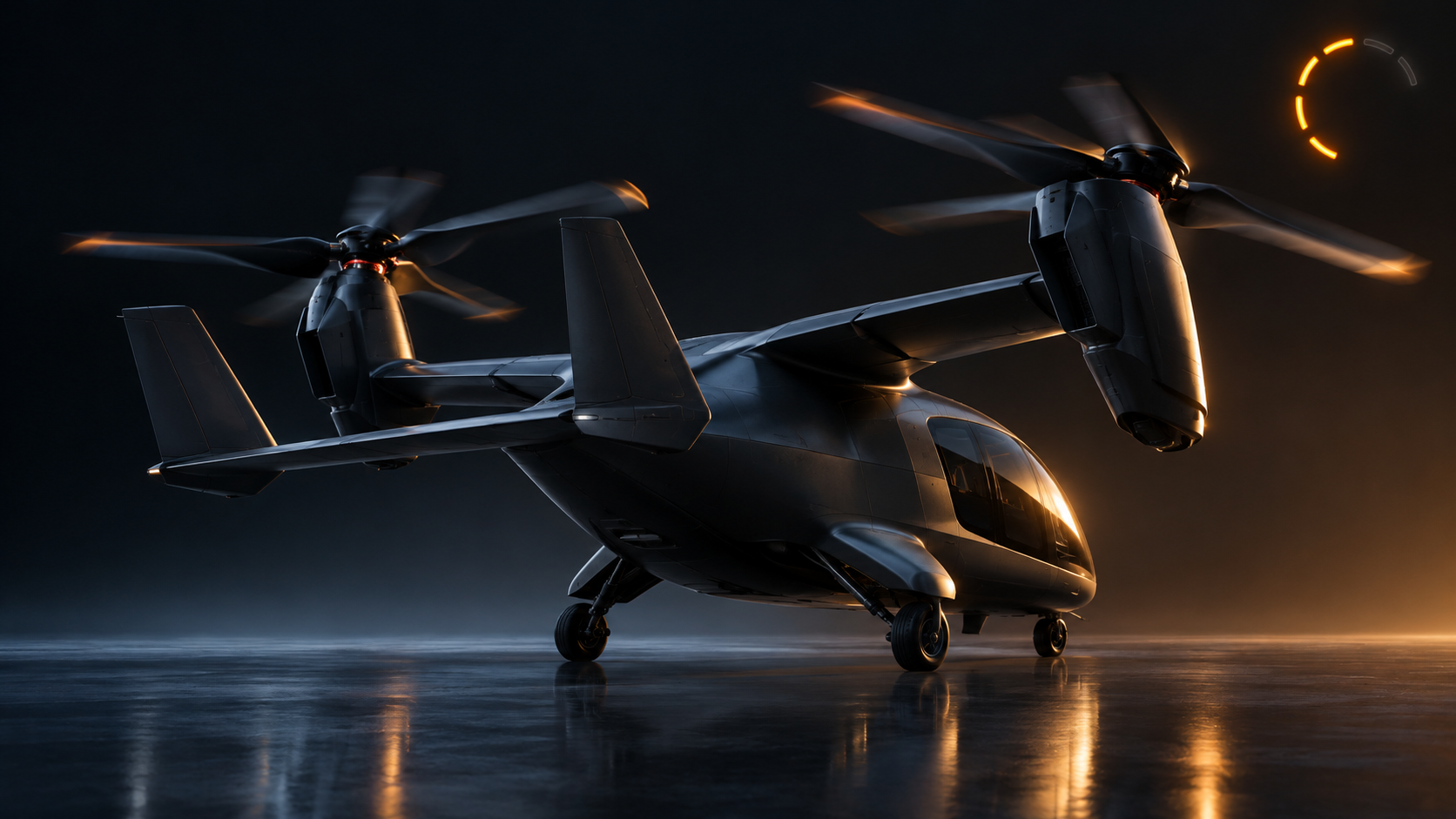
Chaparral is a lift-plus-cruise aircraft, which means different propellers handle vertical flight and forward flight. Elroy's aircraft page lists eight vertical-lift propellers for takeoff and landing, and four forward propellers for wing-borne cruise. Elroy publishes a 9.2 m wingspan, a 6.65 m length, a 115 kt cruise speed, more than 500 lb of payload and a range of up to 450 miles. The payload rides in a detachable pod under the fuselage, so the aircraft can pick up and drop off freight without a ground crew handling it.
The powertrain is a series hybrid. Electric motors drive all twelve propellers, and a turbine-driven generator on board charges the battery in flight. That is why the range is quoted in hundreds of miles rather than the tens of miles typical of battery-only cargo drones. It is also why Chaparral needs no charging station at the landing site, only fuel.
A series hybrid pays for its flexibility with complexity. It adds a turbine, a generator, a rectifier and fuel, on top of a battery that still has to be sized for the peak power of hover. Lift-plus-cruise designs need their highest power for short periods at takeoff and landing, and much less in cruise. In a well-matched hybrid, the generator is sized closer to cruise power, and the battery supplies the extra power in hover and absorbs the generator's surplus during cruise. How Elroy splits power between generator and battery will decide how much of the 450-mile figure is left with a full 500 lb load and reserves. Elroy has not published that breakdown.
Flying without a crew removes the need for passenger certification, but it adds a different burden: the autonomy stack, the command-and-control link and detect-and-avoid all have to be proven. Elroy reports uncrewed autonomous flights under the FAA's eVTOL Integration Pilot Program (eIPP). Its $46 million U.S. Army contract in August includes jam-resistant navigation and hardened communications links, which suggests defense is where the operating model will mature first.
A larger PIPE helps protect the deal against redemptions. In a SPAC merger, public shareholders can take their cash back before closing, and at many recent de-SPACs a large share did. Committed private capital, $75 million of it already funded, sets a floor under the cash Elroy receives. Lockheed Martin Ventures on the investor list also supports the defense angle, alongside the Army award and the Kratos manufacturing agreement. On the commercial side, Bristow Group expanded its early-delivery reservations to 15 aircraft on 17 September. Elroy says the first production Chaparral is planned for late 2026.
This is analysis of publicly announced corporate developments, not investment advice.
No civil type certificate has been announced for Chaparral. Near-term work runs through defense contracts, FAA pilot-program operations and customer demonstrations. A lasting commercial cargo service in U.S. airspace will need either an airworthiness approval for this class of large uncrewed aircraft, or operating approvals scaled beyond pilot programs. The FAA is still defining both.
The technical milestones matter more than the listing date. The first Kratos-built production aircraft will show whether the design has frozen at the configuration Elroy now publishes. Missions flown at full payload and range will show whether the hybrid powertrain delivers the published range. And repeatable autonomous operations with military and civil customers will show whether the software can scale beyond demonstrations. If those arrive close to the late-2026 production target, Chaparral would be one of the first hybrid VTOL cargo aircraft to move from prototypes into a production line.