The Honeywell Aerospace-led Clean Aviation NEWBORN project has completed a key ground-test phase of its integrated hydrogen power source at about 700 kW. The next phase will combine the hydrogen source with batteries and a megawatt-class electric propulsion system for complete demonstrator testing.
~700 kW — integrated hydrogen power source reached during the completed ground-test phase 1 MW — NEWBORN target for modular fuel-cell power-source units 19 seats — initial CS-23 reference-aircraft class 50% — project target for overall hydrogen-to-propeller-shaft efficiency
The result moves NEWBORN from subsystem design toward high-power integrated hardware. The next phase will test the hydrogen source together with batteries and a megawatt-class electric propulsion load, providing more relevant evidence on the complete aircraft power chain.
Measured output at the electric propulsion load, complete-system mass and specific power, battery transient support, heat rejection, hydrogen-storage integration, fault behaviour and whether the planned 1 MW modular architecture is demonstrated at full system level.
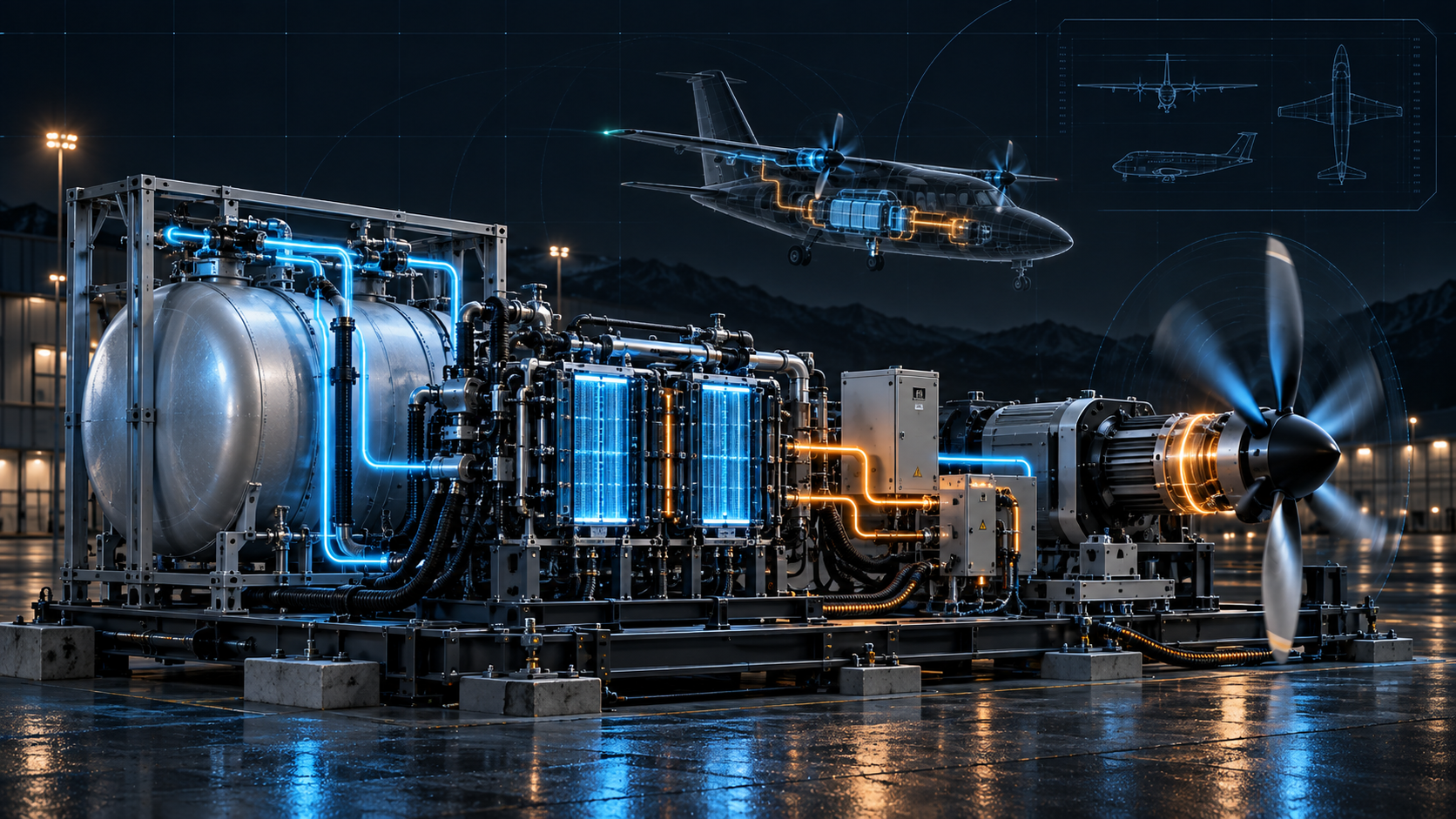
The Clean Aviation NEWBORN program has completed a key ground-test phase of its integrated hydrogen power source at ÚJV Řež in Czechia, reaching approximately 700 kW. The project is coordinated by Honeywell Aerospace and is developing fuel-cell propulsion technology intended to scale from 19-seat commuter aircraft toward larger regional applications.
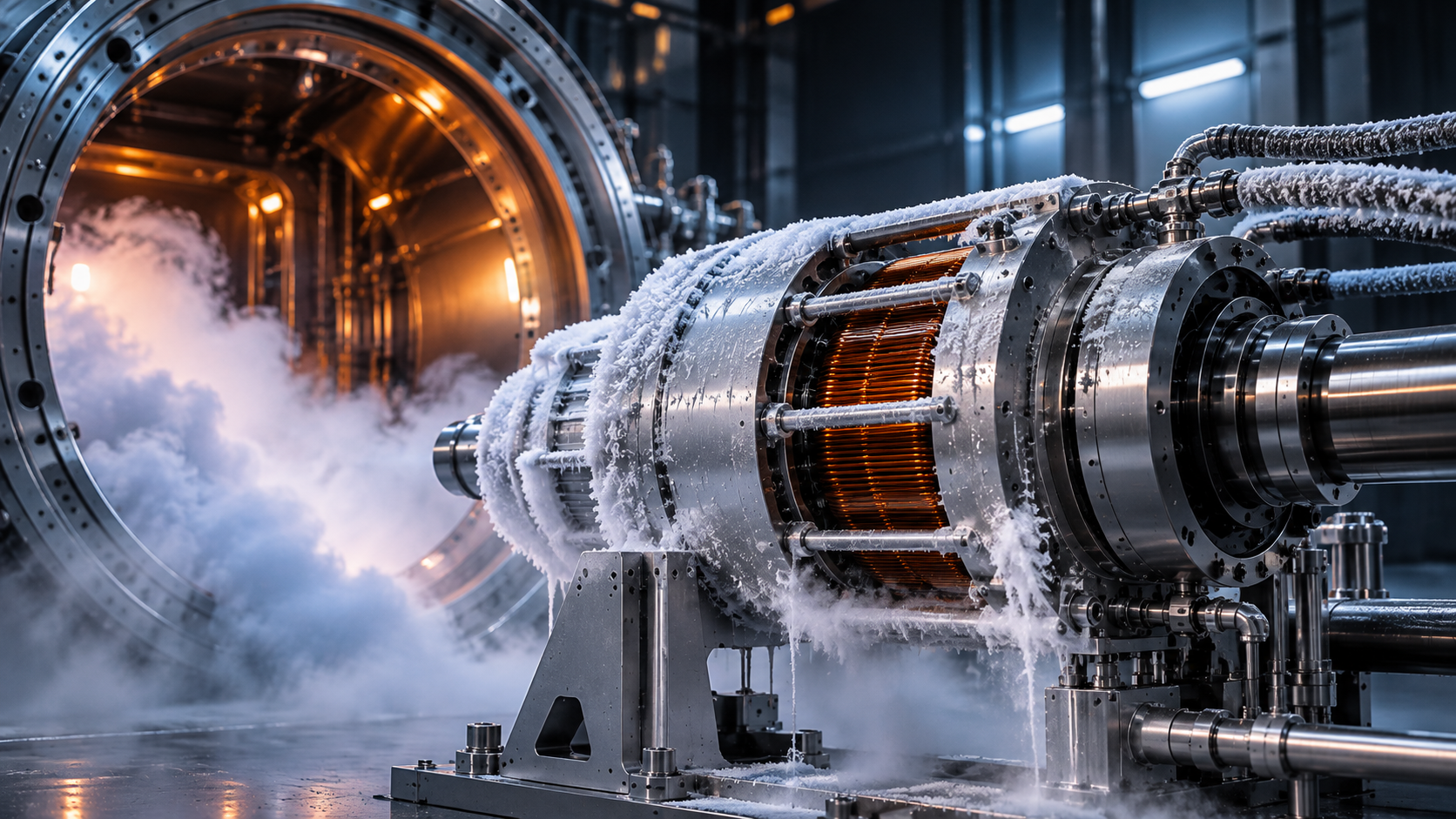
ÚJV Řež reported the result on 22 September 2026. Its test campaign covered the interaction of air supply, humidity control, hydrogen and thermal management, electrical distribution, control systems, safety infrastructure and heat rejection. The reported 700 kW point applies to the integrated hydrogen power source under ground-test conditions; it is not a flight result or a complete 700 kW aircraft propulsion demonstration.
The test infrastructure is scheduled to move to Gorizia, Italy, where the final NEWBORN phase will integrate the hydrogen source with battery systems and a megawatt-class electric propulsion system. The resulting ground demonstrator is intended to exercise the full power chain rather than only the fuel-cell source and its balance-of-plant systems.
Clean Aviation describes NEWBORN's target architecture as modular, with 1 MW fuel-cell power-source modules that could be paralleled to reach multi-megawatt power levels. Those are project targets. The completed Czech test provides evidence at roughly 700 kW, while the 1 MW module objective and full-system power-density targets still have to be demonstrated at the integrated system level.
NEWBORN uses a CS-23-class 19-seat Miniliner as one of its aircraft-integration references. Clean Aviation describes the Pipistrel concept as a hydrogen-electric commuter with two electrically driven propellers, a liquid-hydrogen tank and fuel-cell equipment integrated toward the rear fuselage.
The Miniliner is a research reference aircraft, not a current flight-test or certification program. Published mission figures such as 189 nm per short hop, 945 nm across five hops before refuelling and Mach 0.23 cruise are concept-level design assumptions used to size and assess the architecture.
For aircraft use, electrical output alone does not establish viability. The complete propulsion chain has to carry the fuel-cell stacks, compressors, humidification equipment, hydrogen storage and distribution, cooling hardware, high-voltage conversion, batteries, motors and protection systems. The project therefore has to demonstrate usable system-level specific power and efficiency while controlling heat rejection and fault behaviour at aviation-relevant conditions.
Clean Aviation publishes objectives above 1.2 kW/kg for the power source and above 5 kW/kg for the fuel-cell stack, alongside an overall propulsion-system efficiency target of 50%. These remain program objectives rather than measured performance of a certificated aircraft system.
The next evidence threshold is the complete integrated ground demonstrator in Gorizia: how much power reaches the electric propulsion load, what mass and cooling burden accompanies it, how the battery supports transients, and whether the architecture maintains stable operation through representative fault and load cases.
Evidence note: Approximately 700 kW and completion of the Czech ground-test phase are reported by ÚJV Řež. The modular 1 MW architecture, power-density figures and efficiency target are Clean Aviation/NEWBORN program objectives. None of these results represents aircraft type certification or a flight demonstration.
Sources: ÚJV Řež, 22 September 2026; Clean Aviation NEWBORN project overview; NEWBORN consortium; Clean Aviation Annual Activity Report 2024.