Clean Aviation's fourth call has selected 19 projects with €290 million of EU funding. Two of them, led by Rolls-Royce Deutschland and MTU Aero Engines, will ground-test hybrid-electric propulsion for a next-generation short- and medium-range airliner, while three others target cryo-cooled power electronics, superconducting windings and fuel-cell propulsion hardware.
19 — projects selected in Clean Aviation Call 4 €290M — EU funding across the call (€664M total public/private research effort) €106M — ultra-efficient SMR work-line budget, shared across multiple projects ≥20% — programme-level aircraft CO₂ reduction ambition to which ELEVATED is expected to contribute
Rolls-Royce and MTU will develop separate hybrid-electric engine-demonstration projects. The published information does not yet establish comparable designs, test conditions or measured fuel-burn gains.
ELEVATED's electrical machine rating, shaft interface and storage configuration; HEURECA's disclosed architecture; final grants; and measured integration results against stated aircraft-level assumptions.
Clean Aviation, the EU's aeronautics research partnership, announced 19 new projects from its fourth call on 17 September 2026. Together they carry €290 million of EU funding and €664 million of total public and private research effort. Rolls-Royce followed on 18 September with details of ELEVATED, the hybrid-electric engine project it will lead through Rolls-Royce Deutschland.
MTU Aero Engines leads HEURECA under the same Clean Aviation work line for ground demonstration of hybrid-electric propulsion architectures for an ultra-efficient short- and medium-range aircraft. The two consortia will investigate the topic separately; their eventual demonstrator designs and test boundaries have not yet been disclosed in enough detail for direct comparison. The €106 million allocated to the ultra-efficient SMR work line is shared across several projects, not assigned to these two engines alone.
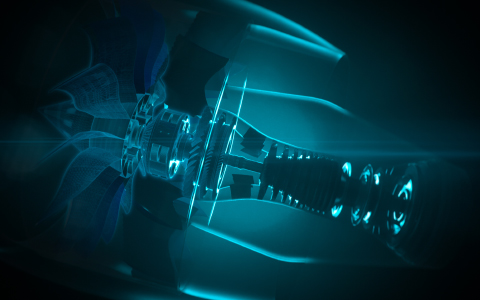
Rolls-Royce says ELEVATED will integrate a hybrid-electric subsystem into a donor gas-turbine engine for testing under realistic boundary conditions, subject to grant preparation. The subsystem is expected to contribute to Clean Aviation's ambition of at least 20% lower aircraft-level CO₂ emissions; this is not a measured saving or a standalone target demonstrated by ELEVATED. The project will also assess hybridisation for the UltraFan 30 technology demonstrator, planned for ground testing in 2028, on a path toward technology readiness level 6.
Rolls-Royce has not published the electrical machine power, which shaft it would drive, or where the energy storage sits. Those details will say more about the concept than the funding headline does.
Current battery specific energy makes battery-only propulsion impractical for the intended short- and medium-range airliner mission. Hybridisation is being investigated for its potential to improve gas-turbine operation and aircraft-level efficiency, with any benefit weighed against electrical-system mass and losses.
Depending on the architecture, an electrical machine may add or extract shaft power during transients, potentially changing compressor operating margins and core sizing. Electric accessories are another possible use of generated power. None of those features is confirmed as ELEVATED's final arrangement: Rolls-Royce has not disclosed the machine rating, shaft interface or energy-storage configuration. Machine, inverter and cabling mass, heat rejection and coupled control failures will determine how much of the projected benefit remains at aircraft level.
Donor-engine testing can reveal mechanical, thermal and control interactions that component rigs cannot reproduce on their own. The programme will need to document those interactions, the electrical system's power balance and its behaviour in degraded operating states before claims about an integrated aircraft benefit can be assessed.
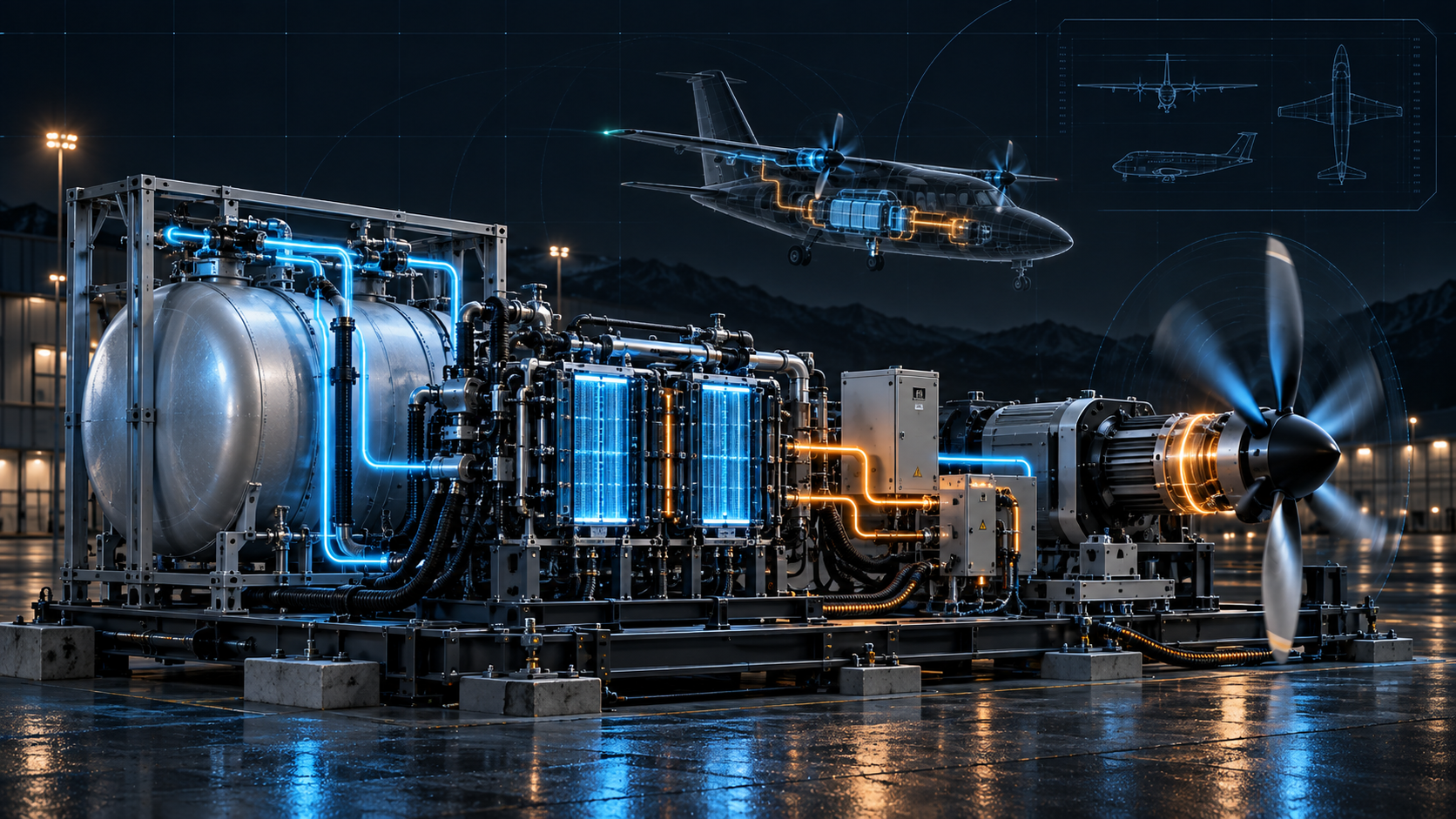
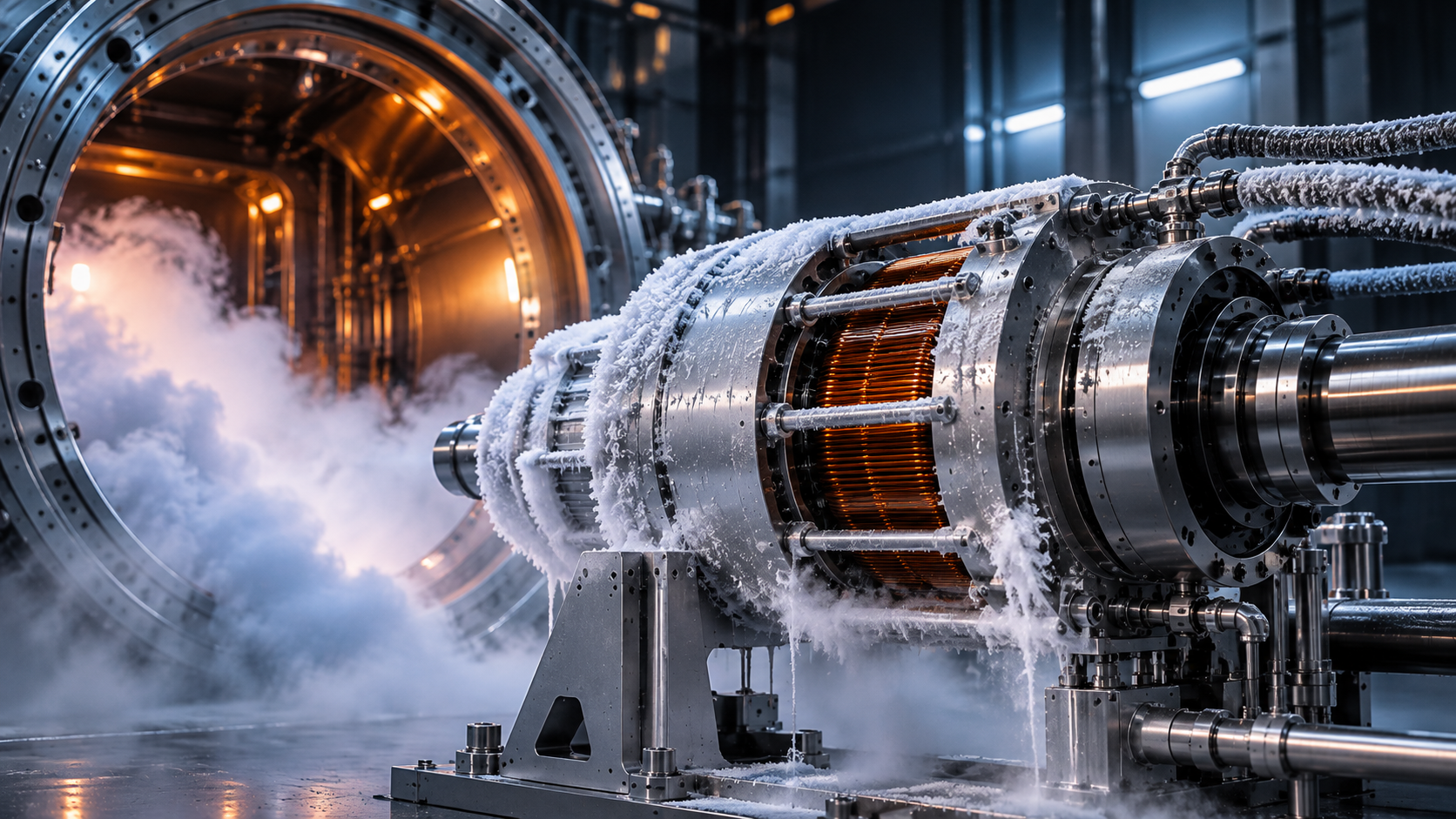
Three smaller Call 4 projects work on hardware for a fully electric hydrogen fuel-cell aircraft. Airbus leads EHPIC on fuel-cell propulsion building blocks. Fraunhofer leads ARCTIC, on cryo-cooled power electronics. The University of Edinburgh leads HYPERWIN, on superconducting motor windings.
Both cryogenic themes rest on the same idea: liquid hydrogen carried as fuel is also a very cold heat sink. Using it to cool inverters and motor windings reduces electrical losses and could shrink the thermal-management system that otherwise adds a heavy penalty to fuel-cell aircraft. PropulsionWatch covered the US version of this approach in CHEETA's cryogenic motor demonstration, and the fuel-cell power-source side in NEWBORN's 700 kW ground tests.
Clean Aviation plans full-scale demonstrations and flight tests in 2029–2030 and is working toward a 30% net greenhouse-gas reduction for aircraft entering service around 2035. All Call 4 selections still depend on completing grant preparation.
The two selected projects give Rolls-Royce and MTU separate routes to test hybrid-electric integration alongside Clean Aviation's airframe and engine-efficiency work. Selection supports research; it does not establish which propulsion architecture will be used in a future production aircraft.
The next useful disclosures are each project's electrical architecture, test conditions and measured fuel-burn or power-management effects. Any comparison will need consistent engine and aircraft assumptions, including the mass and cooling penalties of the electrical equipment. An aircraft-level emissions goal cannot be inferred directly from a donor-engine test result.
Evidence note: Clean Aviation announced project selections and budget allocations on 17 September 2026. Rolls-Royce supplied ELEVATED's proposed scope, the programme-level CO₂ ambition and UltraFan 30 timing. MTU's detailed HEURECA design and results are not yet established here. The €290 million is EU funding across the call, not an individual award, and project starts depend on grant preparation.
Sources: Clean Aviation, 17 September 2026; Rolls-Royce, 18 September 2026; FlightGlobal, September 2026. Image: Rolls-Royce.