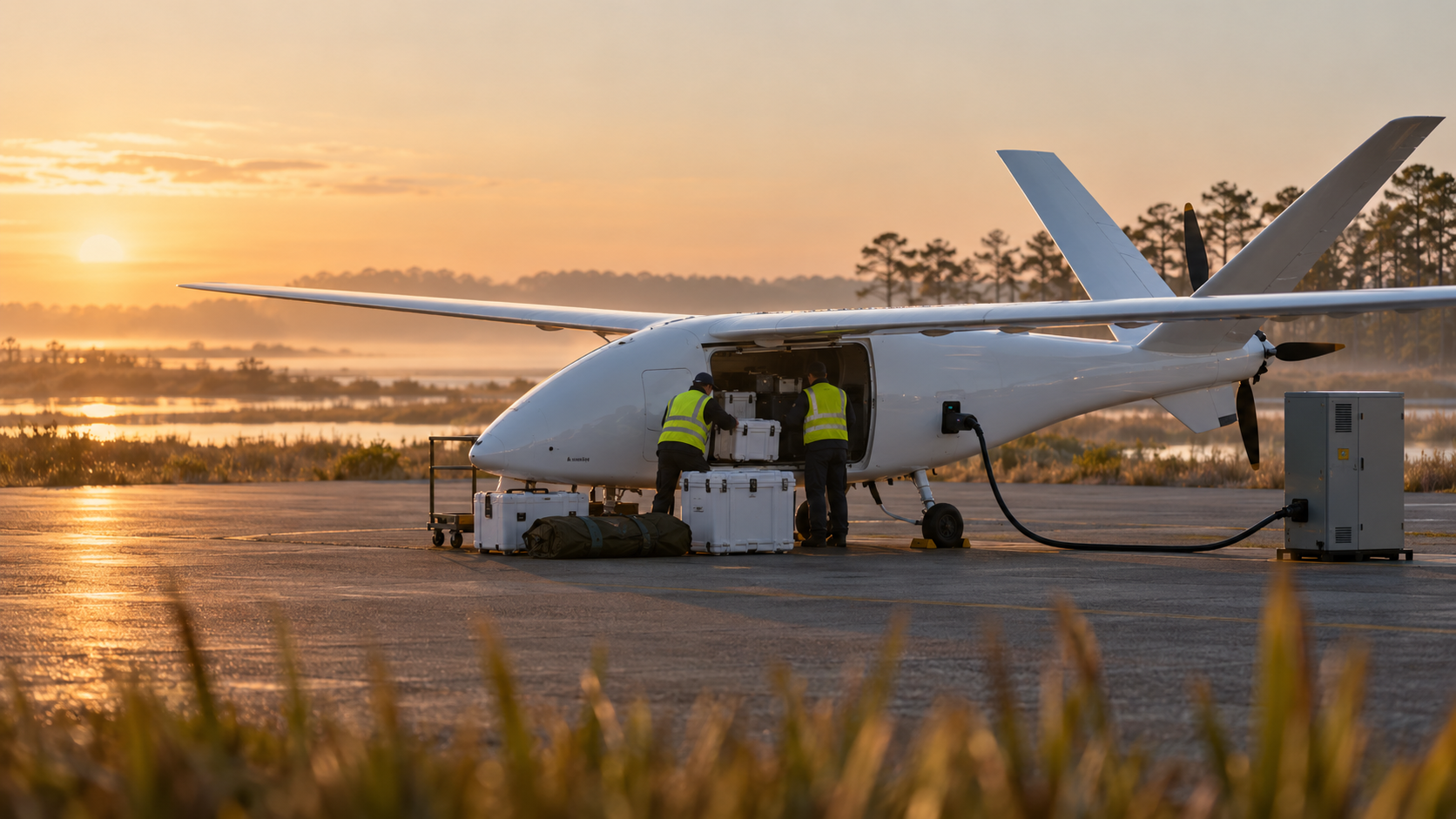
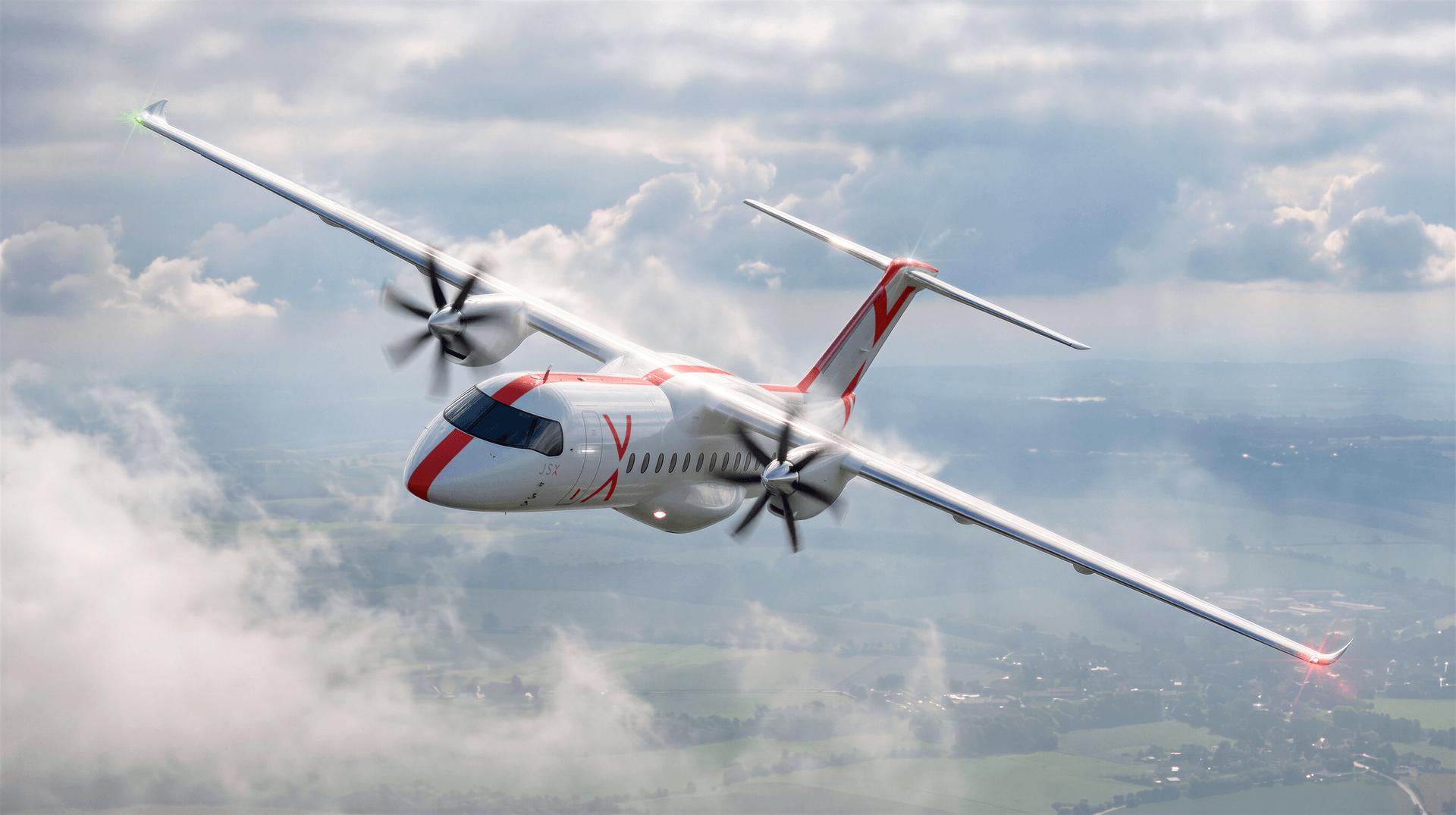
Electra has flown its hybrid-electric EL2 demonstrator from a heliport on the Roanoke–Blacksburg Regional Airport ramp and from other vertical-flight landing areas in Virginia, using point-in-space instrument procedures under the FAA's eIPP. The campaign tests whether a blown-lift airplane can use landing sites and IFR routings built around helicopters.

5 — Virginia locations named in Electra's campaign 150 ft — Electra's published EL9 takeoff and landing ground-roll target 2026 — year of the EL2 procedure demonstrations under the FAA eIPP 2030 — Electra's current EL9 entry-into-service target
Electra's EL2 flights tested use of short landing areas and helicopter-style instrument routings. The operational question is whether suitable procedures and site criteria can be approved for routine fixed-wing use.
Whether the FAA creates a route for airplanes in this category to use point-in-space procedures outside a pilot program, how EL9 handles propulsion-unit failures at approach speed, and progress toward first flight of the full-scale EL9.
Electra has flown its EL2 Ultra Short technology demonstrator out of a heliport on the commercial ramp at Roanoke–Blacksburg Regional Airport. It was one of several vertical-flight landing areas the aircraft used during a flight campaign across Virginia, which Electra announced on 22 September 2026. The flights ran under the FAA's eVTOL and Advanced Air Mobility Integration Pilot Program (eIPP), as part of the Virginia Smart Airspace Program led by Virginia Tech's Mid-Atlantic Aviation Partnership.
Beyond Roanoke, Electra reports EL2 operations at Virginia Tech/Montgomery Regional Airport in Blacksburg (KBCB), at Allan C. Perkinson/Blackstone Army Airfield (KBKT), and at sites in Newport News and Richmond. It used heliports, vertiports and taxiways rather than runways, and flew point-in-space procedures and dedicated instrument routings, the type of IFR design the FAA normally draws for helicopters.
A point-in-space approach does not end at a runway threshold. It takes the aircraft on instruments to a defined point in the air, and from there the pilot continues visually to the landing site. Helicopters have used this for decades because hospital pads and offshore platforms rarely sit at the end of a runway with a glidepath.
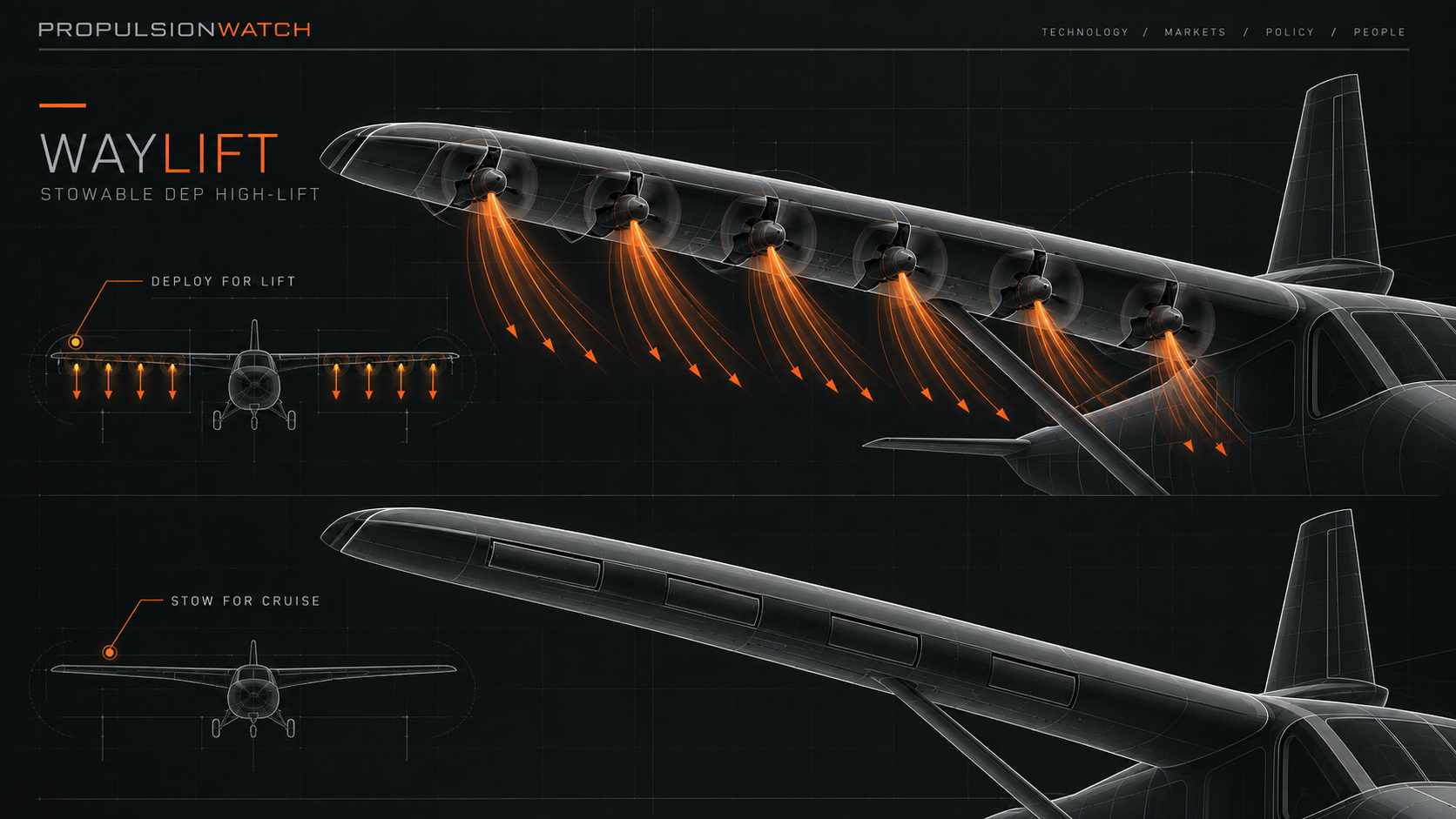
Fixed-wing procedure design works differently. It assumes a runway, a stabilised glidepath and a missed-approach climb gradient sized around the airplane's approach speed. Electra's argument is that a blown-lift airplane slow enough, and with a short enough ground roll, can fly the helicopter's end of the system instead. On the EL2, electrically driven propellers blow air over the wing and large flaps, so the wing keeps producing lift at airspeeds where a conventional airplane of the same size would be close to the stall.
The EL2 is a two-seat demonstrator. The commercial aircraft is the nine-passenger EL9, which uses eight distributed electric propulsion units, four battery packs and a Safran TG600 turbogenerator, and which Electra quotes at a 150 ft takeoff and landing ground roll. EL9 has an agreed FAA Part 23 certification basis following closure of its G-1 issue paper in July 2026. The full-scale aircraft has not flown yet, and the first Atlas-built test airframes are expected in 2027.
Type certification and approval of an instrument procedure address different questions. Electra's quoted 150 ft ground roll would expand site options only where the landing area, obstacle environment and published procedures support aircraft operations. The Virginia programme is developing low-cost IFR access for Ultra Short and other advanced-air-mobility aircraft; its proposed weather and procedure capabilities are objectives, not authorisations established by these demonstration flights.
Low-speed propulsion failures require particular attention. In a blown-lift wing, much of the lift at approach speed comes from the propeller slipstream. Losing a propulsion unit close to the ground therefore costs lift and creates a rolling moment, not just a loss of thrust. EL9's distributed layout and fly-by-wire controls are meant to absorb that, and it is likely to be one of the most closely examined areas of FAA compliance work.
Procedure design also depends on approach and missed-approach performance. A steep, slow approach to a point in space only works if the procedure designer can count on the airplane's climb gradient and obstacle clearance after a go-around, with the hybrid system in a degraded state as well as a healthy one.
Landing-site geometry is a separate constraint. Heliports are sized and marked for helicopters. An airplane that needs a short ground roll still needs one, plus room for the wing, so an airport heliport is not automatically an airplane landing site. Operators will need clear criteria for which pads qualify. PropulsionWatch's piece on vertiport engineering covers the related infrastructure constraints.
Bristow holds pre-delivery positions for five EL9s with options on 45 more, subject to certification, and Electra's current target for entry into service is 2030. The Virginia flights do not change that schedule. What they add is operating evidence Electra can bring to customers and to the FAA while the full-scale aircraft is still being built.
The next evidence is an FAA-accepted route from pilot-program demonstrations to repeatable, published procedures for airplanes using suitable non-runway sites. That work must address obstacle clearance, degraded-system climb performance and the geometry of each landing area. PropulsionWatch examines the separate operational-approval steps in Beyond Type Certification.
Evidence note: Electra reported the flight locations, landing-area types and procedure tests on 22 September 2026. EL9 performance figures and 2030 entry into service remain company targets. FAA G-1 closure establishes the EL9 certification basis, not a Type Certificate. The pilot-program flights are not an approval for routine commercial use of the tested IFR procedures.
Sources: Electra press release, 22 September 2026; Electra, Virginia Smart Airspace Program announcement, February 2026; Virginia Tech News, February 2026; Electra, EL9 G-1 issue paper closure, 10 July 2026; Electra and Atlas, 15 September 2026. Image: Electra.