Wayfarer has completed NASA-supported flight testing of a 35%-scale Cessna 182 testbed for its retractable distributed-electric high-lift system. The company reports four times baseline lift and 40% less thrust than a pylon-mounted DEP arrangement at equivalent lift.
35% scale — Cessna 182-based Phase II flight-test aircraft 4× baseline lift — company-reported test result 40% less thrust — company-reported versus a pylon-mounted DEP system at equivalent lift
Waylift attacks a central distributed-propulsion trade: gaining blown-wing lift at low speed while retracting the propulsors to avoid much of the exposed hardware’s cruise-drag penalty.
Full-scale integration, installed-system mass, measured runway performance, acoustics, thermal limits, asymmetric-failure cases and reliable deployment/retraction under representative environmental conditions.
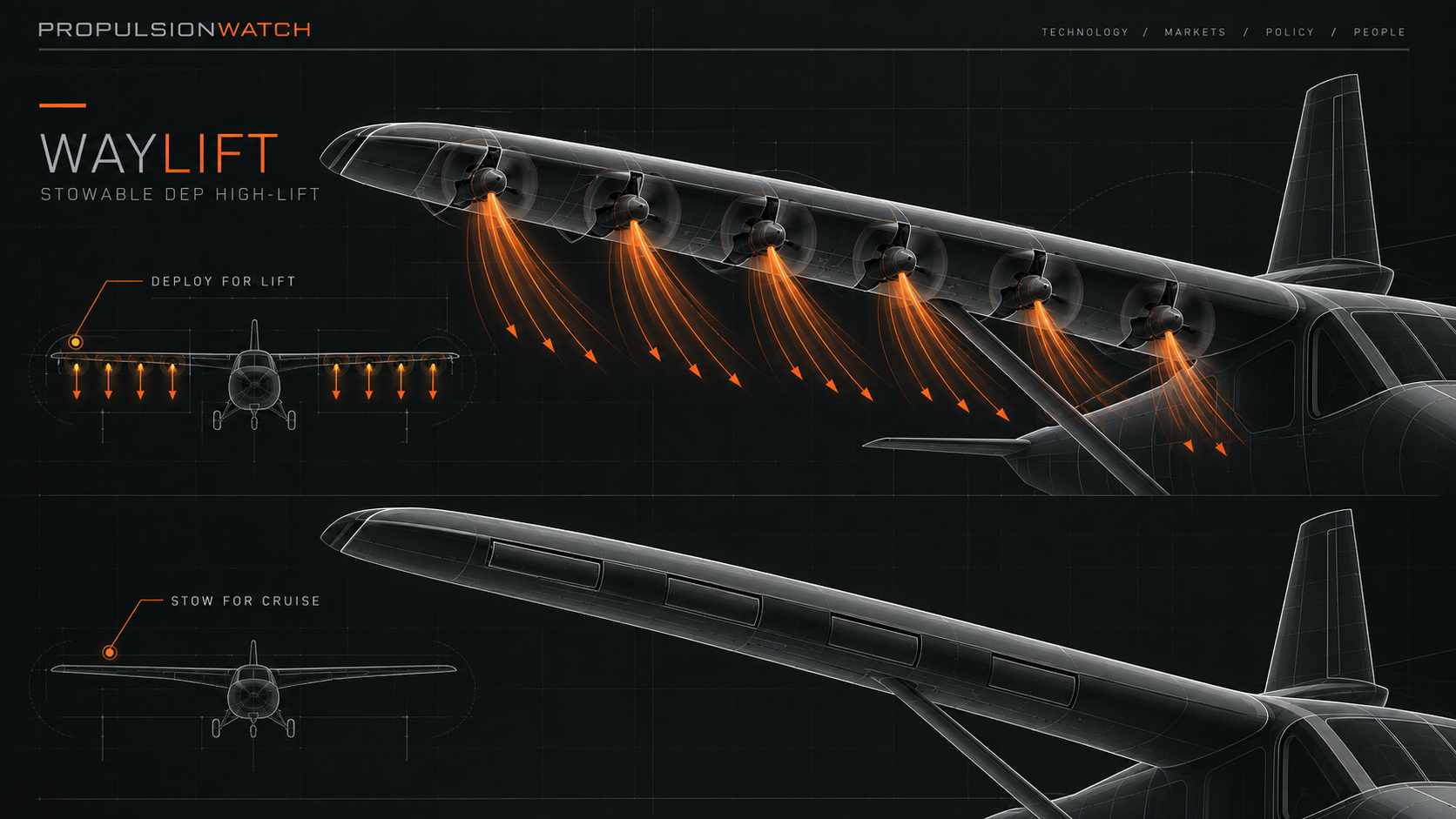
Wayfarer Aircraft has completed a NASA-supported Phase II Small Business Technology Transfer program for its Integrated High Lift Propulsor, marketed as Waylift. The concept uses distributed electric propellers integrated with a deployable high-lift device: the propulsors extend for low-speed blown-wing lift and stow inside the wing for cruise.
NASA’s TechPort record confirms the project objective and describes the architecture as a way to reduce the thrust and power required for lift augmentation while improving cruise efficiency. Aviation Week reported on 9 September that the NASA-supported scaled flight campaign had been completed using a Cessna 182 model testbed.
Distributed electric propulsion can place multiple small propellers along the wing so their slipstream increases local dynamic pressure and raises lift at low speed. That can reduce takeoff and landing distance, but fixed high-lift propulsors and pylons can impose cruise drag, structural weight and integration penalties during the much longer wing-borne part of the mission.
Wayfarer’s approach couples the propulsors to a Krueger-type leading-edge device so the propulsion hardware can be deployed when high lift is needed and then retracted. The attraction is architectural: use electric propulsion as an aerodynamic device during takeoff and landing without carrying the same exposed-propulsor drag through cruise.
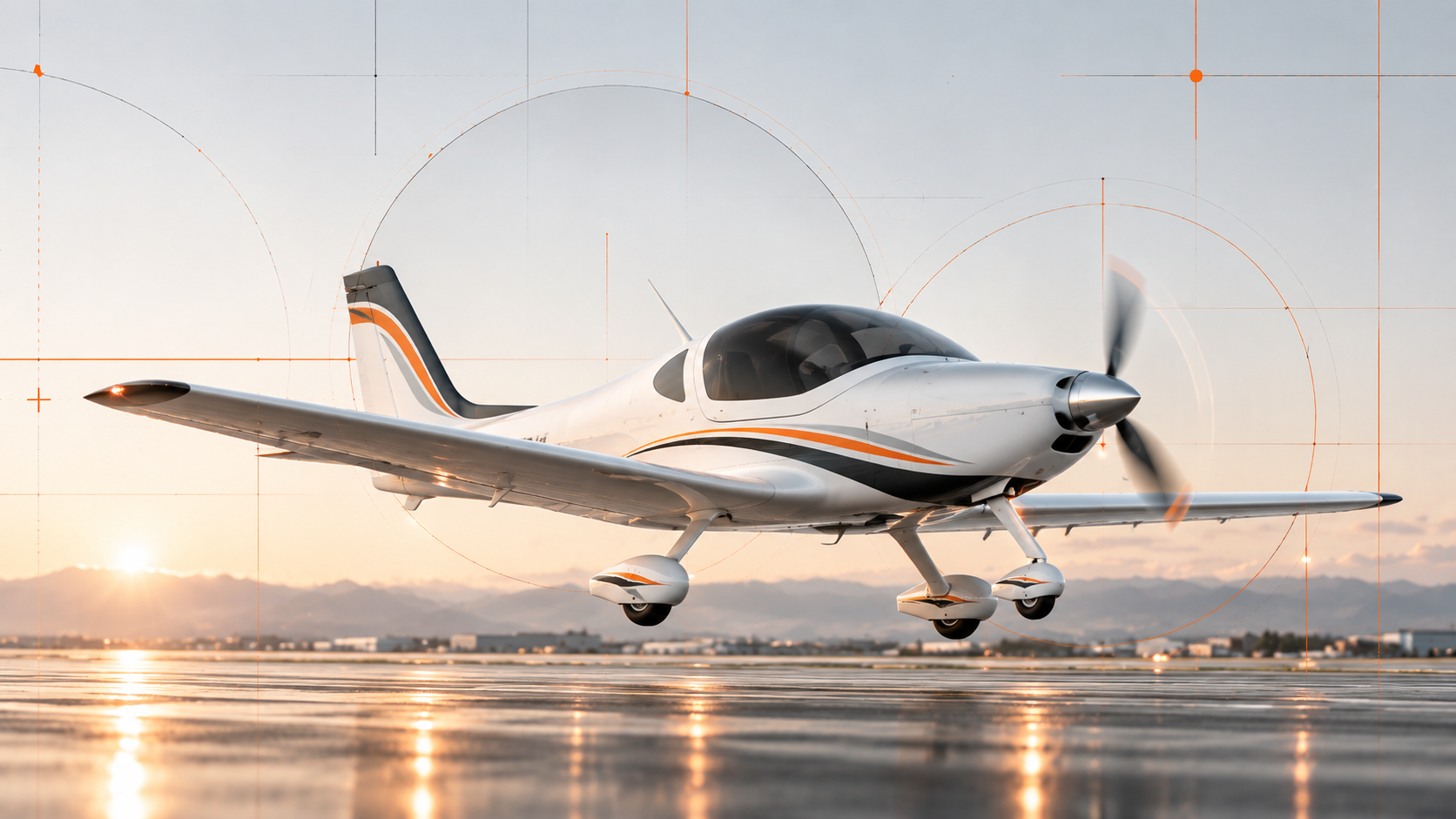
The Phase II aircraft was a roughly 35%-scale Cessna 182 testbed. Wayfarer reports that the modified configuration produced four times the lift of the unmodified baseline aircraft and required 40% less thrust than a typical pylon-mounted DEP system at equivalent lift. Those final performance figures are company-reported; NASA’s public project record confirms the research program and its intended technical objectives, but it should not be cited as independent validation of the exact 4× and 40% values without a final agency report containing them.
The scaled test is nevertheless more useful than a static concept illustration. It provides flight data on a deployable aero-propulsive system and allows back-to-back comparison using the same basic airframe. Earlier AIAA work on the testbed documents the instrumentation, configuration and aerodynamic rationale behind the Integrated High Lift Propulsor.
Stowing the propulsors can reduce cruise drag, but a flightworthy retractable system adds hinges, actuators, doors, wiring, motor mounts and fault cases to a load-bearing wing. Certification questions include whether the aircraft can remain controllable after a partial deployment, a failed retraction or a propulsor fault, and how the system is protected against debris, icing, water ingress and structural fatigue.
Thermal management also changes by flight phase. The motors may be most heavily loaded during short high-lift segments, while the surrounding structure has to accommodate concentrated electrical and mechanical loads. Any retrofit case will also have to show that the modification does not compromise the certified airframe’s flutter margins, stall behaviour, structural life or emergency procedures.
The most important next evidence is full-scale hardware and flight testing on a representative aircraft. Useful data would include measured takeoff and landing distance, power required across the lift curve, acoustic performance, deployment and retraction reliability, one-engine-inoperative or asymmetric-thrust behaviour, and the mass of the complete installed system.
If those results hold at full scale, Waylift would be relevant beyond one short-field demonstrator because it addresses a recurring DEP trade: extracting powered-lift benefit without paying the full aerodynamic penalty in cruise. The current evidence supports the architecture as a tested research concept, not yet as a certificated retrofit product.
Evidence note: NASA confirms the program and technical objective. The four-times-lift and 40%-less-thrust values are Wayfarer-reported results from the Phase II campaign.
Sources: NASA TechPort project 125593; Aviation Week, 9 September 2026; Wayfarer Phase II completion material.