Latest developments across electric aviation, propulsion, certification and advanced aircraft programs.
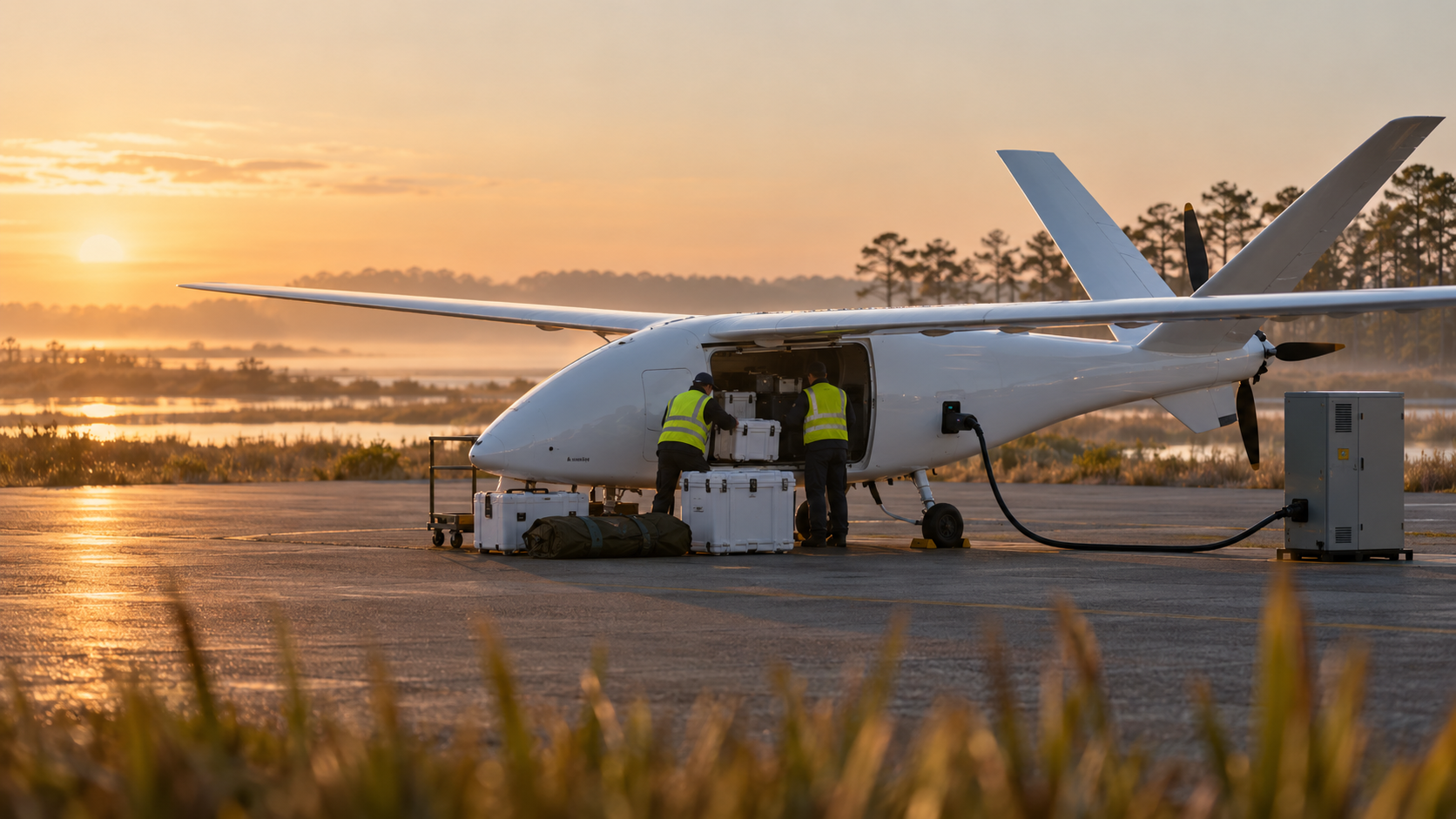
BETA's conventional-takeoff ALIA CX300 began eIPP medical-logistics flights in North Carolina on 17 September 2026, covering more than 1,300 nm, and flew its first Texas eIPP mission for Washington County EMS on 24 September. The trials test where a runway electric aircraft fits in healthcare aviation, and how much charging infrastructure it needs.
September 28, 2026
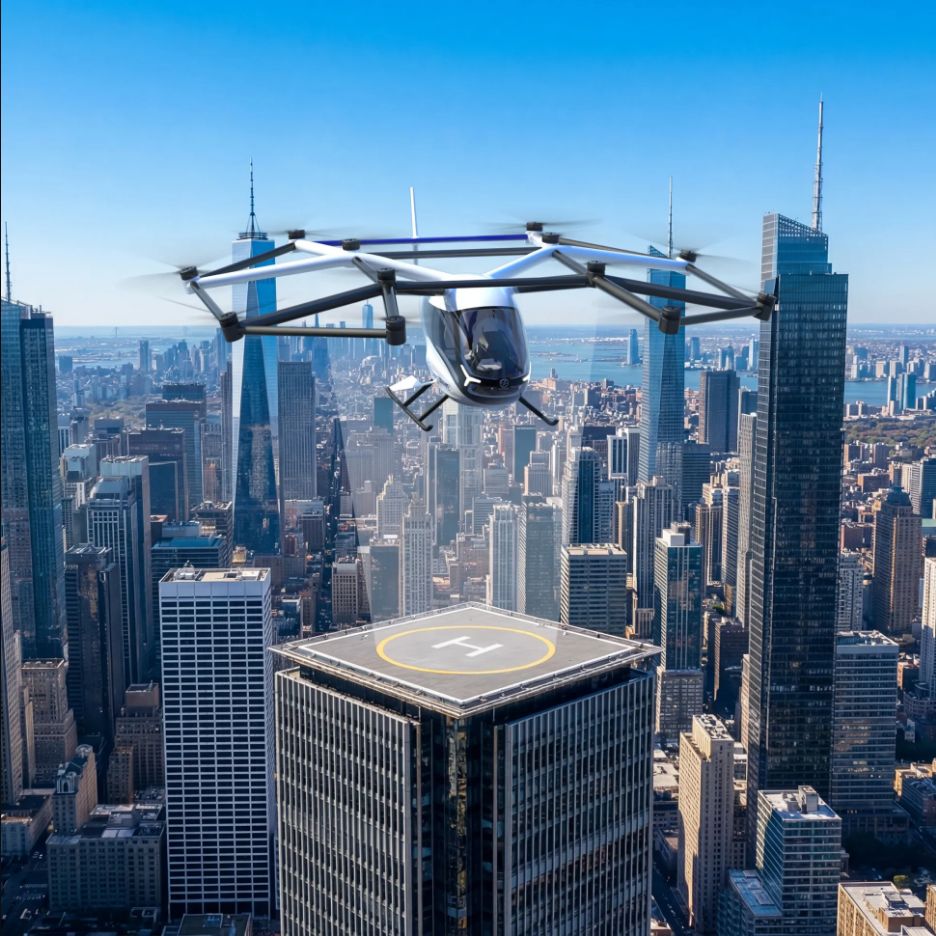
SkyDrive has published its engineering case for a 12-rotor, wingless SD-05: low disk loading to cut hover power, and enough rotors and battery packs that losing one still leaves margin for a vertical landing. We run the numbers and set out what the layout gives up.
September 25, 2026
Elroy Air has increased the PIPE behind its SPAC merger to $175 million, with $75 million already funded and Lockheed Martin Ventures joining. The money goes into Kratos-built production of Chaparral, an uncrewed hybrid-electric VTOL cargo aircraft, with the first production aircraft targeted for late 2026.

September 25, 2026
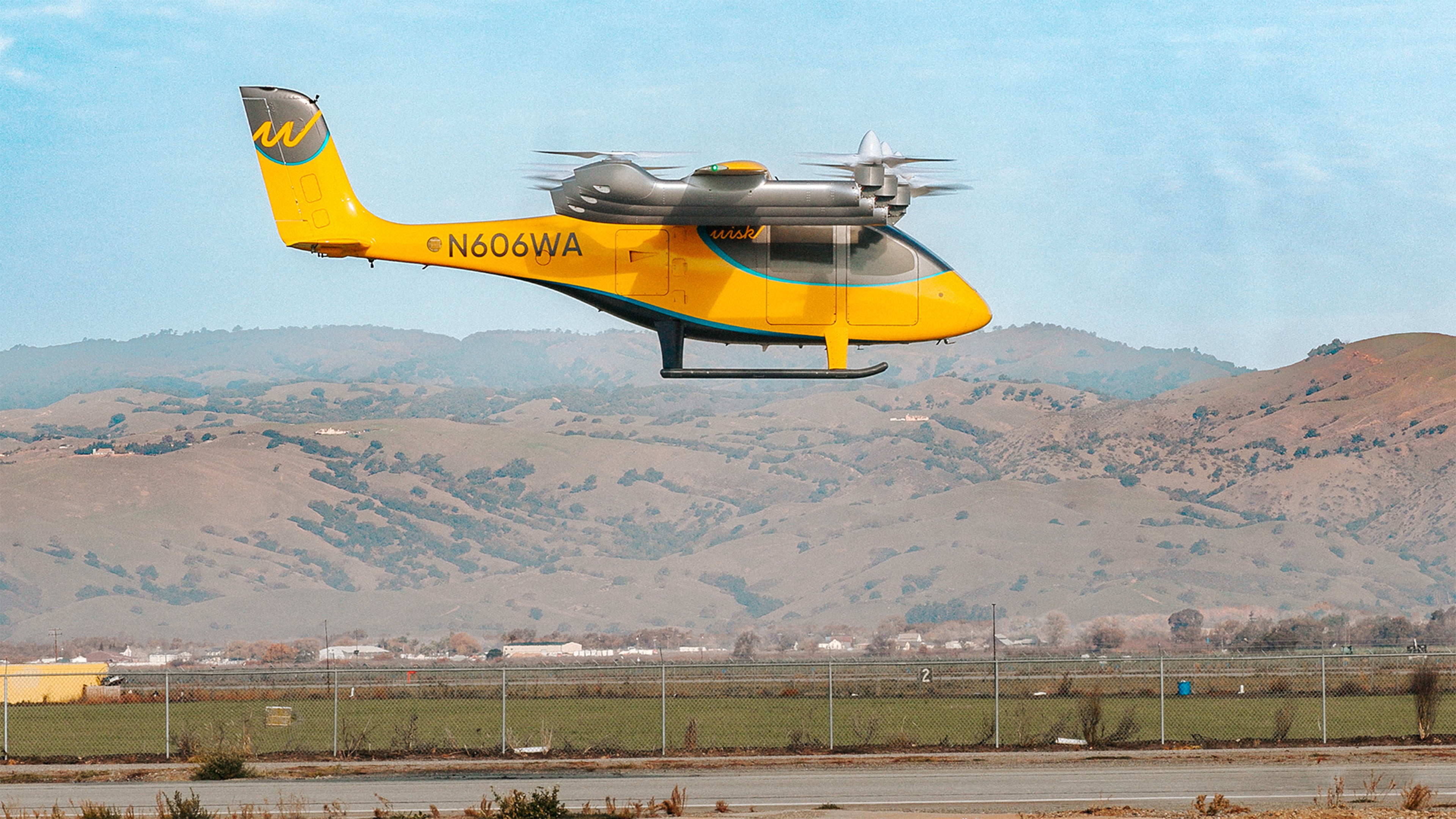
The US Hart-Scott-Rodino waiting period for Archer's acquisition of Boeing's Wisk Aero, Insitu and SkyGrid expired on 18 September 2026. Other regulatory approvals are still pending, and Archer expects to close by the end of 2026, leaving it with two very different eVTOL certification programmes.
September 25, 2026
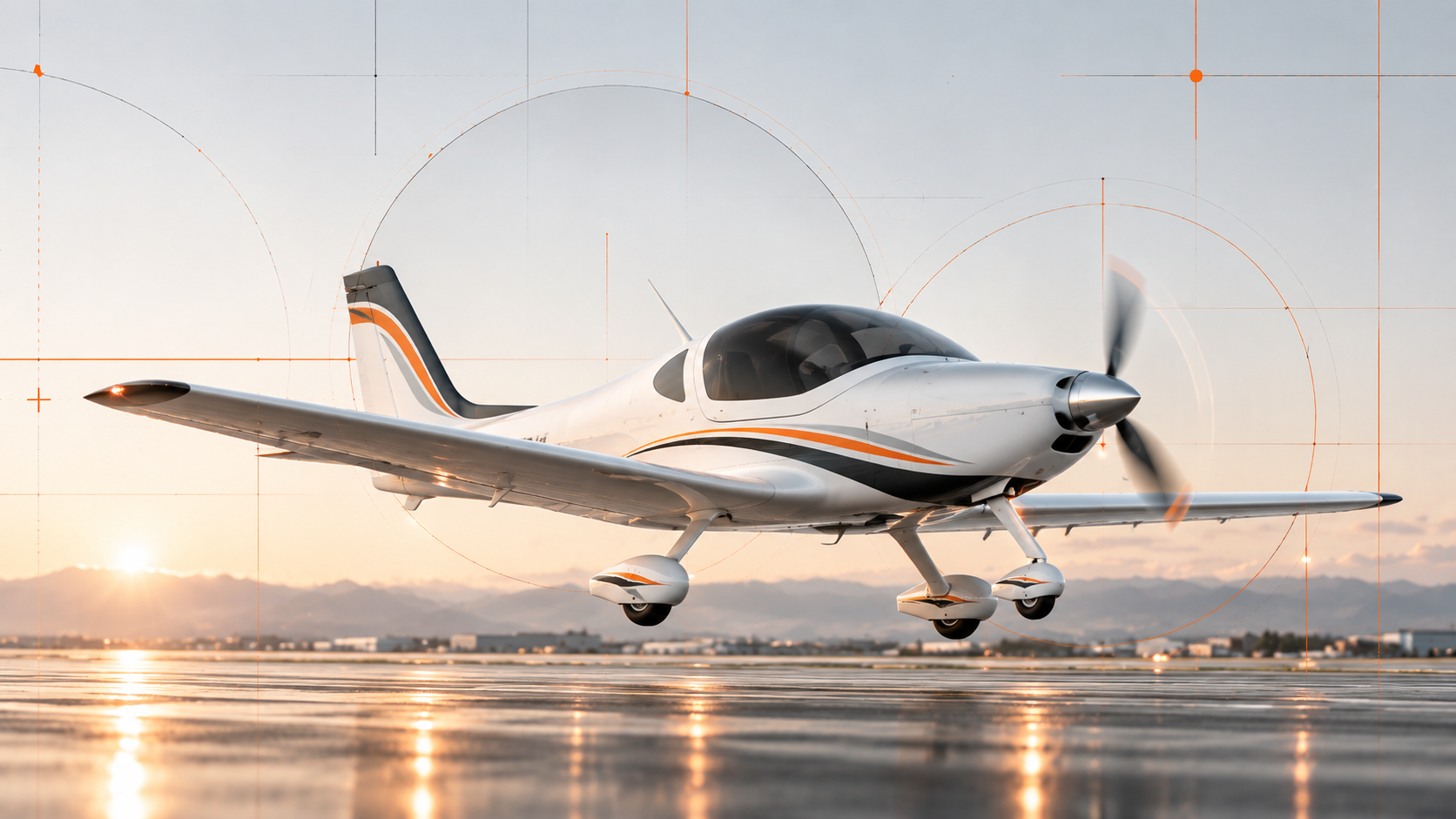
Bye Aerospace's full-scale eFlyer 2 prototype flew for the first time on 24 September 2026 at Centennial Airport near Denver. The flight starts envelope expansion for a two-seat electric trainer pursuing FAA Part 23 certification, but type certification remains a separate and much longer step.
September 24, 2026
Vertical Aerospace has started a review of strategic alternatives, including strategic and financial partnerships, with Jefferies as adviser. The move comes after piloted Valo transition flights and ahead of a Critical Design Review due by the end of 2026, with Type Certification now targeted for 2029.

September 23, 2026
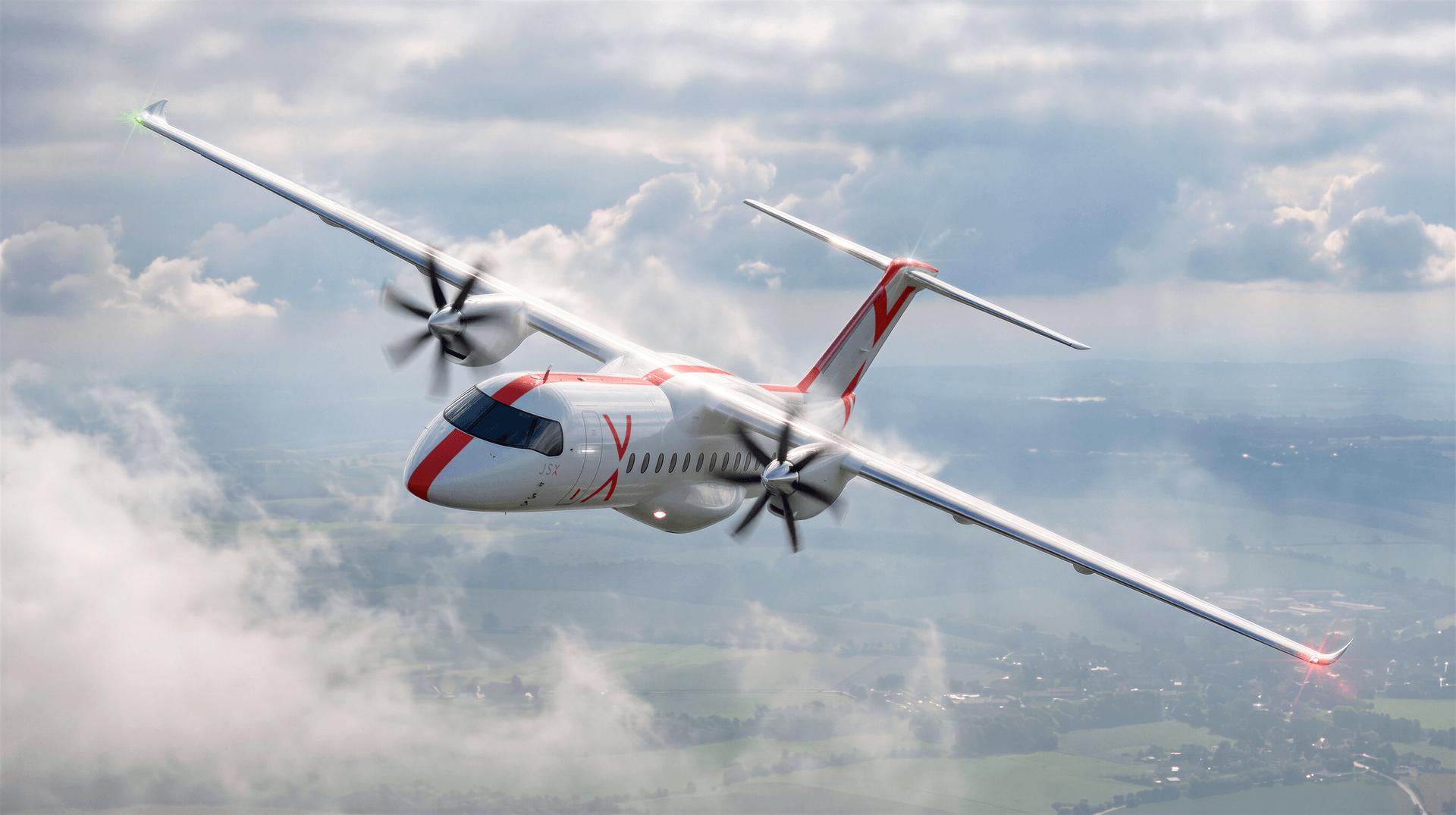
Heart Aerospace has unveiled the 36-seat ES-36 with two series-hybrid powertrains, each pairing a 1.65 MW electric motor with a turbogenerator. Heart quotes 200 km all-electric and 1,200 km hybrid range; JSX has a deposit-backed agreement for 50 aircraft plus 50 purchase rights.
September 23, 2026
Clean Aviation's fourth call has selected 19 projects with €290 million of EU funding. Two of them, led by Rolls-Royce Deutschland and MTU Aero Engines, will ground-test hybrid-electric propulsion for a next-generation short- and medium-range airliner, while three others target cryo-cooled power electronics, superconducting windings and fuel-cell propulsion hardware.

September 23, 2026
Electra has flown its hybrid-electric EL2 demonstrator from a heliport on the Roanoke–Blacksburg Regional Airport ramp and from other vertical-flight landing areas in Virginia, using point-in-space instrument procedures under the FAA's eIPP. The campaign tests whether a blown-lift airplane can use landing sites and IFR routings built around helicopters.

September 22, 2026
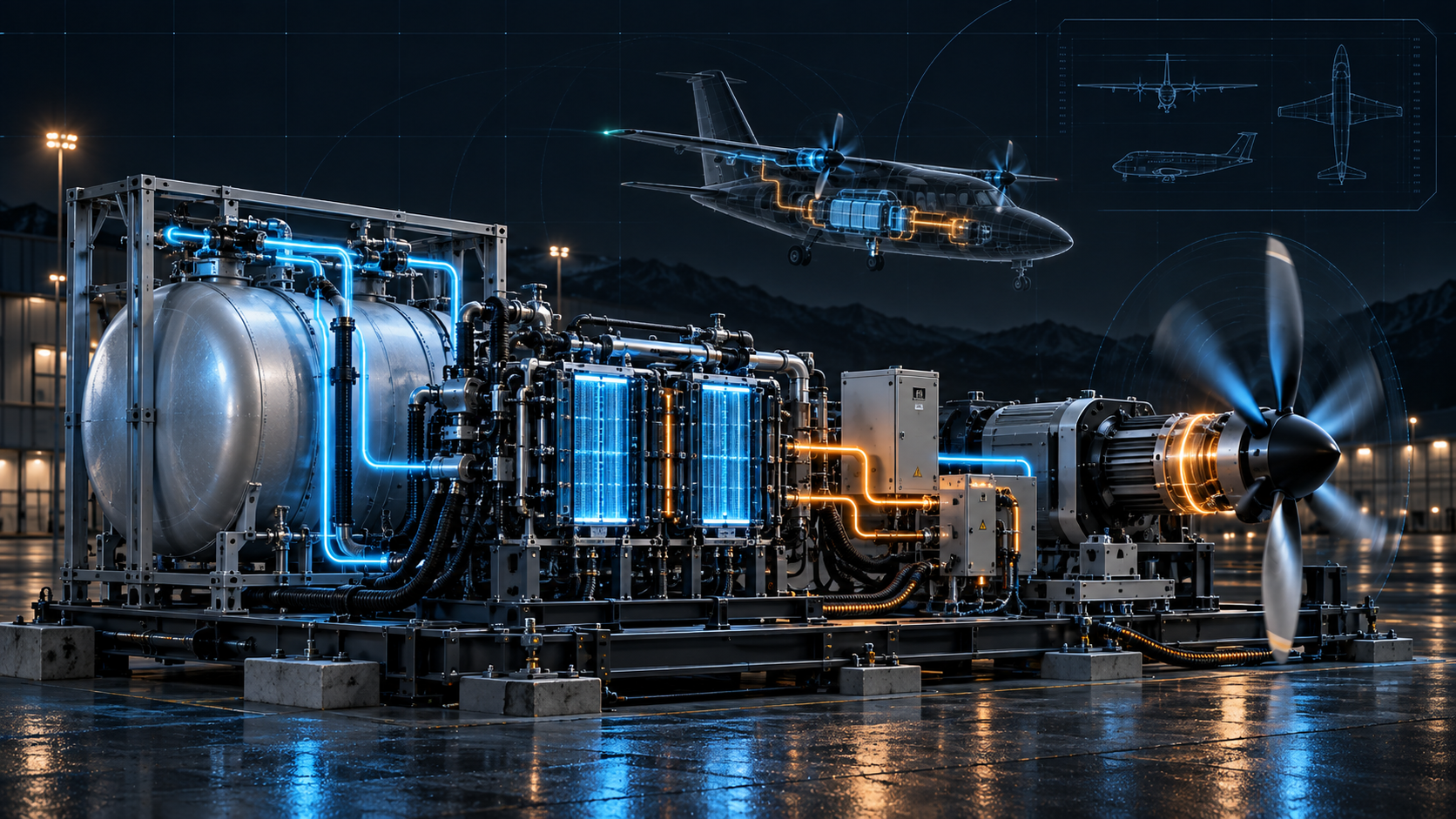
The Honeywell Aerospace-led Clean Aviation NEWBORN project has completed a key ground-test phase of its integrated hydrogen power source at about 700 kW. The next phase will combine the hydrogen source with batteries and a megawatt-class electric propulsion system for complete demonstrator testing.
September 21, 2026
AURA AERO plans to substantially reconfigure its X-VOLT flying testbed so the propulsion system more closely represents the 19-seat ERA series-hybrid architecture. Modified flight testing is targeted for early 2027; that timing and ERA’s late-2027 first-flight date remain company targets.

September 21, 2026
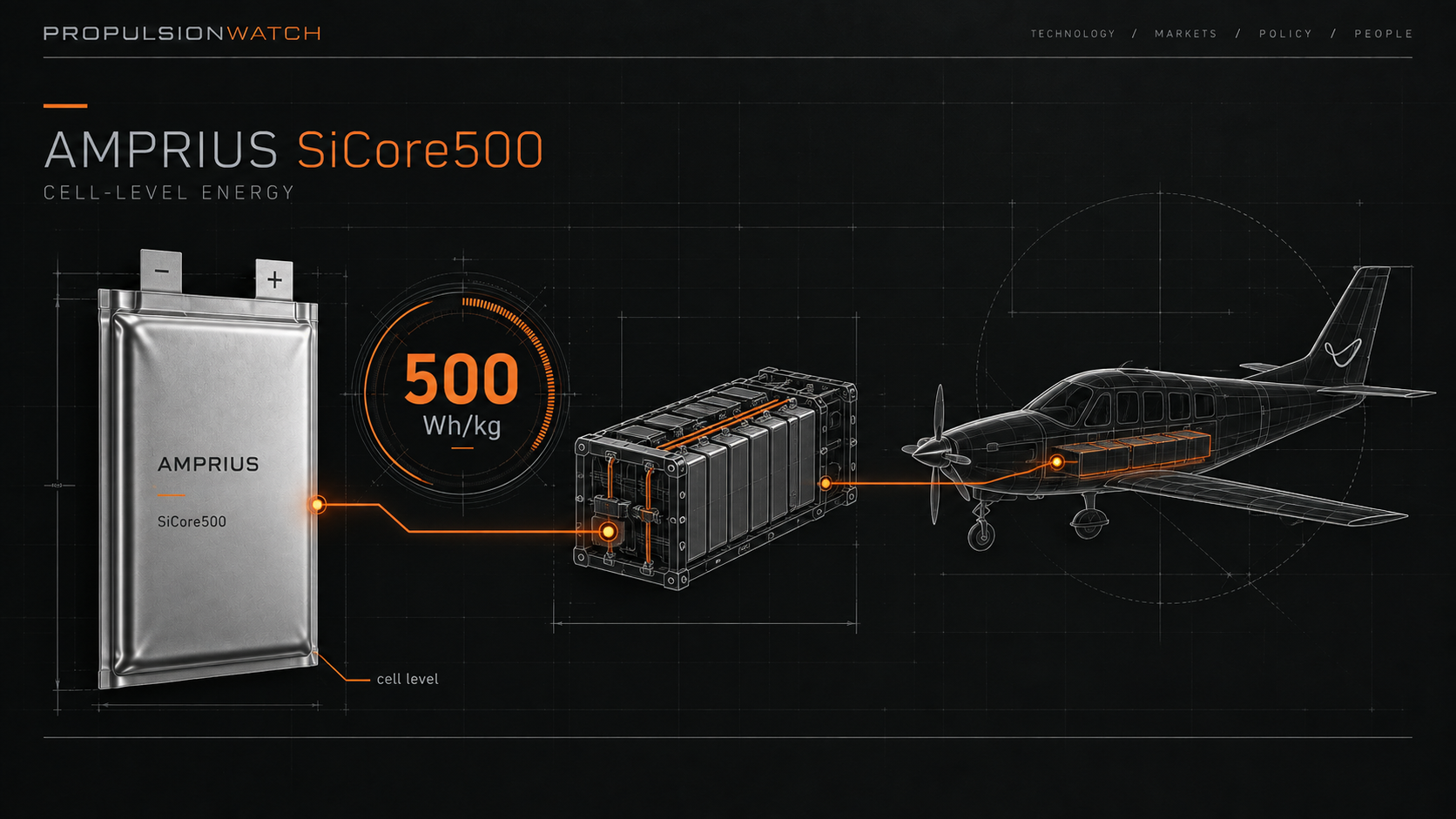
Amprius has introduced a second-generation SiCore silicon-anode cell rated at 500 Wh/kg at 1C continuous discharge and designed for conventional lithium-ion manufacturing equipment. Q4 2026 availability is a company target, and the figure is cell-level rather than pack-level.
September 20, 2026
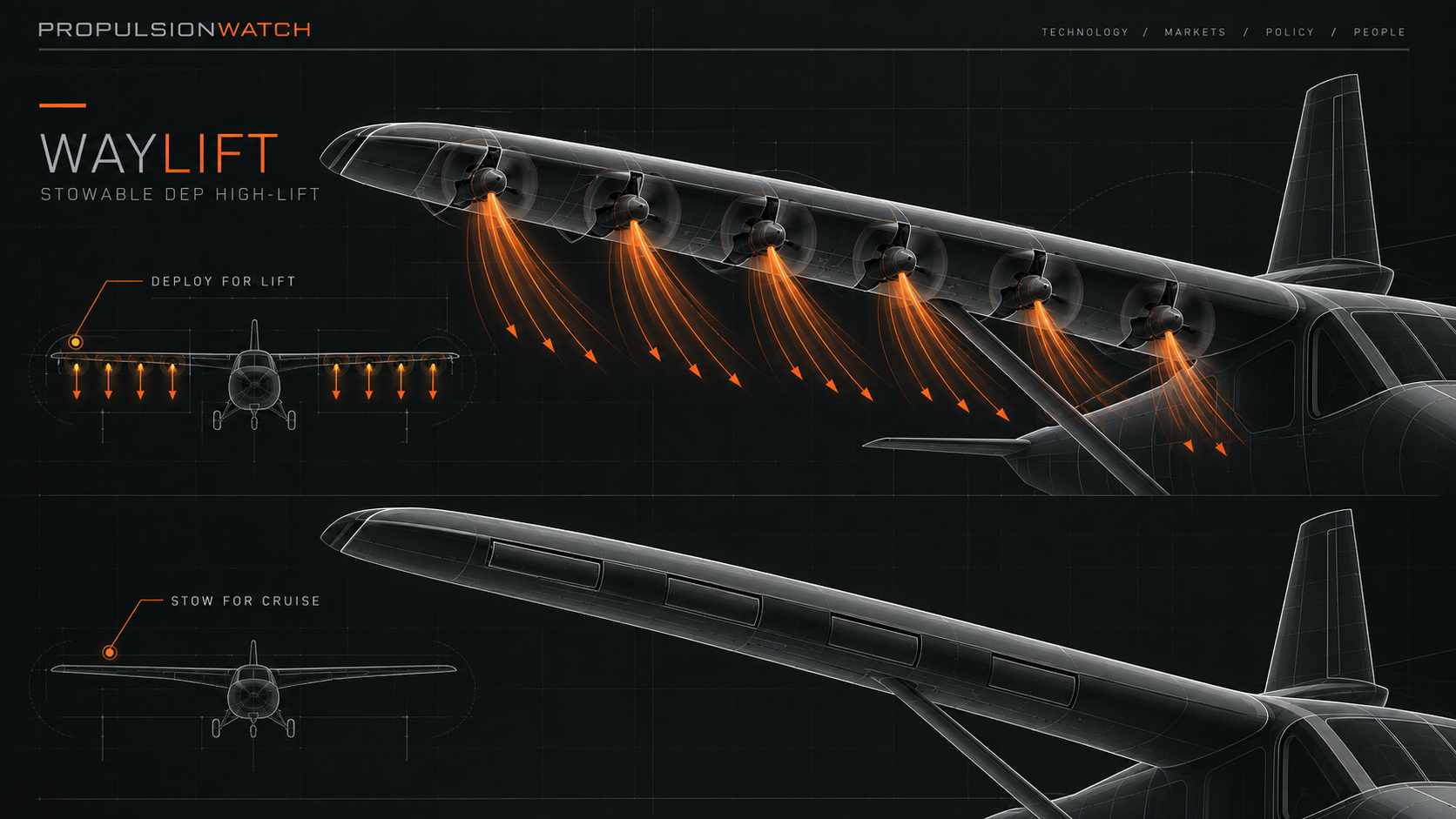
Wayfarer has completed NASA-supported flight testing of a 35%-scale Cessna 182 testbed for its retractable distributed-electric high-lift system. The company reports four times baseline lift and 40% less thrust than a pylon-mounted DEP arrangement at equivalent lift.
September 20, 2026
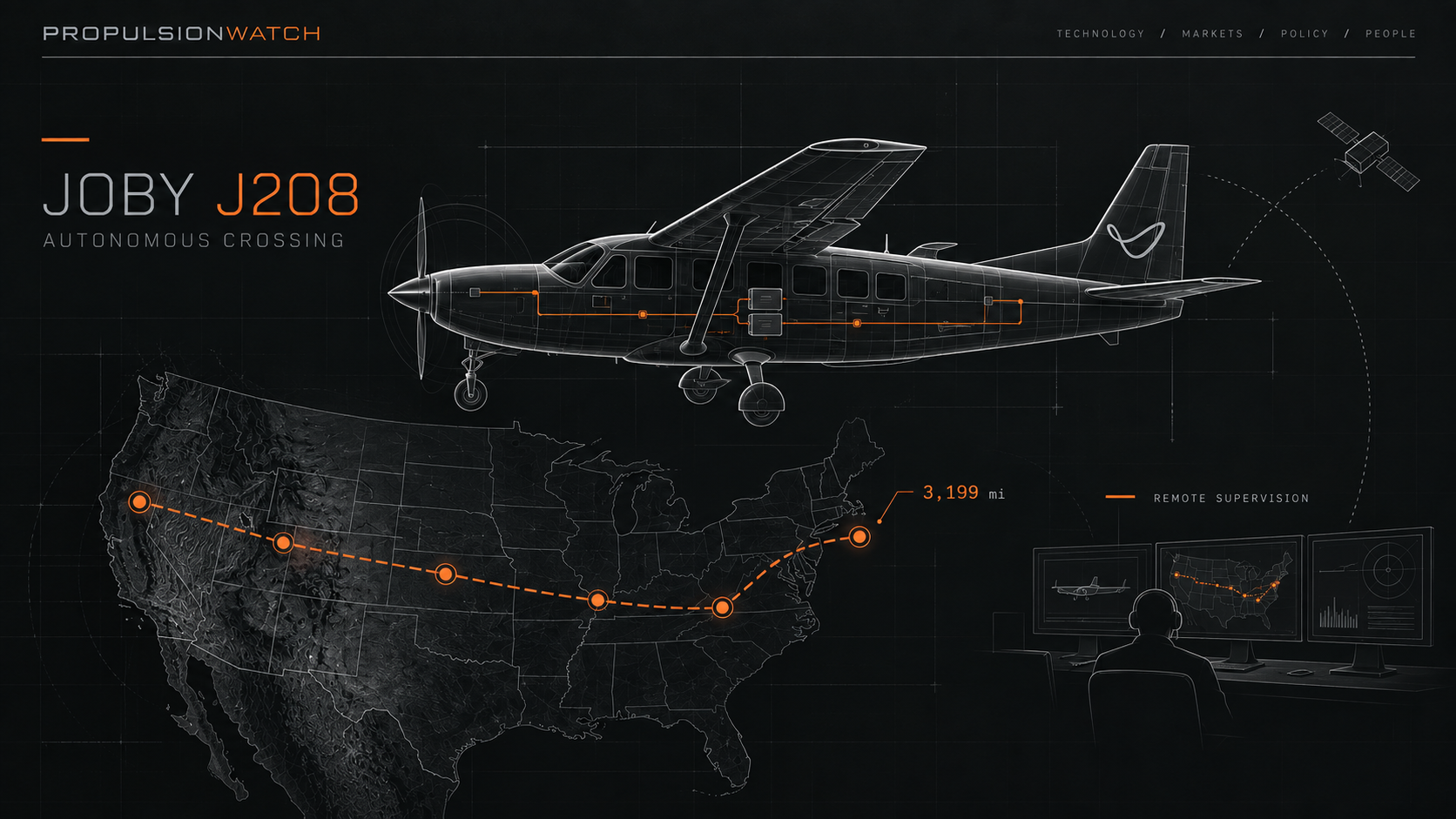
Joby says its Superpilot-equipped Cessna Caravan crossed the U.S. with no control inputs from the onboard safety pilot, while remaining under remote supervision. The result is evidence for the autonomy stack on a conventional certified airframe, not an autonomous-certification milestone for Joby’s S4.
September 15, 2026
University of Illinois researchers have operated CHEETA's fully cryogenic superconducting motor at up to 2,400 rpm and 400 N·m. The milestone advances large-aircraft electric propulsion research, but higher-power and flight-representative testing remain ahead.

September 15, 2026
The FAA has issued a Special Airworthiness Certificate for Bye Aerospace's full-scale eFlyer 2 prototype, moving the two-seat electric trainer from structural and integrated propulsion ground testing toward its first flight.

August 14, 2026
Vertical Aerospace unveiled Valo as the successor to its VX4 prototype. The company targets up to 100 miles of range and 150 mph cruise; after re-baselining the program in July 2026, it now expects Type Certification in 2029 rather than 2028.

August 14, 2026
Archer agreed to acquire roughly 300 Lilium patents for €18 million, according to Archer. The portfolio spans propulsion, batteries, high-voltage systems and flight controls; what Archer ultimately uses from it remains an open engineering and product-integration question.

August 14, 2026
Beta Technologies raised about $1.015 billion in gross proceeds in its 2025 IPO. The capital matters because Beta is funding two certification paths and charging infrastructure, but the raise itself does not establish the timing or economics of either aircraft program.

August 14, 2026
Archer says it has closed Phase 3 of the FAA type-certification process for Midnight and is working through Phase 4 compliance activity. The milestone is meaningful, but it is not a type certificate and Archer's 2026 US operating target remains a company target.
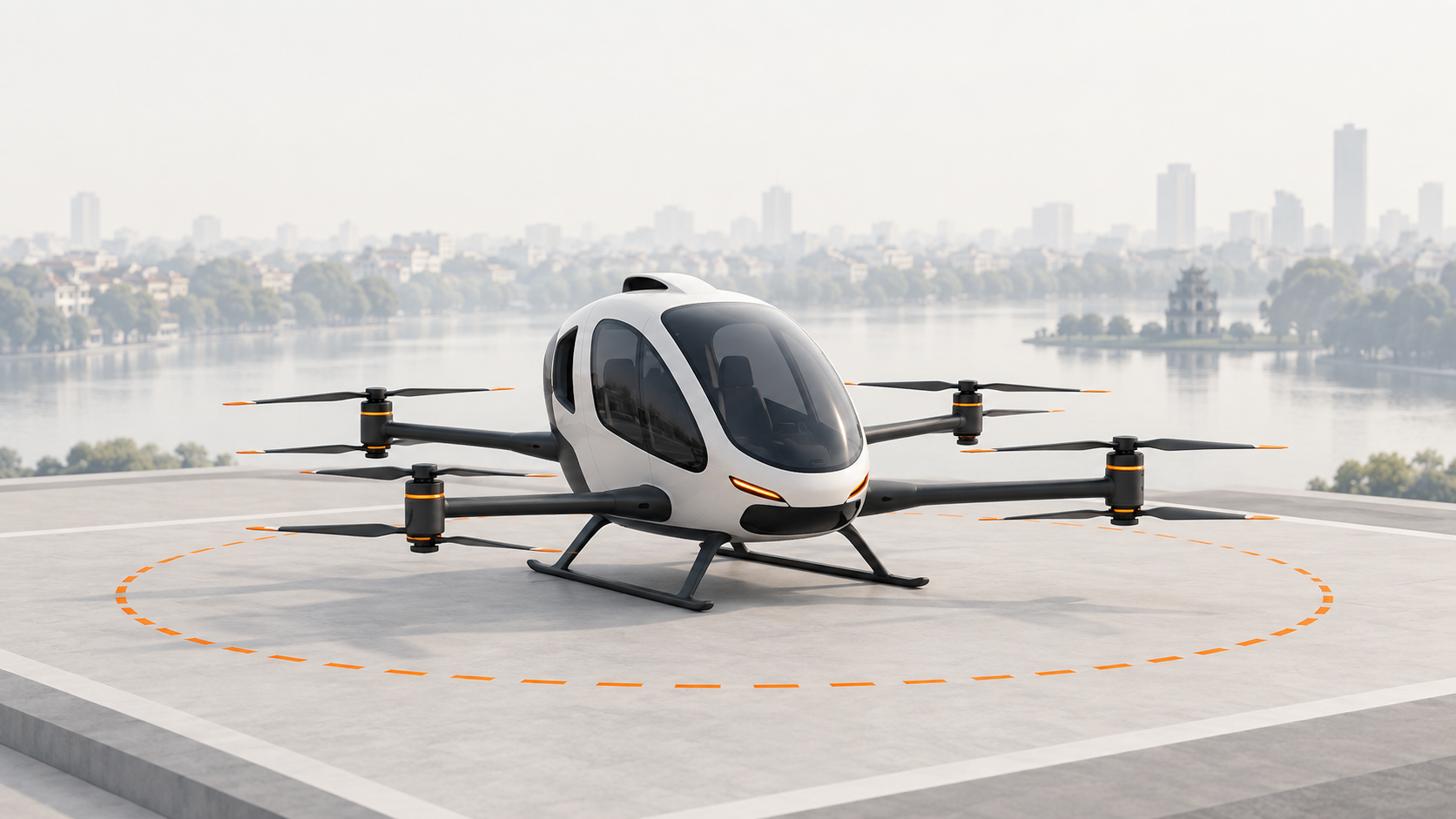
EHang and its Vietnamese partner are pursuing a Hanoi regulatory sandbox for controlled EH216-S testing, but the agreement is an MOU and application pathway rather than an operating approval.
Amprius has secured a U.S. government award worth up to $75 million to convert an existing domestic EV-battery line for high-energy-density silicon-anode cells targeting Group 1–3 UAS, with production capacity targeted at 12 million cells per year.