News

CHEETA Demonstrates Fully Cryogenic Electric Motor

University of Illinois researchers have operated CHEETA's fully cryogenic superconducting motor at up to 2,400 rpm and 400 N·m. The milestone advances large-aircraft electric propulsion research, but higher-power and flight-representative testing remain ahead.
September 15, 2026

·
5 min
· By PropulsionWatch Editorial
CHEETA Demonstrates Fully Cryogenic Electric Motor

The Short Version

Key Numbers

2,400 rpm — highest speed reported in follow-on testing 400 N·m — torque reported by the CHEETA team Laboratory demonstration — flight testing remains a stated future objective

Why It Matters

Superconducting machines are one route to reducing the electrical-machine mass penalty at commercial-aircraft power levels. CHEETA has moved that idea into operating hardware, while leaving the harder aircraft-level cryogenic and certification questions unresolved.

What To Watch

Higher-power operation, measured complete-system efficiency and mass, quench and fault protection, integration with the liquid-hydrogen/fuel-cell architecture, and an eventual flight demonstration.

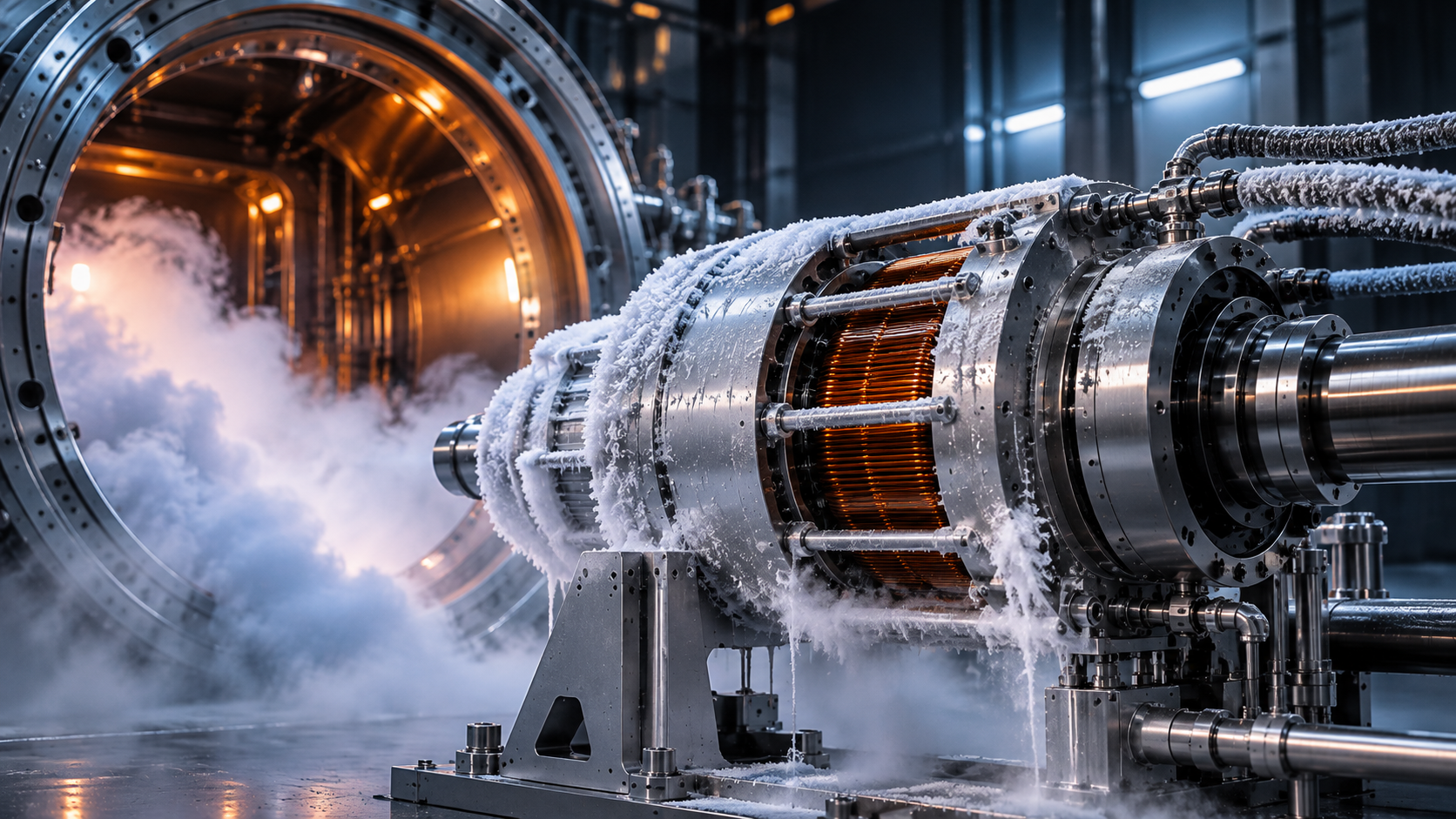
Researchers at the University of Illinois Urbana-Champaign have demonstrated a fully cryogenic electric motor developed under the Center for High-Efficiency Electrical Technologies for Aircraft, or CHEETA. Follow-on testing has operated the machine at speeds up to 2,400 rpm and torque up to 400 N·m.

The result is a laboratory propulsion-technology milestone, not a flight demonstration. The research team explicitly identifies higher-power scaling, additional test infrastructure and eventual flight testing as remaining work.

Why cryogenic machines are being pursued

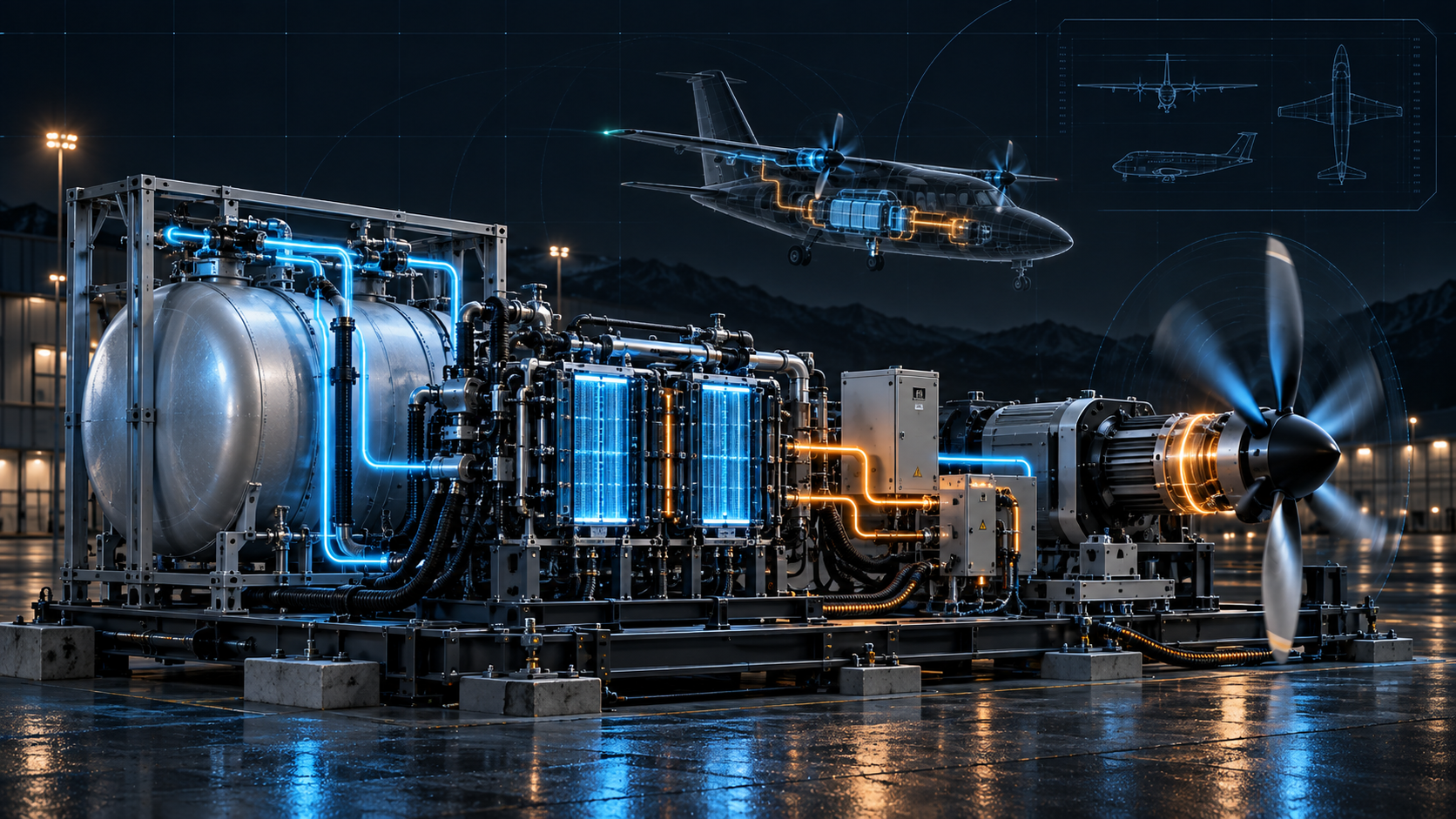
Large electric aircraft push conventional motors, cables and power electronics toward severe mass and thermal constraints. CHEETA's broader architecture investigates liquid hydrogen as both an energy carrier for fuel cells and a cryogenic resource for superconducting electrical systems. NASA's 2026 CHEETA Phase I report describes an integrated concept combining liquid hydrogen, fuel-cell conversion and an electrically driven ducted fan.

Superconducting conductors can sharply reduce resistive loss when maintained below their critical temperature. That creates the possibility of electric machines with much higher current density and lower electrical loss than conventional conductors. Aircraft-level benefit, however, depends on the mass and power required for cryogenic storage, thermal isolation, cooling and protection.

The motor result establishes operation, not system viability

The Illinois test demonstrates that the cryogenic machine can operate under controlled laboratory conditions and provides measured speed and torque points. It does not establish the mass, efficiency, reliability or thermal performance of a complete flight propulsion system.

Scaling also changes the safety problem. Superconducting systems need protection against loss of the superconducting state, while liquid-hydrogen aircraft introduce their own storage, venting, leak-detection and crashworthiness requirements. A credible aircraft comparison therefore has to include the entire energy and thermal chain rather than quoting motor power density alone.

Flight-representative testing is the next boundary

The CHEETA team says it plans higher-power work using a new FAA testbed at the POETS Research & Development Center and ultimately wants to move toward a flight demonstration with NASA and industry partners.

For PropulsionWatch, the useful signal is the transition from electromagnetic promise toward integrated hardware. The decisive evidence will be continuous power and efficiency at representative thermal conditions, cryogenic-system mass, fault behaviour and eventually operation in a flight environment.

Sources: University of Illinois CHEETA test report; NASA CHEETA Phase I Final Report.

Two quick questions before you go.

Which of these best describes you?
What would make PropulsionWatch most useful to you next?
Thanks — this helps shape what PropulsionWatch builds next.
Oops! Something went wrong while submitting the form.
View all
BETA Starts eIPP Medical-Logistics Flights in North Carolina and Texas With Its Runway Electric Aircraft
News

BETA Starts eIPP Medical-Logistics Flights in North Carolina and Texas With Its Runway Electric Aircraft

4 min
SkyDrive Explains Why the SD-05 Uses 12 Rotors: Disk Loading, Power Margin and the Motor-Out Case
News

SkyDrive Explains Why the SD-05 Uses 12 Rotors: Disk Loading, Power Margin and the Motor-Out Case

September 28, 2026

·
4 min
Elroy Air Upsizes PIPE to $175 Million, Adds Lockheed Martin Ventures Ahead of Nasdaq Listing
News

Elroy Air Upsizes PIPE to $175 Million, Adds Lockheed Martin Ventures Ahead of Nasdaq Listing

September 25, 2026

·
4 min
Archer's Deal for Boeing's Wisk, Insitu and SkyGrid Clears US Antitrust Waiting Period
News

Archer's Deal for Boeing's Wisk, Insitu and SkyGrid Clears US Antitrust Waiting Period

September 25, 2026

·
2 min
Bye eFlyer 2 Makes First Flight, Opening Its Electric-Trainer Test Campaign
News

Bye eFlyer 2 Makes First Flight, Opening Its Electric-Trainer Test Campaign

September 25, 2026

·
2 min
Vertical Aerospace Opens Strategic Review as Valo Heads for Critical Design Review
News

Vertical Aerospace Opens Strategic Review as Valo Heads for Critical Design Review

September 24, 2026

·
5 min
Heart Replaces ES-30 With Two-Propeller, 36-Seat ES-36 Hybrid-Electric Airliner
News

Heart Replaces ES-30 With Two-Propeller, 36-Seat ES-36 Hybrid-Electric Airliner

September 23, 2026

·
5 min
EU Funds Rival Hybrid-Electric Engine Demonstrators From Rolls-Royce and MTU
News

EU Funds Rival Hybrid-Electric Engine Demonstrators From Rolls-Royce and MTU

September 23, 2026

·
5 min
Electra Flies EL2 From an Airport Heliport on Helicopter-Style Instrument Procedures
News

Electra Flies EL2 From an Airport Heliport on Helicopter-Style Instrument Procedures

September 23, 2026

·
5 min
NEWBORN Hydrogen Power Source Reaches ~700 kW in Ground Tests
News

NEWBORN Hydrogen Power Source Reaches ~700 kW in Ground Tests

September 22, 2026

·
4 min
AURA AERO Plans X-VOLT Reconfiguration for ERA Series-Hybrid Tests
News

AURA AERO Plans X-VOLT Reconfiguration for ERA Series-Hybrid Tests

September 21, 2026

·
4 min
Vertical Aerospace Unveils Valo, Successor to the VX4
News

Vertical Aerospace Unveils Valo, Successor to the VX4

August 14, 2026

·
6 min
Beta Technologies Debuts on NYSE in $1 Billion IPO
News

Beta Technologies Debuts on NYSE in $1 Billion IPO

August 14, 2026

·
6 min
Amprius Introduces 500 Wh/kg SiCore Cell for Long-Endurance Aviation
News

Amprius Introduces 500 Wh/kg SiCore Cell for Long-Endurance Aviation

September 21, 2026

·
5 min
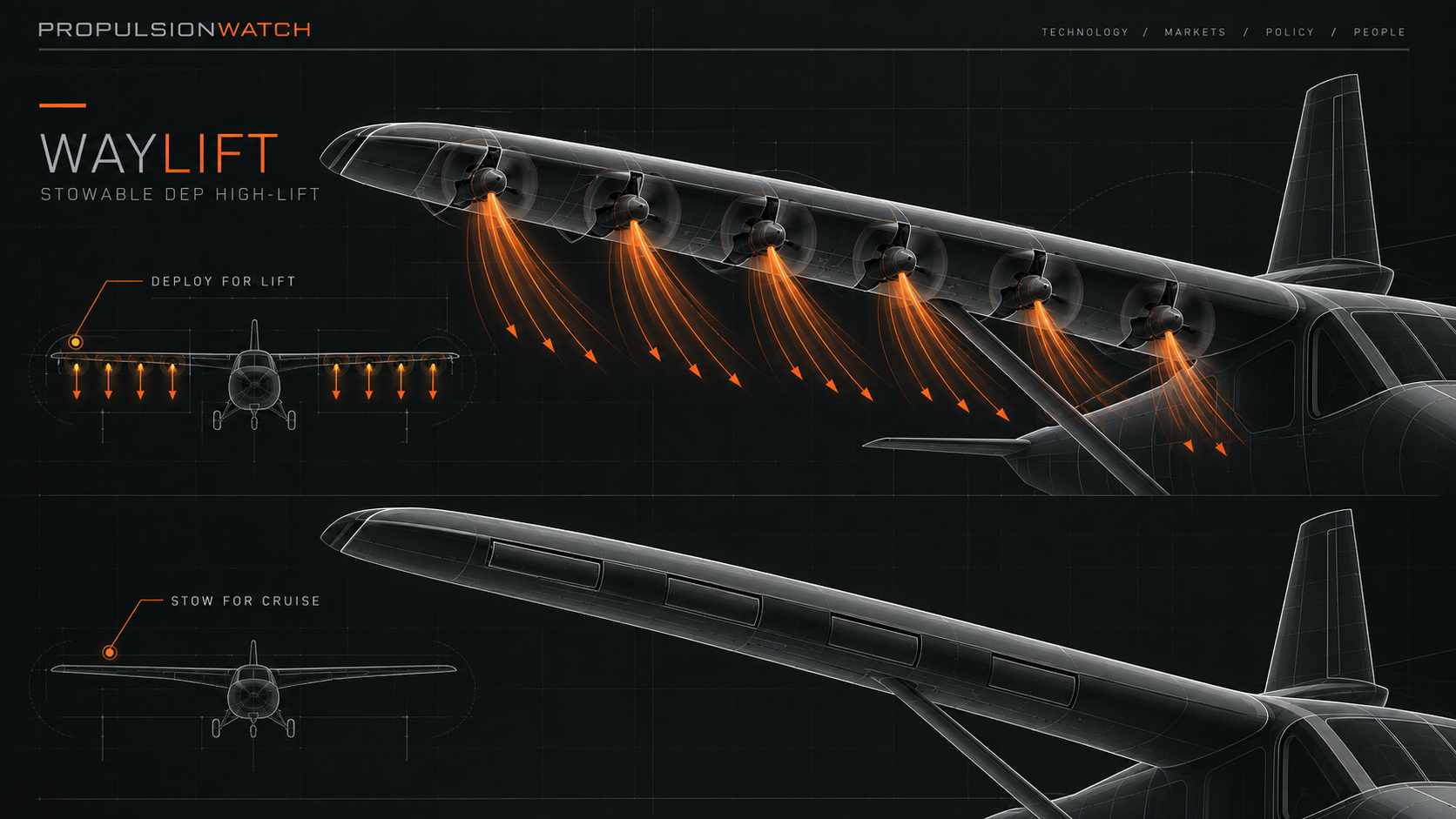
Wayfarer Tests Stowable Distributed Electric High-Lift System
News

Wayfarer Tests Stowable Distributed Electric High-Lift System

September 20, 2026

·
5 min
Joby J208 Completes 3,199-Mile Autonomous U.S. Crossing
News

Joby J208 Completes 3,199-Mile Autonomous U.S. Crossing

September 20, 2026

·
5 min
Bye eFlyer 2 Cleared to Begin Electric Flight Testing
News

Bye eFlyer 2 Cleared to Begin Electric Flight Testing

September 15, 2026

·
5 min
Archer Acquires Lilium's Patent Portfolio in €18 Million Deal
News

Archer Acquires Lilium's Patent Portfolio in €18 Million Deal

August 14, 2026

·
6 min
Archer Becomes First eVTOL Developer to Close FAA Type Certification Phase 3
News

Archer Becomes First eVTOL Developer to Close FAA Type Certification Phase 3

August 14, 2026

·
6 min
EHang Enters Hanoi Sandbox Process for EH216-S Testing in Vietnam
News

EHang Enters Hanoi Sandbox Process for EH216-S Testing in Vietnam

2 min
Amprius Gets Up to $75M U.S. Award to Scale High-Energy Drone Battery Production
News

Amprius Gets Up to $75M U.S. Award to Scale High-Energy Drone Battery Production

2 min