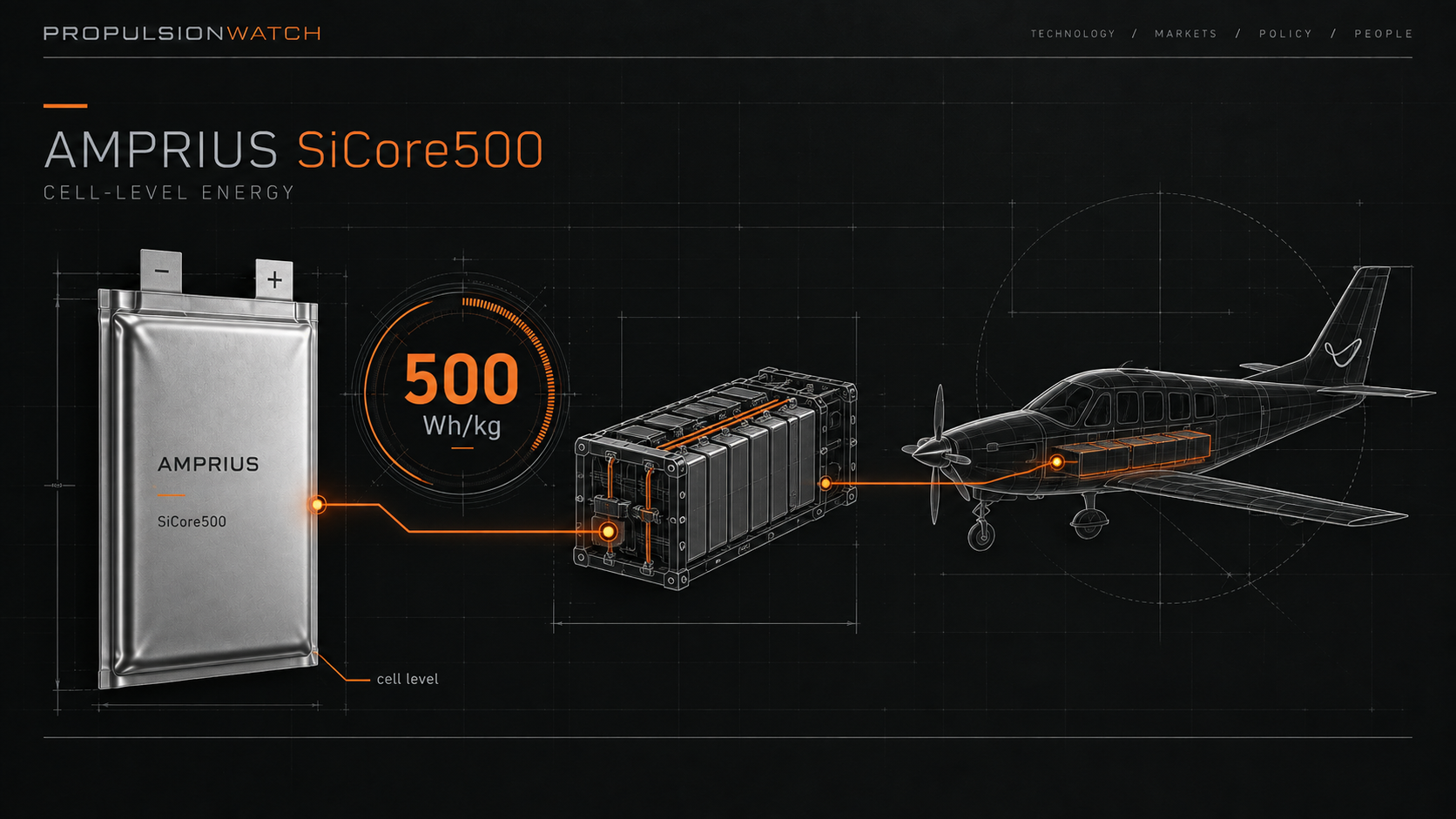
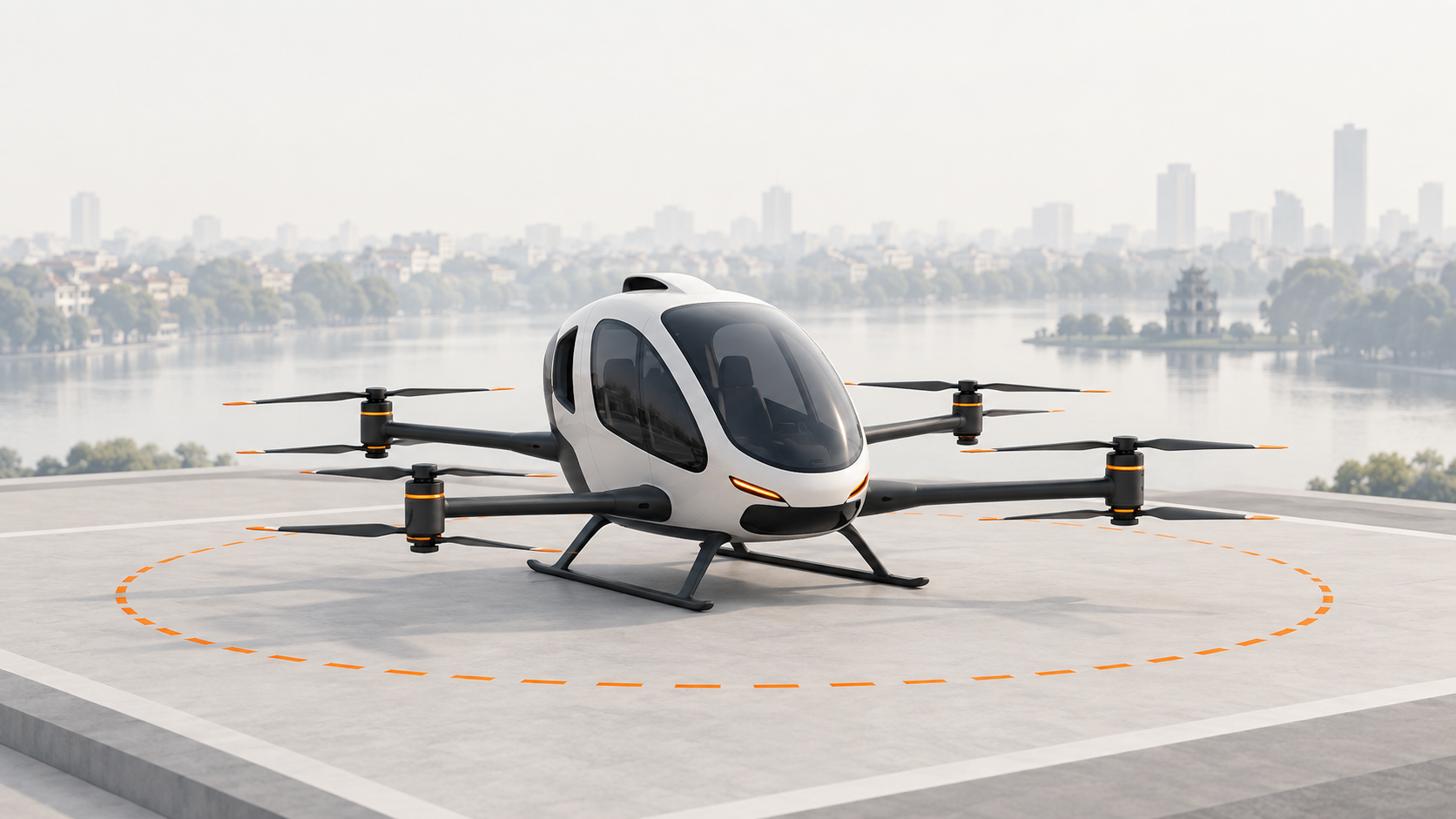
Amprius has secured a U.S. government award worth up to $75 million to convert an existing domestic EV-battery line for high-energy-density silicon-anode cells targeting Group 1–3 UAS, with production capacity targeted at 12 million cells per year.

Up to $75M U.S. government award $74.793M stated agreement value $22.3M base funding 12M cells/year targeted capacity Early 2028 planned completion
The significance is manufacturing scale rather than another cell-performance claim. If the conversion reaches its target, Amprius would add substantial U.S. capacity for high-energy cells aimed at small UAS.
Line conversion progress, qualification lots, production yield, customer qualification, and whether the stated 12 million cells/year capacity is achieved by the planned 2028 completion.
Amprius Technologies has secured a U.S. government award worth up to $75 million to expand domestic production of high-energy-density silicon-anode lithium-ion cells for small unmanned aircraft.
The company announced the award on 28 September, describing it as funding to convert an existing U.S. electric-vehicle battery production line operated by a South Korean manufacturing partner. The target applications are Group 1, 2 and 3 unmanned aerial systems.
Amprius describes the award as a grant in its announcement. The SEC-filed agreement identifies a different legal instrument. Amprius entered an Other Transaction Agreement with the U.S. government for Project acCELLerate under 10 U.S.C. §4022. The agreement lists a total value of $74.793 million, with $22.3 million funded at the base award and subsequent payments tied to accepted milestones. Amprius is not required to provide a cost share.
The technical story is less about another laboratory energy-density claim and more about manufacturing capacity.
Amprius says the converted line is expected to reach capacity for 12 million cells per year, with completion planned for early 2028. The company estimates the wider conversion project at roughly $100 million when in-kind investment from Amprius and its manufacturing partner is included.
That matters because high-energy cells only become useful at fleet scale when they can be produced consistently, qualified repeatedly and sourced in volumes that match aircraft production.
For small UAS, battery mass directly constrains payload, endurance and mission radius. Silicon-anode cells can increase stored energy for a given pack mass, but production yield, consistency, swelling behaviour, cycle life and qualification remain as important as headline specific energy.
The funding supports domestic manufacturing capability; it does not by itself demonstrate the final cell’s aircraft-level performance, qualification status or production yield.
The agreement also should not be read as a conventional procurement contract. The SEC-filed project document explicitly identifies the instrument as an Other Transaction agreement.
The next evidence to watch is therefore operational: line conversion, qualification lots, production yield, customer qualification and whether the targeted 2028 capacity is achieved.