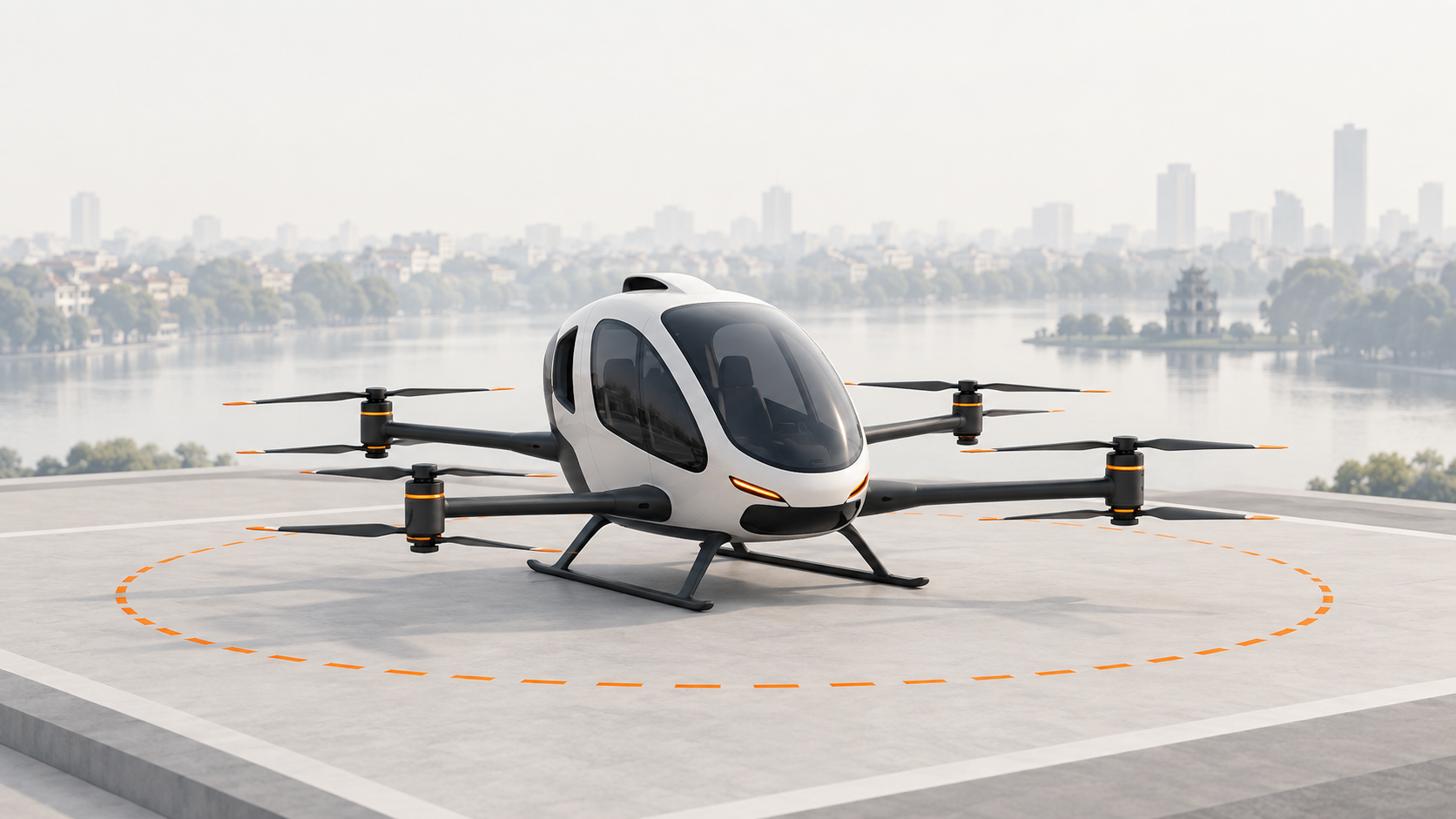
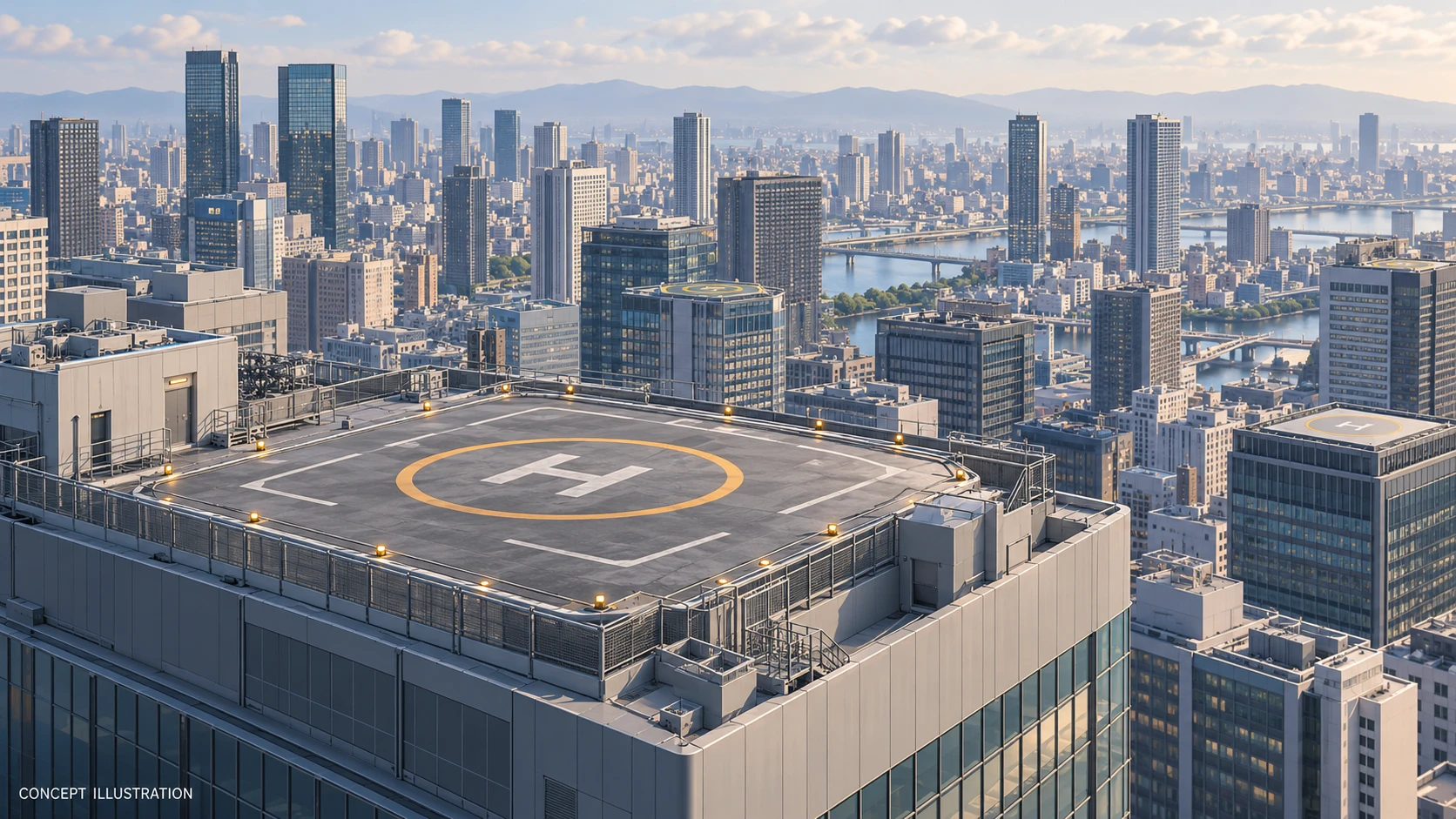
SkyDrive and Osaka partners are studying whether 146 existing rooftop emergency landing sites can serve as alternate eVTOL vertiports, with work covering airspace, wind, noise, structural loading, charging and regulatory rules.
146 — existing rooftop emergency landing sites in Osaka City 2028 — SkyDrive’s stated target for commercial eVTOL service 8 — study areas spanning safety, infrastructure and regulation
If existing emergency rooftops can be adapted safely, Osaka could expand its future eVTOL landing network without building every vertiport from scratch.
Site-selection results, structural and wind findings, regulator requirements and whether any rooftops progress from study status into approved operational infrastructure.
SkyDrive has launched a feasibility study with Osaka authorities and infrastructure partners to assess whether existing rooftop emergency landing sites across Osaka City could be repurposed as alternate vertiports for future eVTOL operations.
The project is part of Japan’s Cabinet Office Super City initiative and brings together Osaka Prefecture, Osaka City, Osaka Metro, SkyDrive, Kansai Electric Power, Chodai and the Airport Environment Improvement Foundation.
The important distinction is that this is not an operating approval. The work is intended to establish whether the sites can meet technical and regulatory requirements before any commercial use is considered.
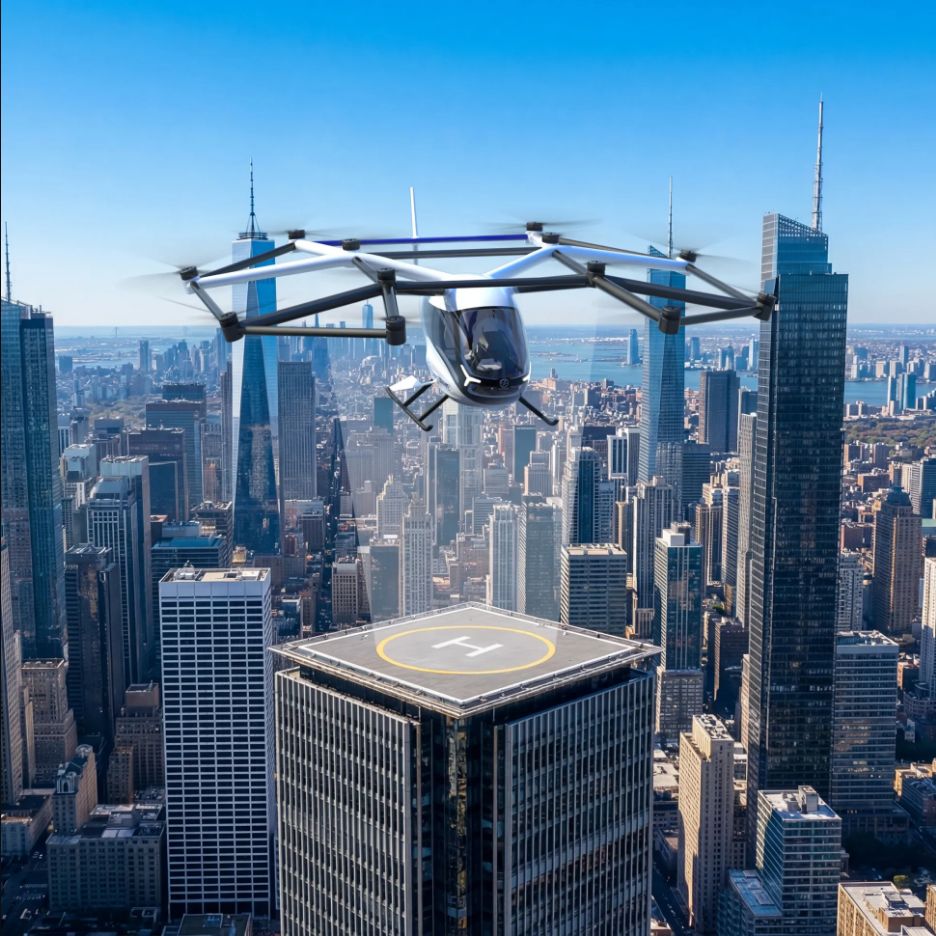
SkyDrive says Osaka City has 146 rooftop emergency landing sites, mainly on high-rise buildings. They were built for disaster response and lifesaving operations, not routine passenger transport.
That existing network could reduce one of the biggest infrastructure constraints for urban eVTOL operations: finding new land for vertiports in dense city centers.
The study will examine whether those rooftops can function as alternate landing sites when an aircraft cannot reach its intended destination, rather than assuming they can immediately become primary commercial terminals.
The program covers:
SkyDrive will focus on Civil Aeronautics Act compliance and operating requirements, while other partners will evaluate electrical infrastructure, obstacle clearances and noise impacts.
The sites are currently restricted to emergency use. Converting them into eVTOL landing facilities would require regulatory clearances, operating rules and coordination with authorities including the Osaka Municipal Fire Department.
The Cabinet Office’s wider Super City program is designed to combine advanced-service testing with regulatory and institutional reform, which is why the Osaka study sits within that framework.
The next meaningful evidence will be:
Until those steps are complete, the correct classification is infrastructure feasibility study, not operational deployment.