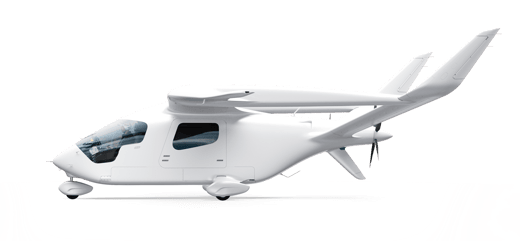
All-electric conventional-takeoff-and-landing airplane using one H500A electric pusher motor and a five-blade fixed-pitch propeller; no vertical-lift propulsion system.
Propulsion Unit Count
1
Redundancy Approach
BETA describes the H500A motor as dual-redundant and its battery packs as incorporating redundant protections against thermal runaway, communication faults and non-uniform discharge. The CX300 emergency guide identifies five high-voltage battery packs plus dual DC/DC and engine channels; full aircraft-level failure architecture is not fully public.
Range / Speed
Manufacturer-published: 336 nm maximum demonstrated range; 153 kt maximum speed; 5-passenger configuration; 200 ft³ cargo volume; optimized charge time 35 min.
Seat Count
5
Last Updated
September 18, 2026
CX300 is BETA's all-electric conventional-takeoff aircraft, not an eVTOL. BETA reported in August 2026 that FAA acceptance of the aircraft's complete set of compliance requirements closed the Requirements Definition phase. The aircraft has also flown pre-certification operational demonstrations, including eIPP medical-logistics flights, but no FAA Type Certificate has been issued.
Advance from accepted requirements into the remaining Part 23 compliance-planning, implementation, testing and FAA verification work, alongside continued H500A Part 33 certification activity.
The ALIA CX300 is BETA Technologies’ all-electric conventional-takeoff-and-landing aircraft. It shares major enabling technologies with the A250 VTOL program but does not use vertical-lift motors in the CX300 configuration. The aircraft is being certified as a Part 23 airplane.
In its August 2026 Q2 update, BETA said the FAA had accepted the CX300’s complete set of compliance requirements, closing the Requirements Definition phase. That is a significant certification-program milestone but not Type Certificate issuance.
The CX300 uses one H500A electric pusher motor driving a five-blade fixed-pitch propeller. BETA’s current aircraft page lists a 50 ft wingspan, five-passenger capacity, 200 ft³ cargo volume, 153 kt maximum speed, 336 nm maximum demonstrated range and a 35-minute optimized charge time.
BETA’s filings describe 225 kWh of onboard energy in the certification-intent CTOL configuration. The company describes the H500A as dual-redundant and its battery packs as incorporating redundant protections against thermal-runaway events, communications faults and non-uniform discharge. The CX300 emergency-response guide identifies five high-voltage battery packs and dual engine/DC-DC channels; PropulsionWatch does not infer a complete certification-level failure architecture beyond those disclosed elements.
BETA has accumulated extensive piloted CTOL flight experience while progressing certification of the CX300 and its common propulsion platform. In Q2 2026 the company reported FAA acceptance of the CX300’s complete set of compliance requirements, closing the Requirements Definition phase. The same update said formal FAA testing of the H500A electric motor was underway after agreement on its continued-rotation compliance approach.
During 2026 BETA also operated its conventional-takeoff ALIA aircraft under the U.S. eVTOL Integration Pilot Program to transport manufactured organs with United Therapeutics. These flights demonstrate operational integration and aircraft utility; they do not replace Part 23 Type Certification.
CX300 is intended for medical, cargo/logistics and regional passenger missions using existing airport infrastructure. BETA’s current aircraft material lists five passengers or 200 ft³ of cargo and IFR-capable single-pilot operation.
Following UK demonstration flying, Loganair signed a July 2026 term sheet for five CX300 aircraft with options for five more. The announcement described an expected 2029 service entry for the Loganair fleet. That is operator/company planning and remains dependent on certification, validation and operating approvals.
FAA Part 23 Type Certification remains outstanding. The next regulatory work includes compliance planning, implementation, inspection, testing and analysis against the accepted requirements, followed by FAA verification. The H500A motor’s Part 33 certification program is progressing in parallel and is an important common-platform dependency.
International customer deployment will also require validation and operator approvals in the relevant jurisdictions. Demonstration and eIPP flights provide operational evidence but do not establish unrestricted commercial certification.
Company / SEC-filed Q2 update — 12 Aug 2026: BETA reports FAA acceptance of the CX300’s complete compliance requirements, closure of Requirements Definition, formal H500A FAA testing, eIPP CTOL operations and the Loganair commercial term sheet. Source.
Manufacturer aircraft specification page: BETA publishes the current ALIA CTOL configuration, including one H500A motor, five-passenger capacity, 153 kt maximum speed and 336 nm maximum demonstrated range. Source.
Company annual filing — 9 Mar 2026: BETA describes H500A dual redundancy, battery safety protections and 225 kWh of onboard energy in the certification-intent CTOL configuration. Source.
Manufacturer emergency-response guide — Sep 2025: CX300 production-prototype guide identifies five high-voltage battery packs and dual engine/DC-DC channels. Source.
Evidence classification: eIPP and demonstration flights are operational test activity, not FAA Type Certification; performance figures are manufacturer-published unless explicitly described as demonstrated.
September 18, 2026