Metron’s 5 October results announcement reports over 1,000 simulated flights across 27 data-collection runs. The September campaign examined how eVTOL traffic could interact with controllers and airspace services.
1,000+ — simulated flights, company-reported 27 — data-collection runs, company-reported 5 October 2026 — results announcement
Traffic coordination can constrain an eVTOL network before aircraft capacity does. Simulation allows operators to examine congestion and workload before attempting dense real-world operations.
Published scenario assumptions, controller workload, delay and conflict metrics, and subsequent validation using representative aircraft and operating conditions.
Metron Aviation reported on 5 October 2026 that it and partners AAMTEX and Unmanned Experts completed participation in NASA’s Advanced Air Mobility Pathfinders TCL-1 simulation campaign. The company reports more than 1,000 simulated flights across 27 data-collection runs.
The campaign concluded in September, with final data collection in August and September. The fresh development is the results announcement. These counts describe simulations rather than aircraft flight tests.
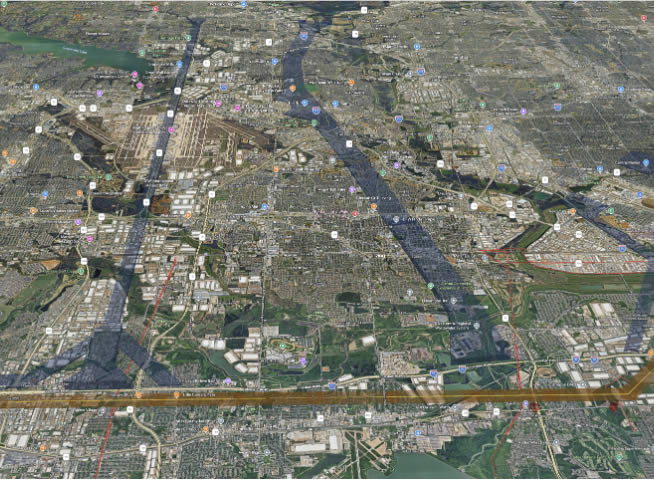
Metron says the work covered demand-capacity balancing, flight-intent management, conformance monitoring and fleet management, including pilot-controller interactions around Dallas Love Field. The release provides activity counts but does not publish a quantified safety or capacity improvement.
NASA’s earlier explanation of urban-airspace research describes strategic deconfliction as coordinating flight plans before departure. Its situational viewer and demand-capacity monitor help researchers examine traffic and adjust plans. That background supports the research context; it does not independently verify Metron’s new numerical results.
PropulsionWatch analysis: simulation volume is useful only alongside the conditions tested. An assessment of network capacity needs traffic density, separation assumptions, weather, vertiport turnaround constraints and controller workload. Average throughput can conceal unstable queues when arrival demand briefly exceeds landing capacity.
The next valuable evidence would be scenario-level results showing delays, conflicts and workload, including disrupted operations. Validation with representative aircraft would then test whether simulated behaviour captures actual navigation performance and operational constraints. The announcement establishes research participation and reported activity, without establishing a certified airspace service or passenger operation.
Image: map-based visual supplied by Metron with its simulation announcement, showing airport and route overlays. It provides simulation context rather than photographic evidence of an aircraft flight. Credit: Metron Aviation.