Hong Kong officials are developing a joint regulatory-testing framework with Guangdong through Sandbox Connect, according to a 5 October report. The work covers traffic management and more complex air-mobility trials; cross-border commercial passenger approvals remain unestablished in the reviewed evidence.
5 October 2026 — new reporting on Sandbox Connect 15 — UTM pilot projects selected as of the June government reply 4 — initial unconventional-aircraft pilot projects in that June reply
Joint testing could help air-mobility developers produce evidence usable across jurisdictions, provided authorities agree on standards and acceptance responsibilities.
Published trial protocols, named routes, aircraft-specific permissions and formal arrangements for recognising results across the boundary.
Hong Kong and Guangdong are developing a joint regulatory-testing framework for low-altitude aviation through Sandbox Connect, according to official comments reported by China Daily on 5 October 2026.
The report identifies Nansha in Guangzhou as a gateway for collaboration. Officials describe Guangdong’s role in technical testing and Hong Kong’s role in commercialisation, standards and certification. Sandbox Connect sits within the broader Sandbox X programme.
The current news is the reported cross-jurisdictional testing work. The officials’ longer-term objective of mutual recognition and faster approvals remains an objective; the reviewed sources do not establish permission for a cross-border commercial eVTOL passenger service.
In its 24 June Legislative Council reply, the Hong Kong government said it had selected 15 unmanned-aircraft traffic-management pilot projects and an initial four unconventional-aircraft projects for phased implementation. Those are dated background counts, not new October selections.
The same reply describes a Civil Aviation Department study of a smart low-altitude traffic-management system. Cross-boundary work includes route networks, customs arrangements and infrastructure requirements. The government also says unconventional-aircraft trials operate under specified conditions, while dedicated legislation is being studied.
PropulsionWatch analysis: a joint test framework could reduce duplication between jurisdictions only if the resulting evidence is accepted by both authorities. Compatible traffic-management interfaces and clear approval responsibilities will matter as much as demonstrating an aircraft.
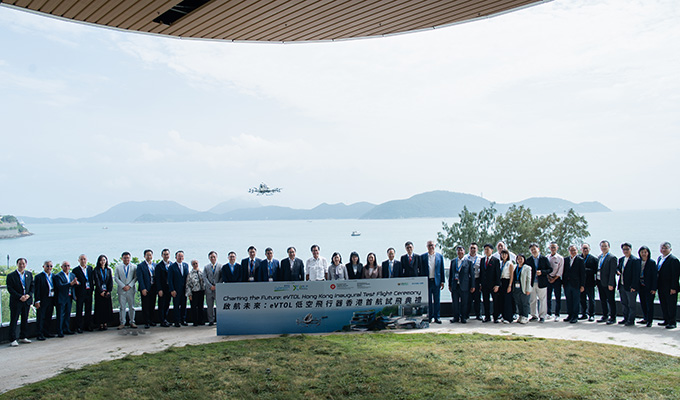
EHang reported an EH216-S public demonstration at Cyberport on 28 August under Sandbox X. That company-reported flight is earlier context, separate from the October account of Sandbox Connect. It does not establish that a cross-border passenger route is operating.
The next useful evidence is a published joint protocol, named trial routes and permissions defining aircraft, operating conditions and how results will be recognised across the boundary.
Image: EHang’s archival photograph of the EH216-S demonstration at Hong Kong Cyberport, 28 August 2026. It does not depict a new October flight or cross-border service.