An agreement announced on 8 October links ePlane’s e200X development with Noida Airport trial space, charging and operating procedures. Drone trials are intended to precede piloted aircraft work, with regulatory clearances still required.

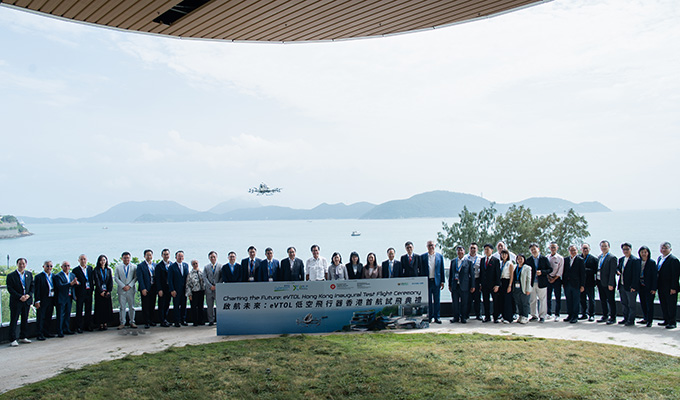
8 October 2026 — agreement publicly announced 5 October 2026 — date shown on the signing photograph’s backdrop
Developing airport interfaces alongside an aircraft can expose infrastructure, charging and traffic-management constraints before passenger services are proposed.
Defined trial scope, allocated sites, electrical requirements, aircraft test results and specific DGCA and security permissions.
The ePlane Company and Noida International Airport announced an agreement on 8 October 2026 to develop trial infrastructure and operating procedures for the e200X electric aircraft. A company press release distributed by Analytics Insight describes the memorandum of understanding; Business Standard corroborates its scope.
The airport’s operator, Yamuna International Airport Private Limited, is to allocate space for proof-of-concept trials, vertiports and charging stations. ePlane is to pursue the necessary civil-aviation and security clearances alongside aircraft development.
The release describes drone trials as a way to validate operating models before progressing to piloted e200X flights. It says the full-scale PT-01 prototype is in ground testing. Airport transfers and air-ambulance services remain proposed applications; the MoU does not establish aircraft certification or passenger-service approval.
The announcement was released on 8 October. Its accompanying photograph has a signing-event backdrop dated 5 October, so the new development is the public disclosure rather than a claim that the signing happened today.
PropulsionWatch analysis: an airport trial should test how electric-aircraft movements interact with established traffic, ground handling and emergency response. Electrical capacity and charger placement need to match the proposed turnaround, while trial procedures should define who controls the landing area and how disrupted arrivals are managed.
Drone trials can help examine coordination and scheduling, but their results require careful interpretation before use with a piloted aircraft carrying passengers. Differences in mass, rotor airflow, energy storage and operating responsibilities affect what transfers between test stages.
The next assessable milestone is a defined trial plan with permissions, infrastructure requirements and success criteria, followed by published results from the relevant aircraft configuration.
Image accompanying the 8 October company release: ePlane and airport representatives at the signing event, with a backdrop dated 5 October 2026. Source: company release distributed by Analytics Insight.