Heart’s Project HYPER pairs a $2.9 million FAA award with an equal company contribution for ground and flight demonstrations of the ES-36’s series-hybrid powertrain.
$2.9M — FAA contribution $5.8M — total project value with Heart’s equal match 24 months — R&D and demonstration scope 2028 — company target for pre-production aircraft first flight
The project addresses the generator, battery and motor interfaces that will determine the ES-36’s hybrid operating envelope.
Integrated ground-test results, the 2028 pre-production flight target, fuel-burn and noise measurements, and certification compliance evidence.
Heart Aerospace announced a $2.9 million FAA CLEEN IV award on 12 October to develop and demonstrate the turbogenerator for its ES-36 regional aircraft. An equal company contribution brings Project HYPER to $5.8 million over 24 months.
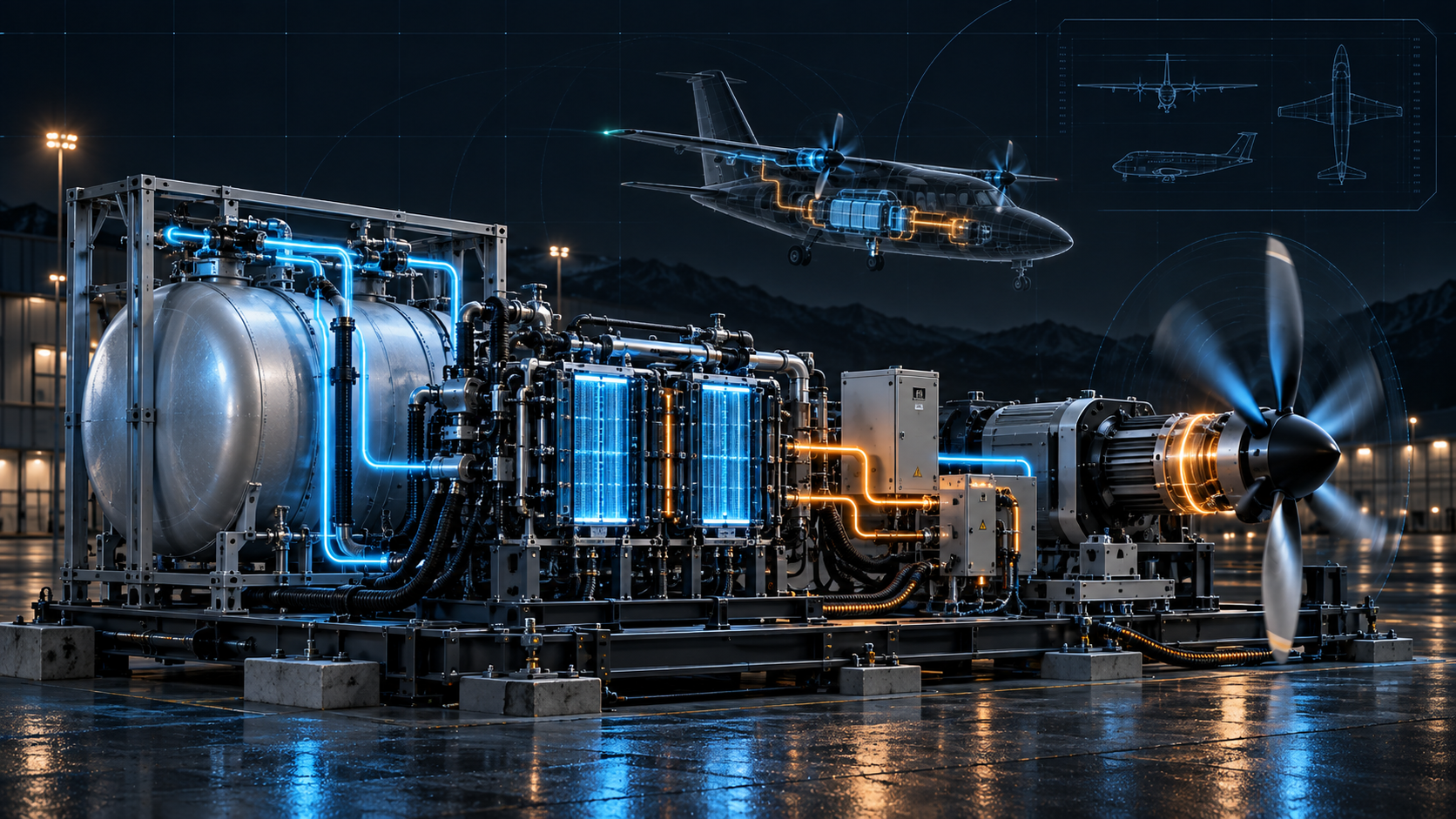
The work targets the electricity-generating part of the series-hybrid powertrain. A turbogenerator supplies electrical power to the propulsion system; the electric motors drive the propellers. Ground testing will examine how generation, battery storage and motor demand interact before aircraft demonstrations.
Heart plans to carry the turbogenerator work onto its pre-production ES-36, whose first flight is targeted for 2028. Its earlier X1 demonstrator was built around the superseded ES-30 configuration. X1 flying therefore supports development learning without proving the final ES-36 installation.
Project HYPER extends FAA support for the company’s THEMIS propulsion-management architecture. Coordinating batteries, generators and motors is central to a series hybrid: the control system must manage changing power demand and the available electrical supply across operating modes.
The research is intended to generate energy-use, fuel-burn, emissions and noise data. A funded demonstration project does not establish an issued aircraft Type Certificate. Heart continues to describe ES-36 readiness and performance as development targets.
The useful next evidence is an integrated ground-test result, followed by flight data from the two-powertrain pre-production configuration and regulator-verifiable compliance progress.
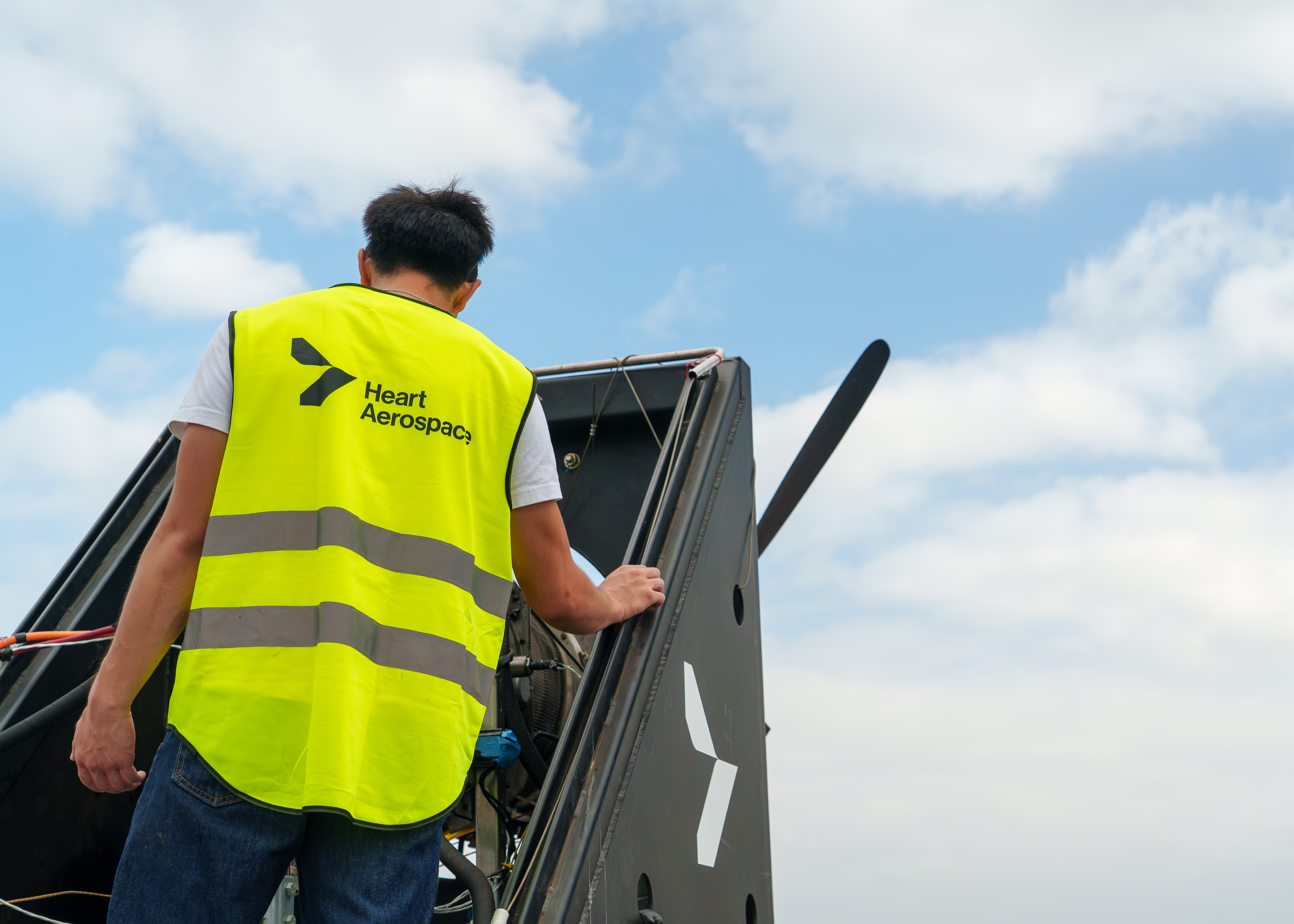
Image: Heart Aerospace testing photograph supplied with the announcement. Credit: Heart Aerospace.