Multicopter, lift + cruise and vectored-thrust aircraft allocate hover and cruise propulsion differently. Compare their disk-loading, wing-lift, installed-mass, transition and failure-analysis trade-offs without treating manufacturer targets as like-for-like results.
Hover power depends strongly on rotor disk loading. In forward flight, a wing can carry the aircraft's weight more efficiently than vertical rotor thrust, but it brings a transition problem and extra structure. An eVTOL's propulsor arrangement determines how those demands are shared and which failure cases the flight-control and certification programmes must address.
The Vertical Flight Society's directory uses five broad categories: vectored thrust, lift + cruise, wingless multicopters, hoverbikes and electric rotorcraft. This comparison focuses on three common passenger-aircraft layouts. The labels are useful shorthand, although hybrid configurations such as Archer's Midnight do not fit a perfectly exclusive taxonomy.
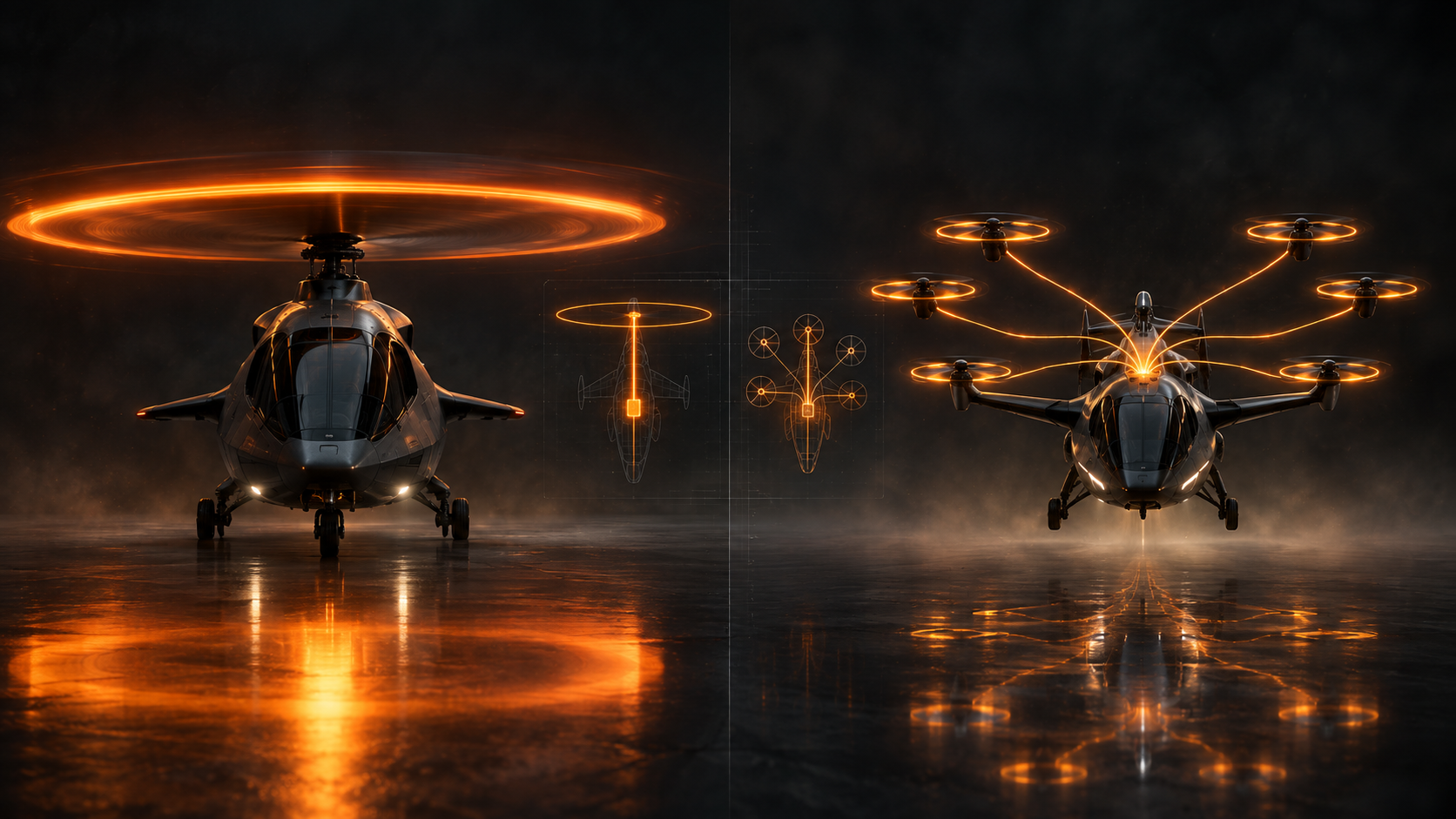
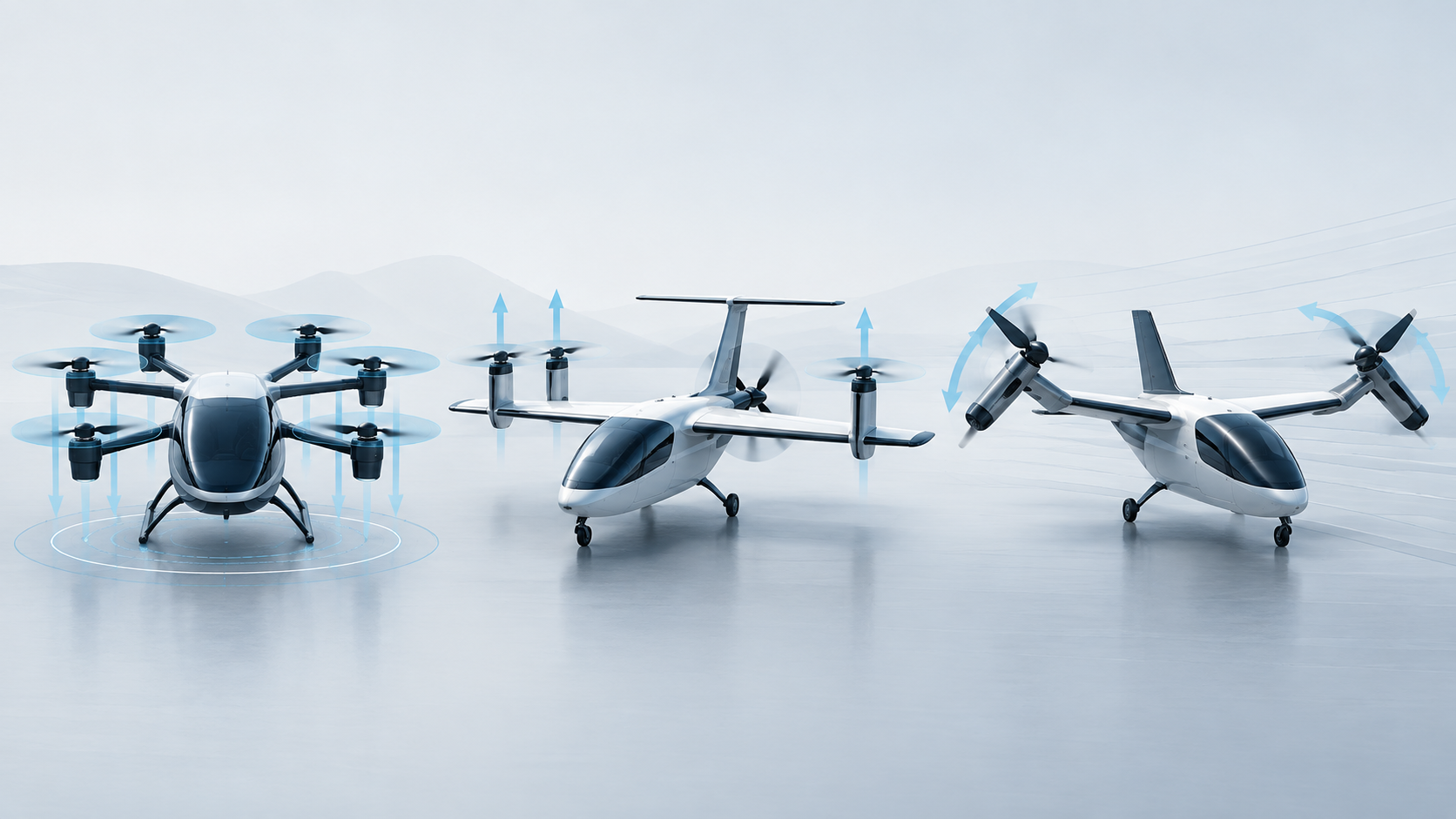
A multicopter has no wing and no dedicated cruise propulsion. Every rotor produces lift, and the aircraft tilts slightly to fly forward. The EHang EH216-S uses 16 motors in coaxial pairs on eight arms. The Volocopter VoloCity has 18 fixed-pitch rotors.
Multicopters avoid tilting nacelles and the handover to wing-borne flight. In an idealized hover, power for a given weight rises with the square root of disk loading (weight divided by total rotor disk area). Rotor count alone does not determine efficiency; rotor diameter, interference, tip speed and installation losses matter. Flight control typically varies thrust across the rotors.
Without a wing, rotor thrust must support the aircraft throughout the mission. EHang publishes a 30 km range for the CAAC-certified EH216-S; Volocopter has published a 35 km VoloCity figure. Those figures describe different aircraft and operating assumptions, not a controlled comparison. The absence of wing-borne cruise generally limits the energy available for longer sectors.
A lift + cruise aircraft adds a wing and separates the two jobs completely. One set of fixed, upward-facing propellers handles hover and transition. A separate propeller, usually a pusher, drives the aircraft in cruise while the wing carries the weight. BETA's ALIA-250 uses four lift propellers and one pusher. Eve's aircraft has eight lift rotors and a rear pusher. EHang's VT35 pairs eight lift propellers with one cruise propeller on a tandem wing.
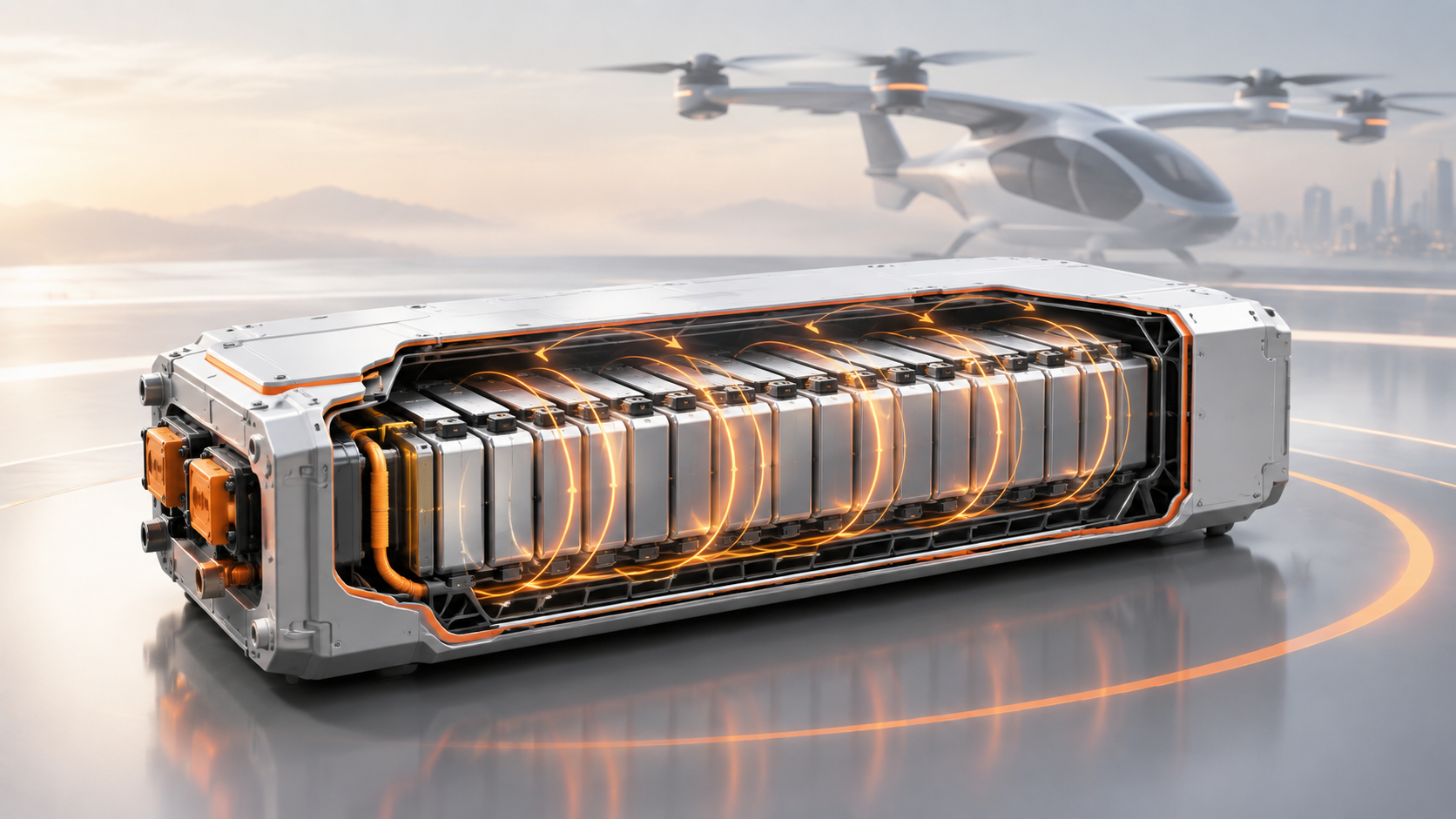
Keeping the propulsors fixed eliminates tilt actuation, while separate lift and cruise units can be sized for their respective flight phases. Once the wing carries the weight, cruise power can fall substantially. The resulting range depends on aircraft mass, drag, battery installation and mission reserves; a common battery capacity alone is not enough for a valid multicopter comparison.
The dedicated lift hardware remains aboard in cruise. Stopping, feathering or otherwise managing those propellers can reduce drag, but the motors, mounts, wiring and structural provisions still carry a mass penalty. Transition requires the control system to unload the lift rotors as wing lift develops.
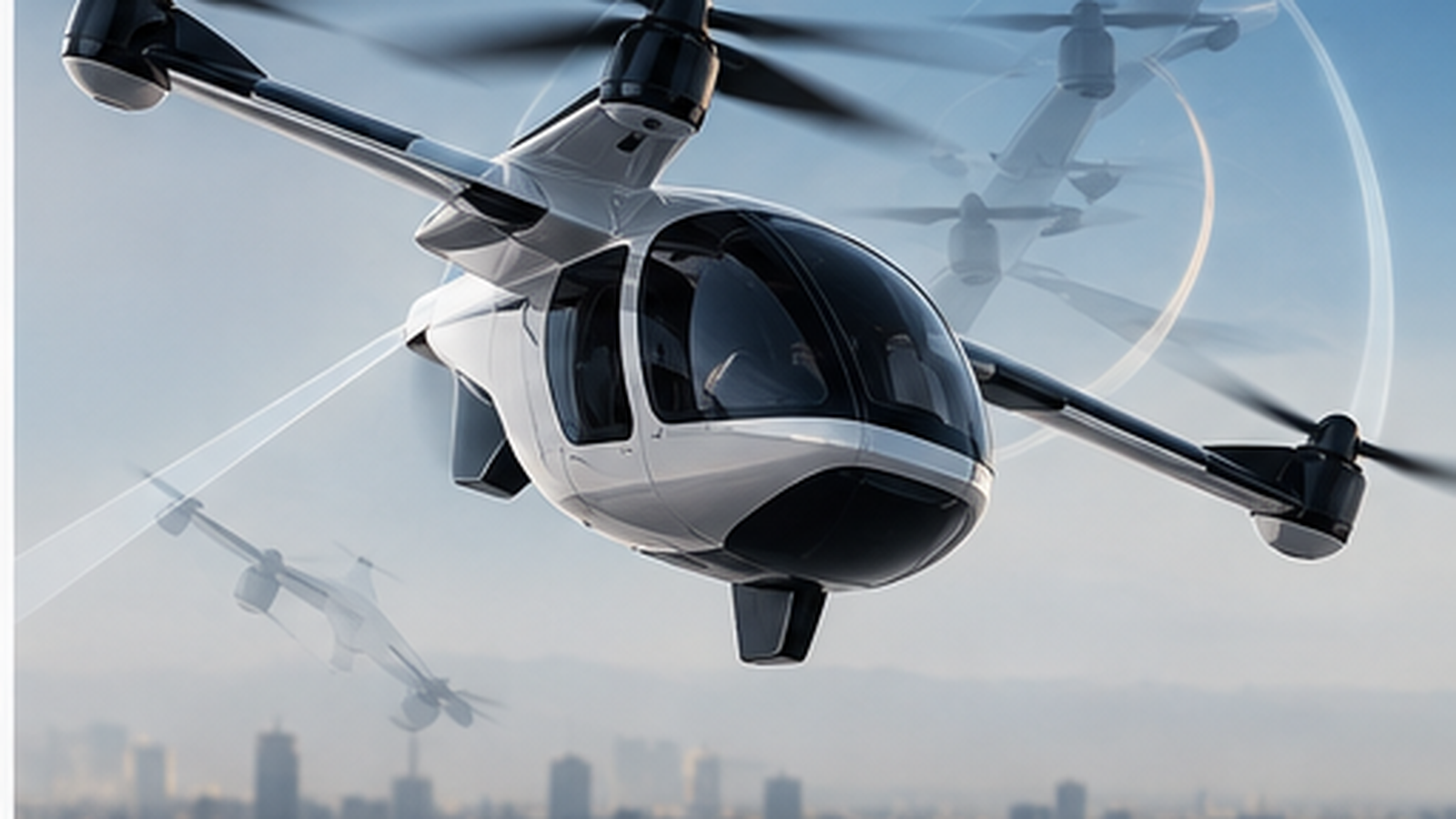
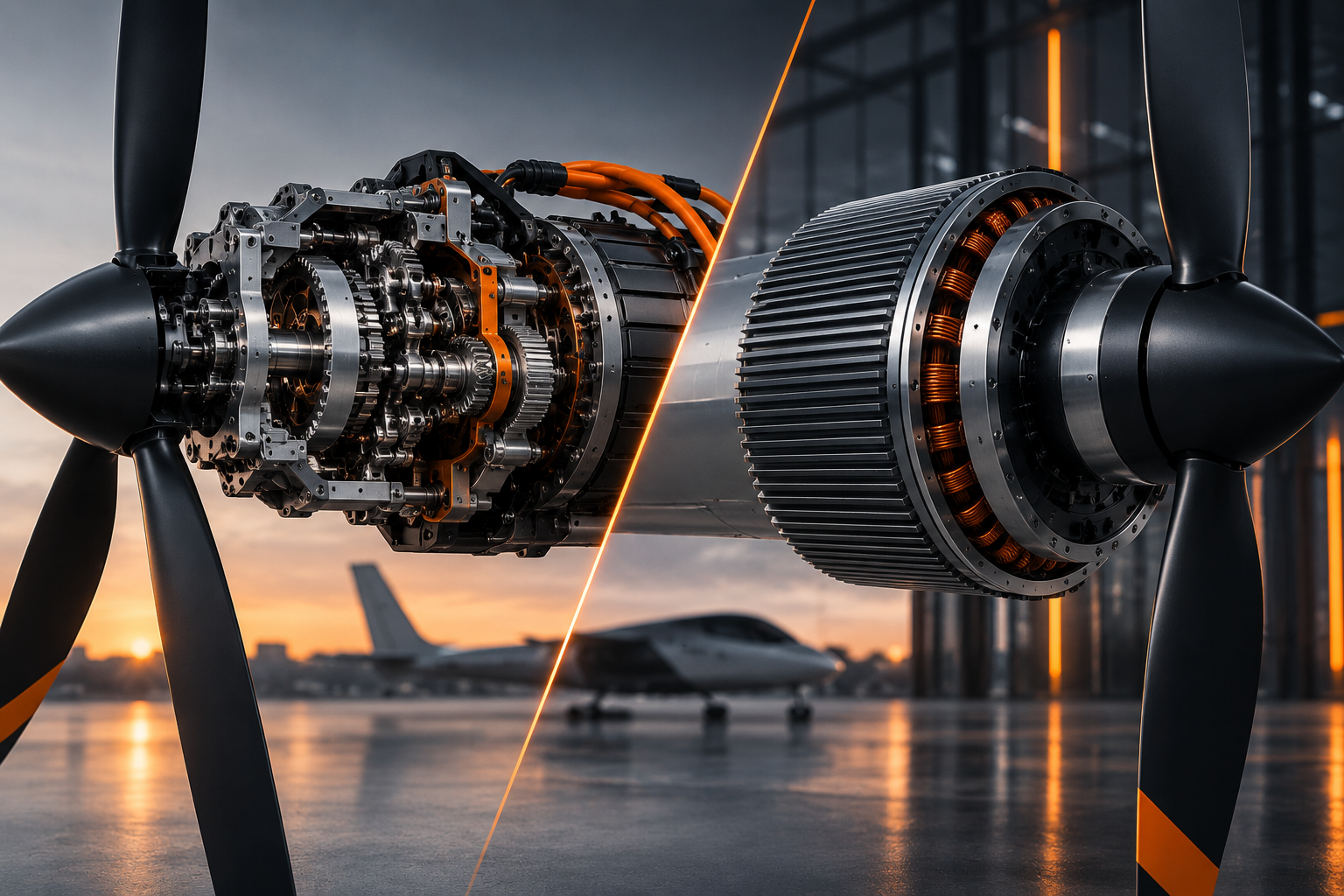
Vectored-thrust aircraft use some or all of the same propellers for hover and cruise, tilting them between the two. Joby's S4 tilts all six of its propellers. Archer's Midnight combines the two ideas: six tilting propellers provide lift and cruise thrust, while six fixed propellers work only in vertical flight.
Using the tilting propulsors in both phases avoids carrying a fully separate lift-propulsion system, although the actuators and structure add mass. Speed and range depend on the full aircraft design, not the architecture label alone. Manufacturer performance figures remain targets until demonstrated under specified mission conditions.
Tilt actuators, their locks or position sensors, and flight controls become part of the failure analysis. Hover-to-cruise transition changes propeller inflow and the distribution of aerodynamic lift and control authority. A blade designed to produce efficient hover thrust may not have the same optimum geometry in cruise; pitch control, rotor sizing and mixed propulsor arrangements help manage that compromise.
A useful comparison holds payload, mission reserves and operating conditions constant. A wing can reduce cruise energy, but adds mass and a transition regime. Dedicated lift propulsors leave hardware unused in cruise; vectored propulsors need tilt hardware and a broader control envelope. None of those choices establishes aircraft-level performance without propulsion, aerodynamic and battery data for the specific design.
Redundancy must be assessed as a complete power-and-control architecture. A high rotor count can provide more thrust-allocation options, but continued flight after a motor or inverter failure depends on remaining control authority, common-cause failures, flight phase and the approved failure case. Joby's dual-wound motor architecture is one example of internal electrical redundancy. PropulsionWatch's explainers on distributed electric propulsion and how eVTOL power is shared across motors go further into that.
China's CAAC issued a type certificate for the pilotless EH216-S in October 2023. Joby and Archer are pursuing FAA approval for piloted designs that use tilting propellers; other programmes use lift + cruise. These are different aircraft under different certification bases and operating concepts. The EH216-S approval does not establish that multicopters certify faster, nor can an applicant's company-defined progress stage be used to rank architectures.
For a specific route, the decisive evidence is mission energy including reserves, payload at the relevant temperature and altitude, failure performance in transition and the installed-system mass. The aircraft comparison tool and 3D aircraft explorer provide the aircraft-level context for those questions.
Evidence note: The architecture categories follow the Vertical Flight Society's descriptive taxonomy. Aircraft configurations and quoted performance come from manufacturer disclosures and linked PropulsionWatch dossiers; performance figures are not presented as comparable certified results. EHang's EH216-S type certificate is a CAAC approval for that specific pilotless design.
Sources: Vertical Flight Society / eVTOL.news, VTOL configuration taxonomy; manufacturer specifications as recorded in PropulsionWatch aircraft dossiers for Joby S4, Archer Midnight, BETA ALIA-250, Eve and EHang EH216-S.