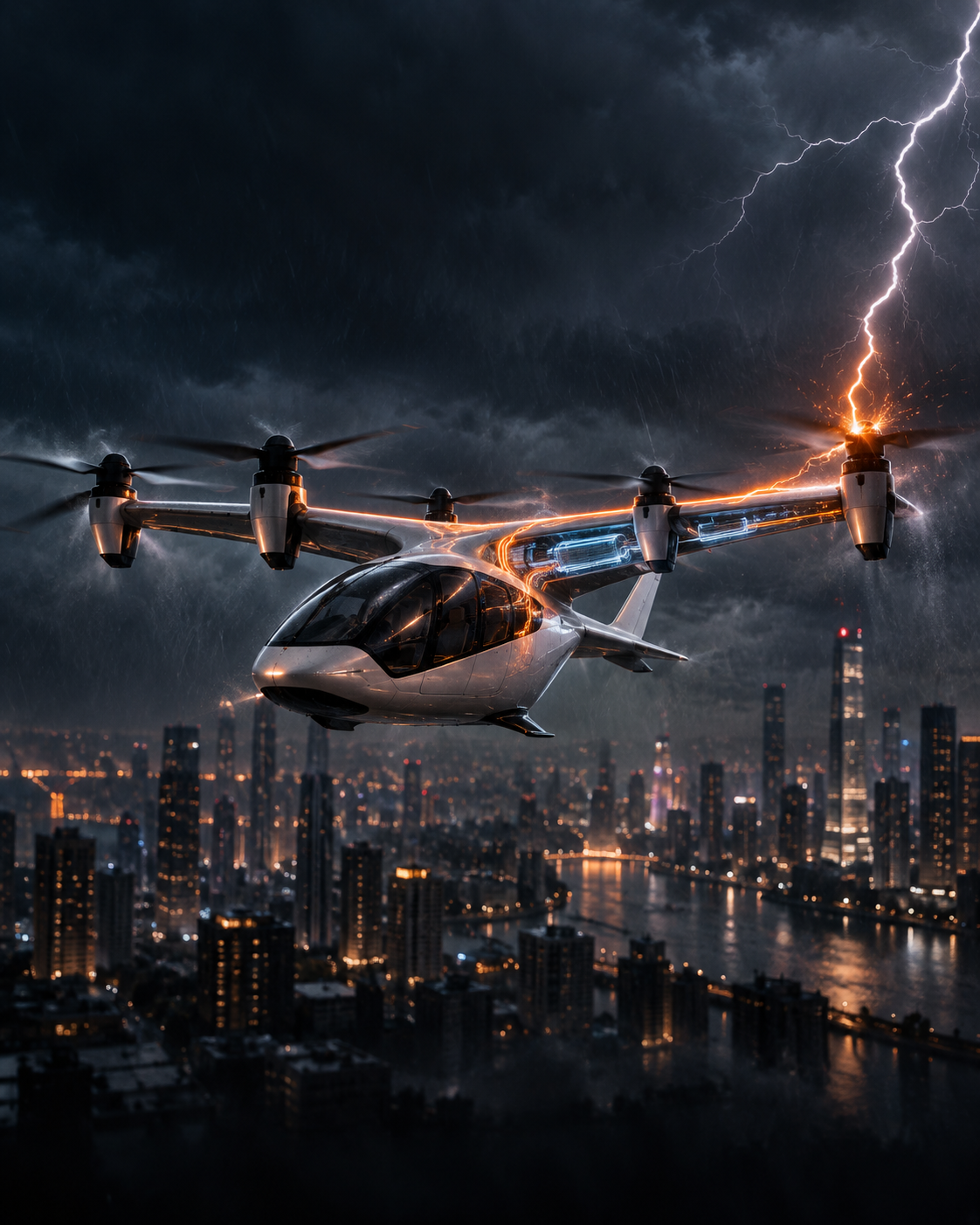
Electric motors and inverters can be highly efficient and still reject kilowatts of heat at eVTOL power levels. Hover, cruise, charging and turnaround expose the aircraft to different heat loads and cooling conditions, so thermal management has to be optimized over the mission rather than around a single peak temperature.
500 kW × 2% loss = 10 kW heat — illustrative at 98% efficiency 500 kW × 1% loss = 5 kW heat — illustrative at 99% efficiency >20% — thermal-management share of mission energy in one 2026 integrated eVTOL simulation; study-specific
High electrical efficiency does not eliminate heat rejection. Mission phase, airspeed, ambient conditions and turnaround determine whether motors, inverters and batteries can repeat the required duty cycle without derating or carrying an excessive cooling-system penalty.
Repeated-sector thermal data, hot-day turnaround performance, charge acceptance after flight, auxiliary cooling power, and disclosed derating behavior after pump, fan or cooling-path failures.
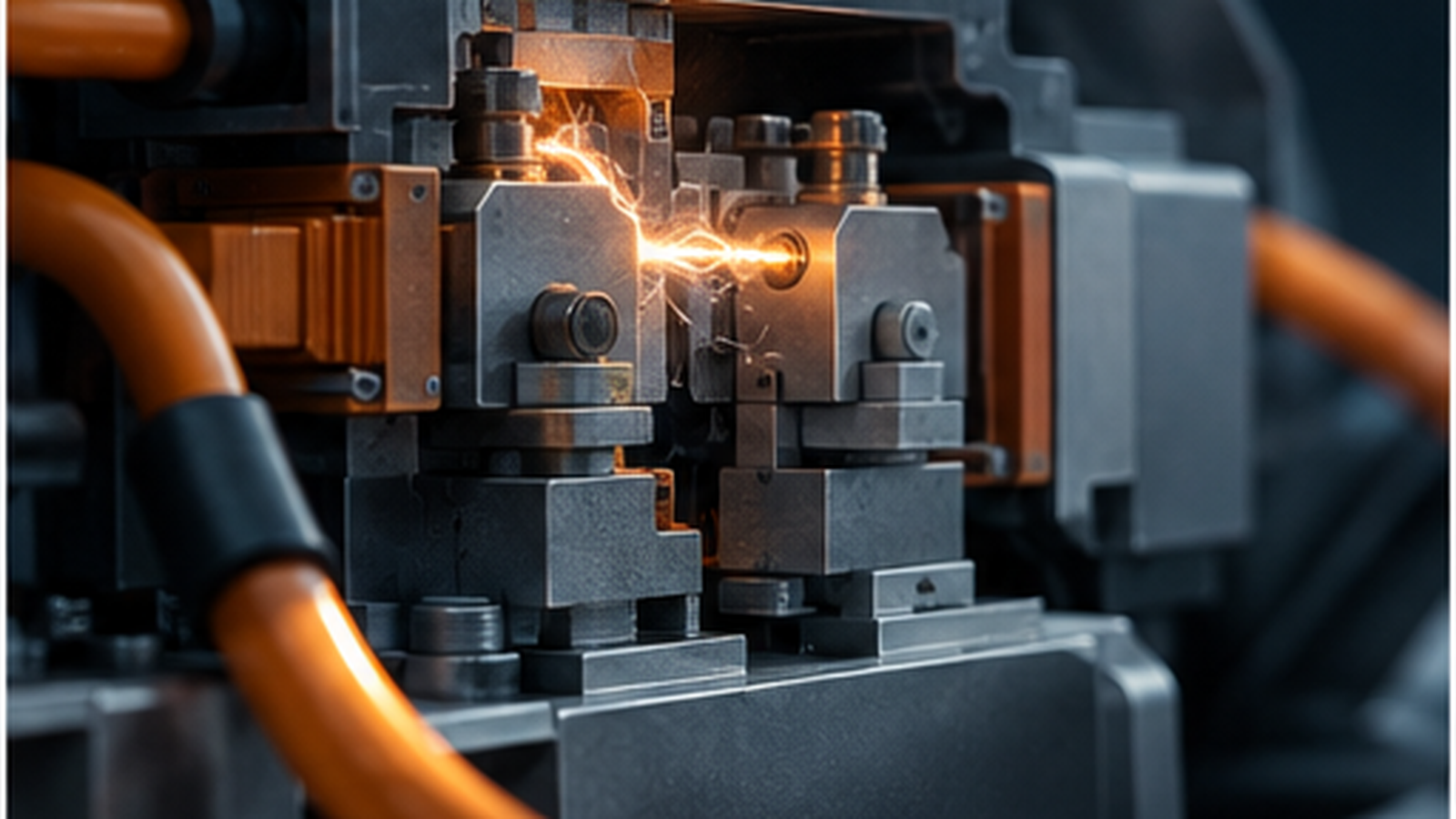
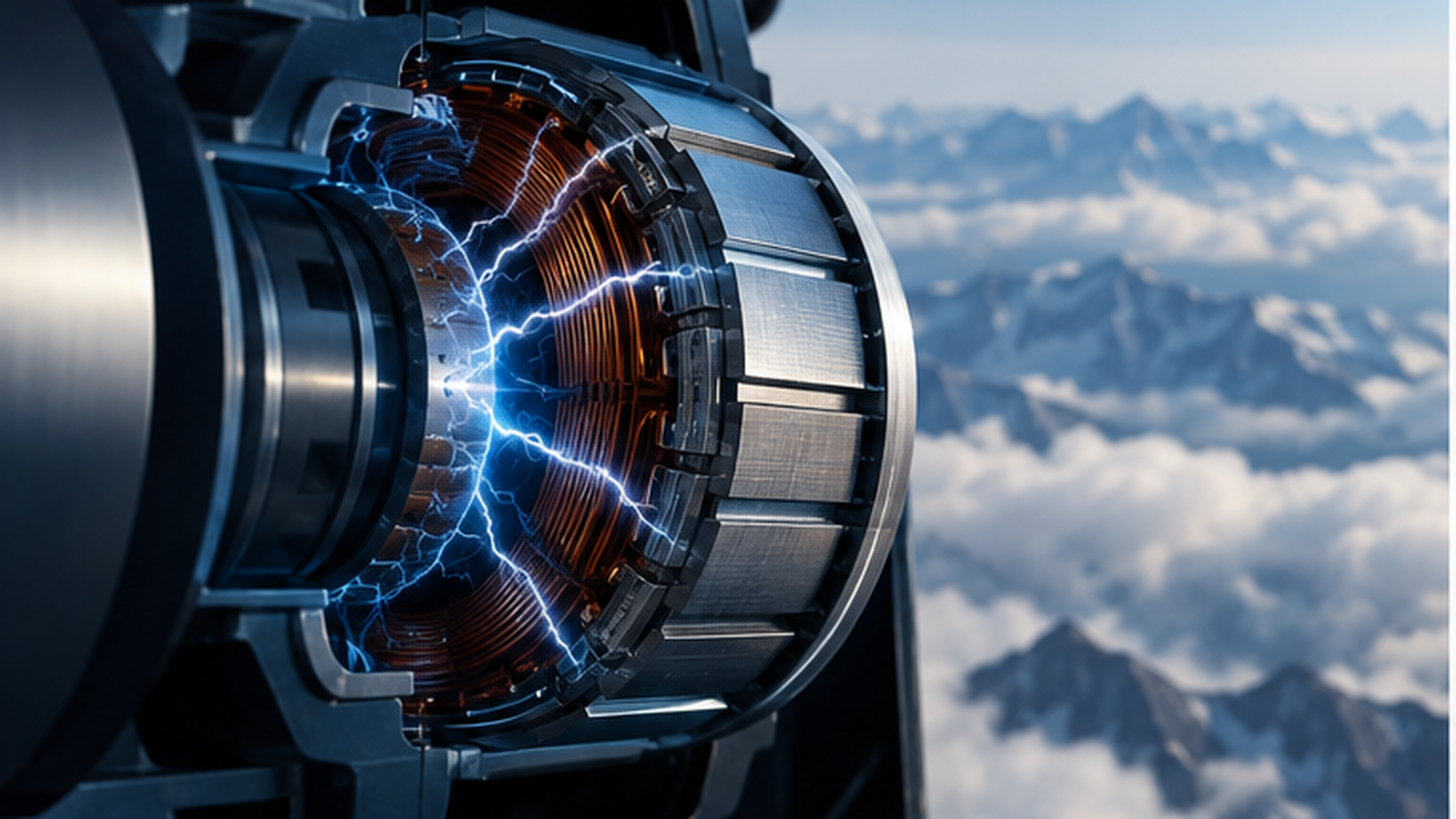
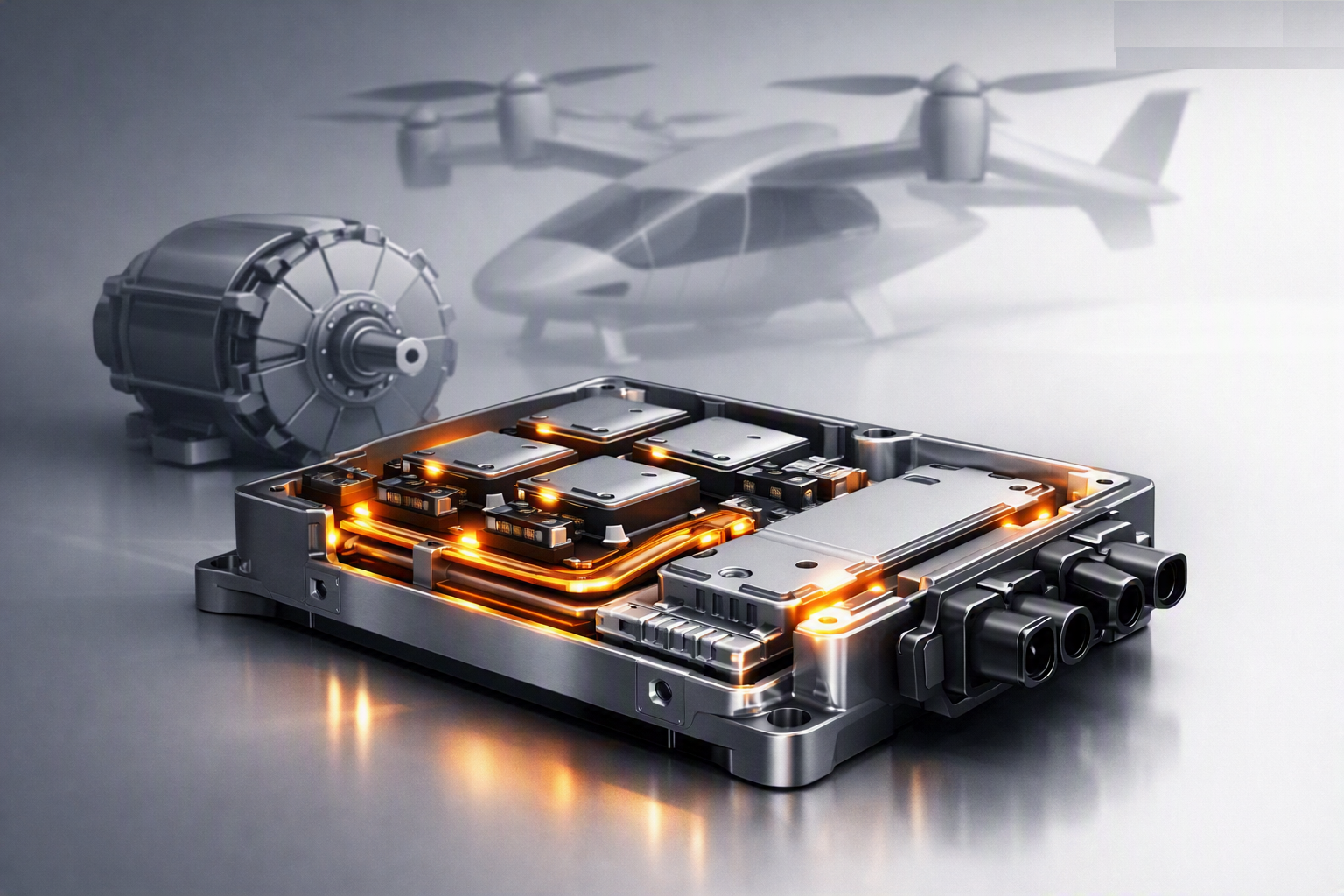
A 500 kW electrical device operating at 98% efficiency rejects about 10 kW of heat. At 99% efficiency the loss is still about 5 kW. Those are illustrative numbers, not ratings for a particular eVTOL, but they show why small efficiency differences matter when propulsion power is measured in hundreds of kilowatts.
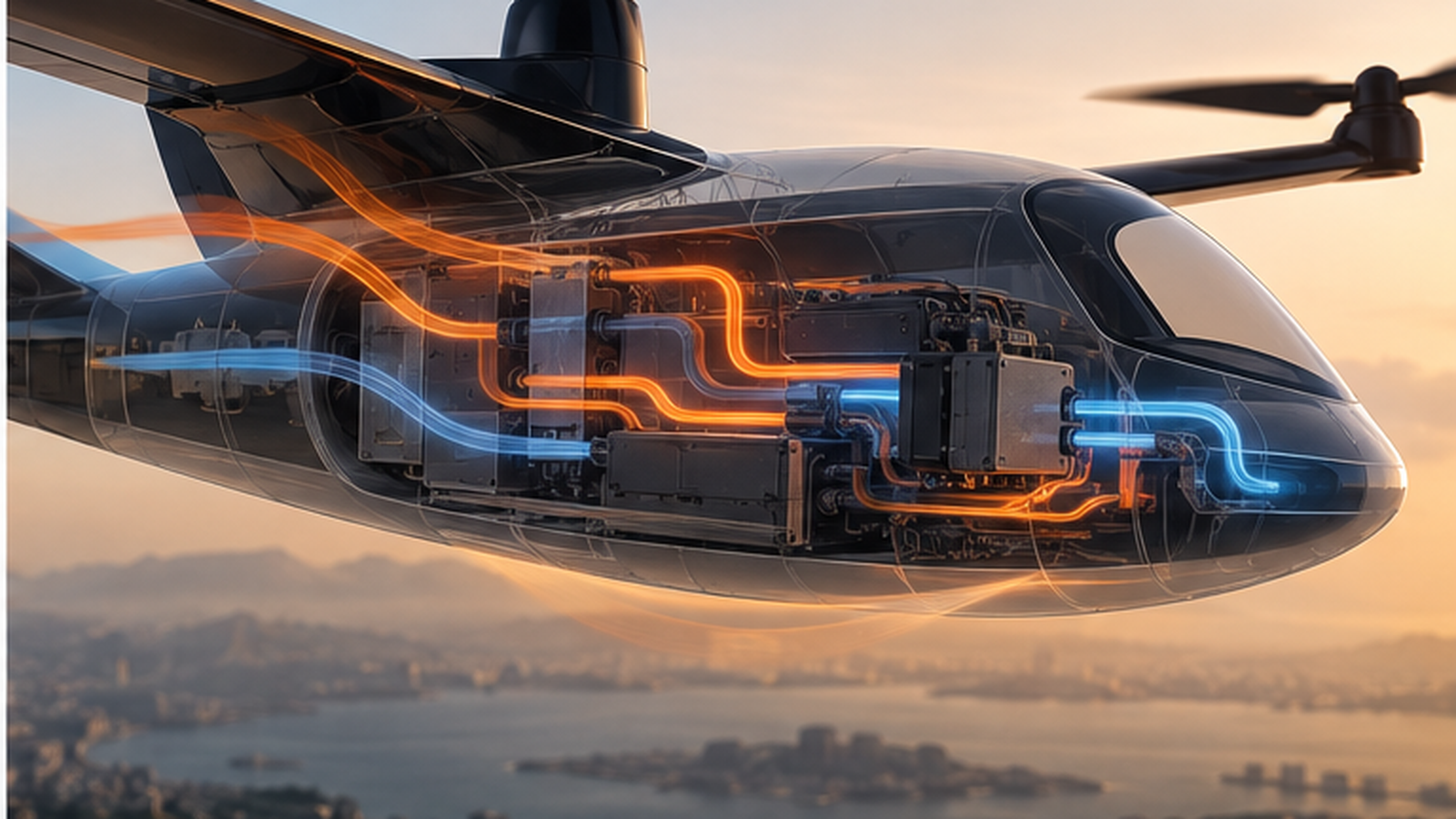
The thermal problem grows because an aircraft carries several heat sources at once: batteries, inverters, motors, DC distribution hardware and sometimes cabin-conditioning loads. Their peaks do not necessarily occur at the same point in the mission, and the aircraft's ability to reject heat also changes with airspeed, ambient temperature and ground time. A cooling system sized around one steady operating point can therefore be misleading.
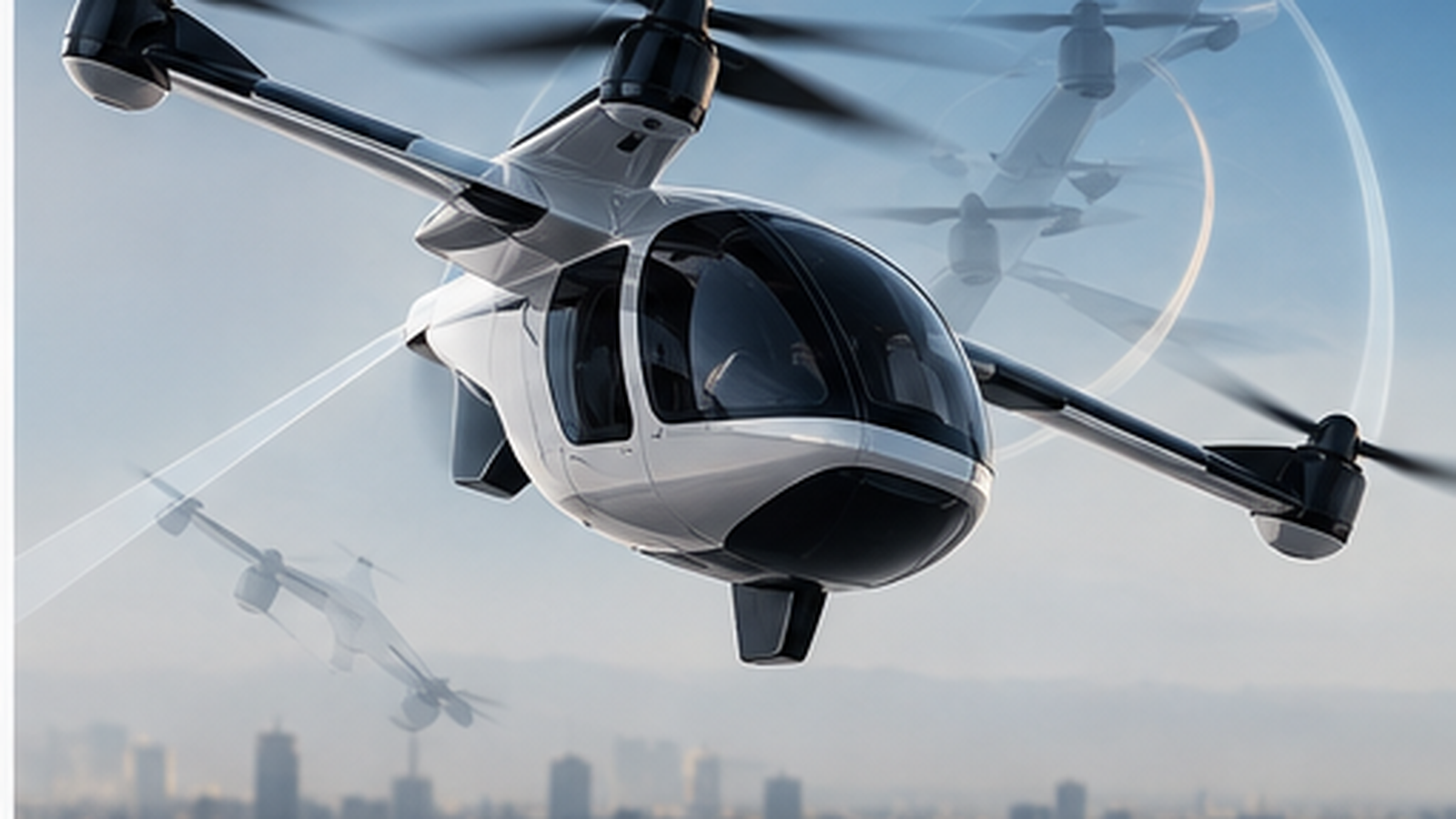
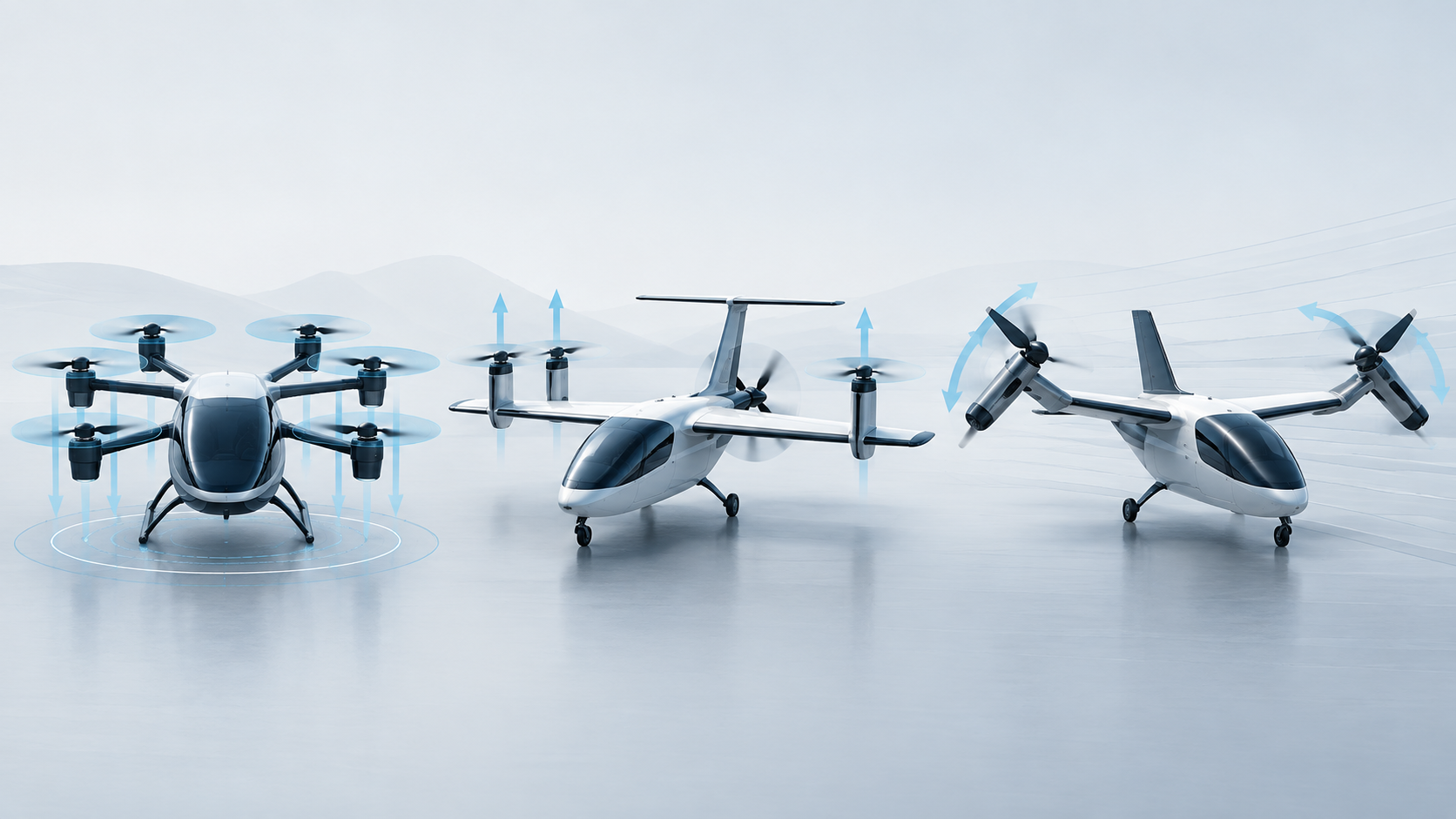
Vertical flight can impose high electrical power while the aircraft has little forward speed. Rotor wash can provide local airflow, but it is highly non-uniform and its usefulness depends on heat-exchanger placement, aircraft geometry and operating condition. A system that relies heavily on ram air in cruise may face a different rejection limit in hover or low-speed transition.
At the same time, batteries can see high discharge current, inverters switch substantial power and motors operate near high torque. Thermal inertia allows components to absorb some short-duration heat without immediately reaching a limit. That can be useful: the cooling system does not necessarily need to reject every watt at the instant it is generated. But absorbed heat has to go somewhere later, and repeated short sectors can accumulate temperature if turnaround is too brief for recovery.
This is where thermal design connects to PropulsionWatch's aircraft-level power discussion. Peak electrical power and continuous thermal rejection are different sizing problems.
Wing-borne cruise usually reduces lift-power demand for configurations that unload dedicated lift rotors or tilt propulsors into a more efficient forward-flight condition. Forward speed also gives heat exchangers access to more consistent external flow. That makes cruise a potential recovery phase for components that heated during takeoff and transition.
The apparent advantage is not free. A radiator or heat exchanger placed in the external flow creates pressure loss and drag. Pumps and fans consume electrical power. Ducts, cold plates, fluid, valves and structural supports add mass. NASA's HEATheR work frames this directly: electrified aircraft need to reject substantial low-grade heat without allowing the thermal-management system's mass, drag and auxiliary power to erase propulsion-system gains.
Low-grade heat is particularly awkward because the temperature difference between the coolant and ambient air can be modest. A smaller temperature difference requires more heat-transfer area or more airflow for the same heat rejection. Raising component temperature can improve the heat exchanger's job but may reduce semiconductor, magnet, winding-insulation or battery life.
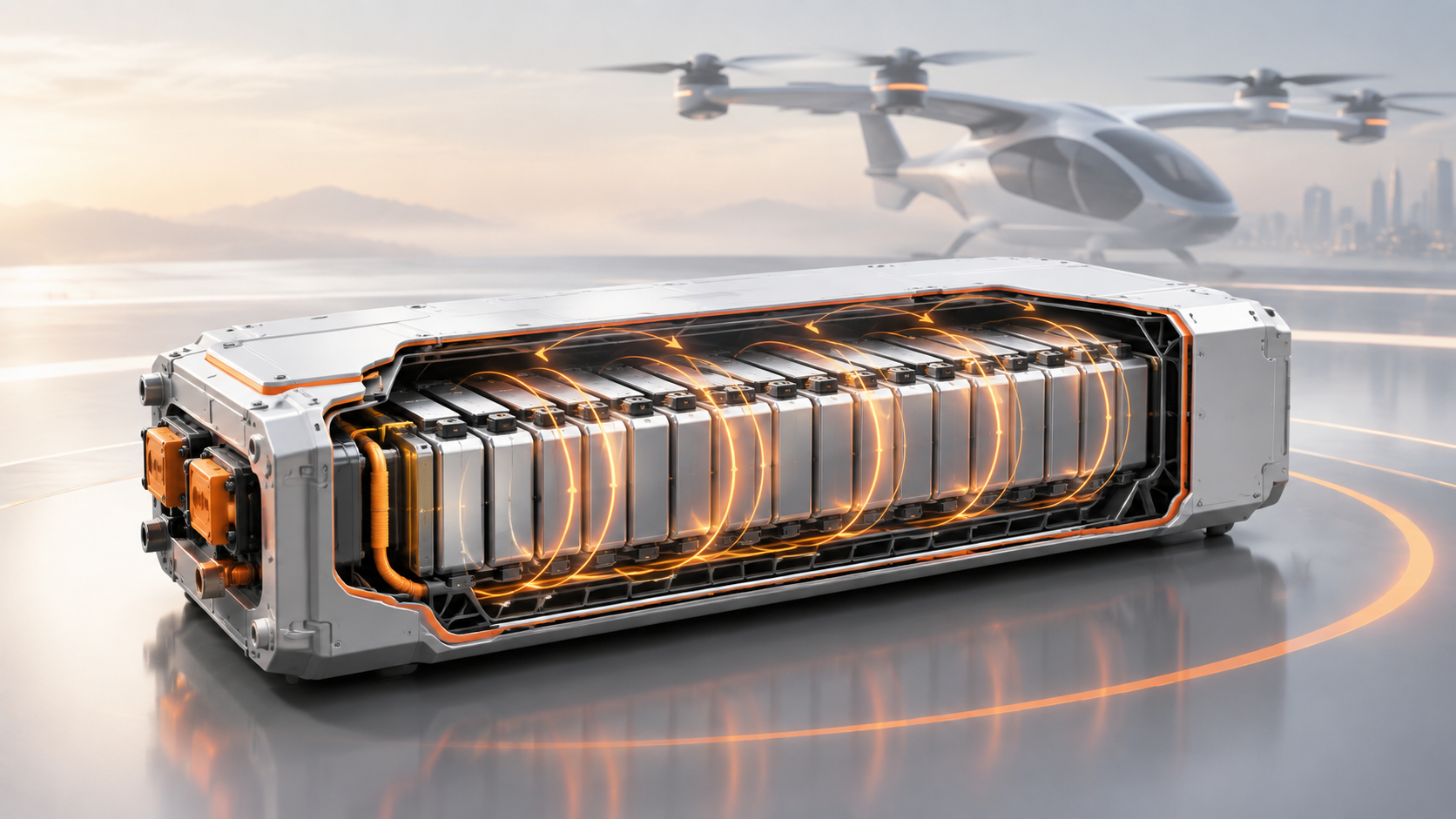
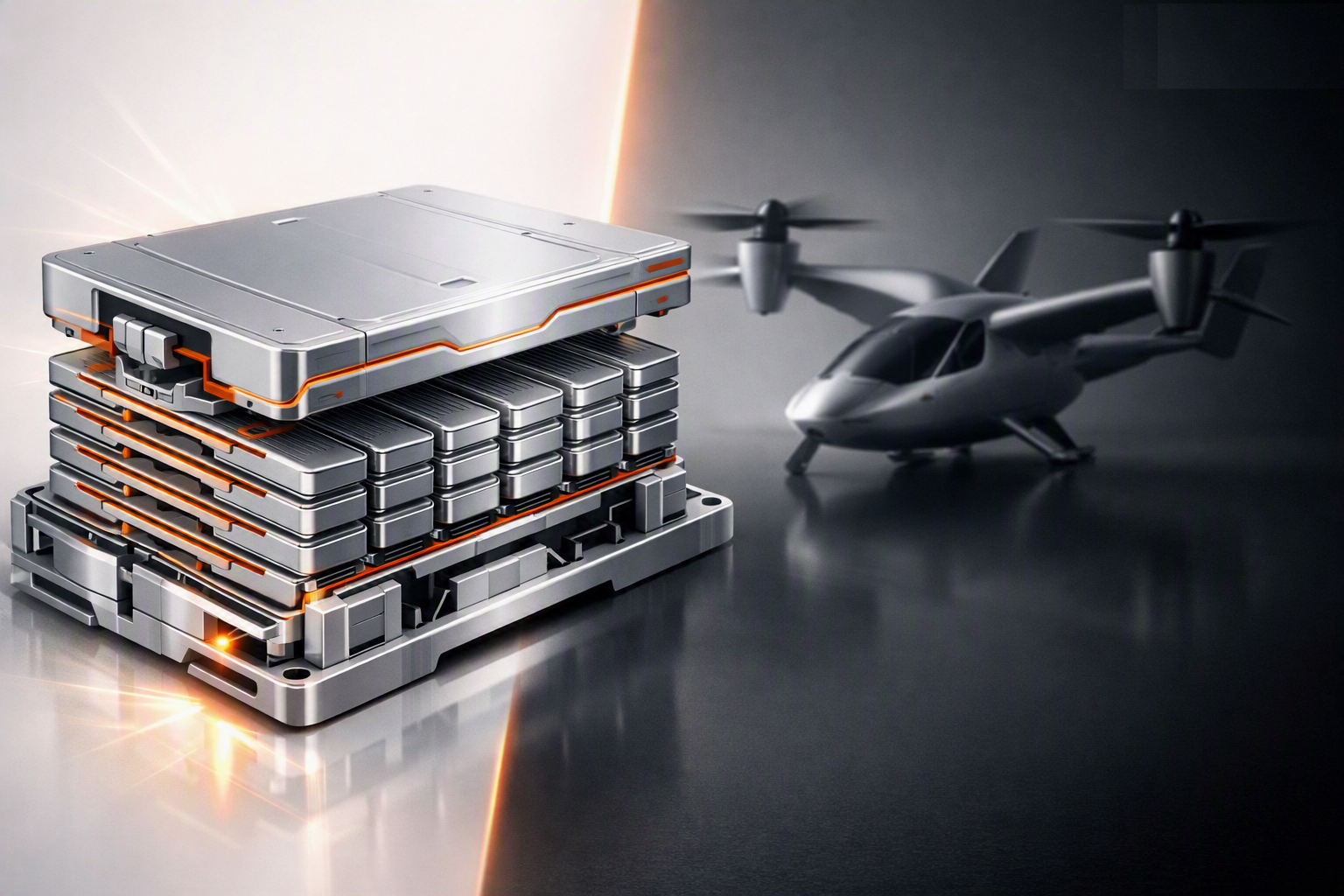
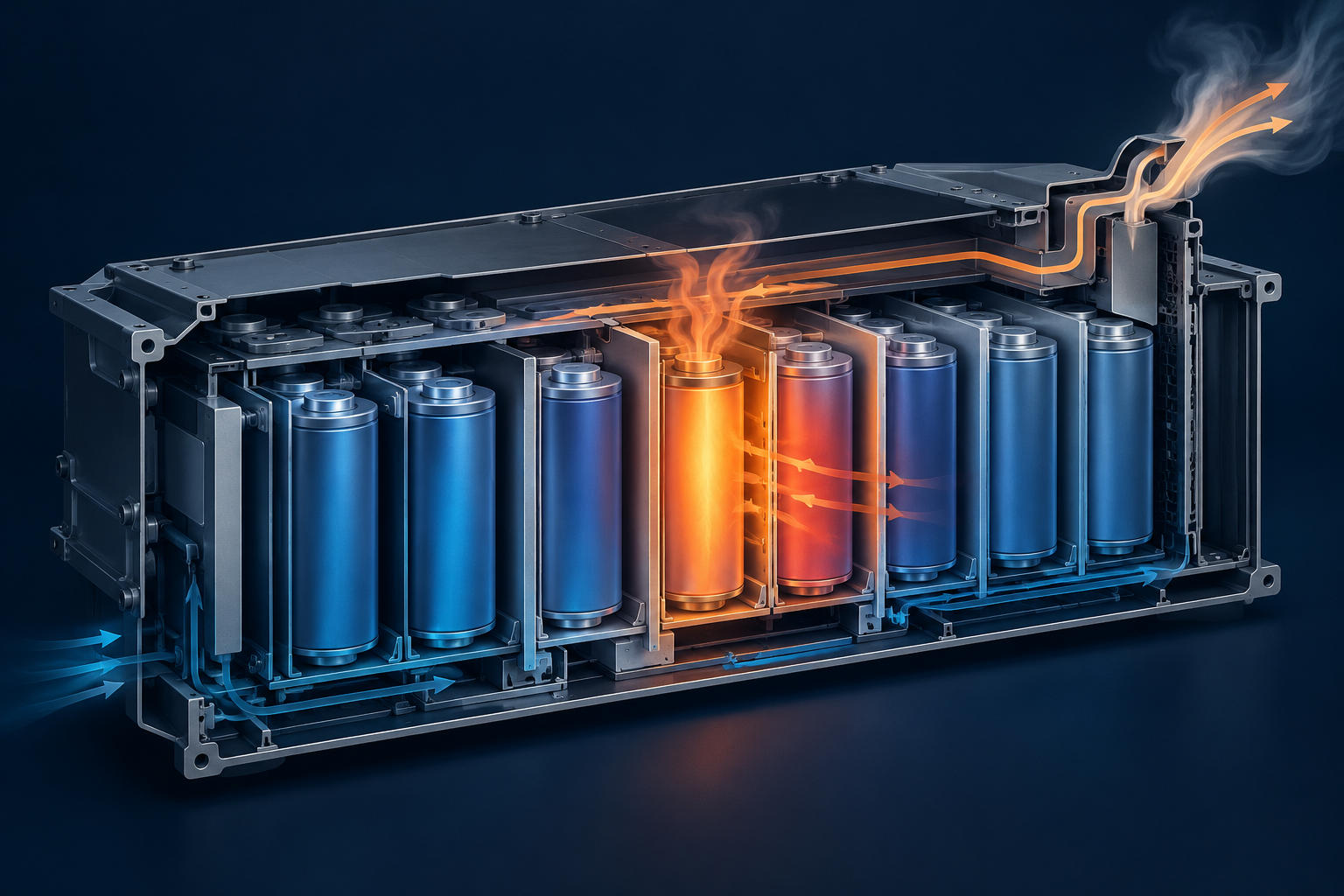
One shared coolant loop can be attractive for mass and simplicity, but different components have different preferred operating ranges. Batteries are sensitive to both high temperature and temperature non-uniformity. Power electronics may tolerate higher coolant temperatures than cells, while motor windings and magnets have their own material limits.
That can lead to separate loops, staged heat exchangers or refrigerant-assisted cooling. Every additional loop creates pumps, valves, plumbing and failure cases. Conversely, one tightly integrated loop can create thermal coupling in which a hot propulsion component raises the inlet temperature available to another subsystem.
The trade cannot be judged from a component's maximum temperature alone. Engineers need the complete thermal network, including heat capacity and transient flow. A battery pack may remain below its absolute temperature limit while developing cell-to-cell gradients that accelerate ageing or restrict charge acceptance.
For high-utilization AAM operations, landing does not reset the thermal state. The aircraft can arrive with a warm battery, motor and inverter, then begin passenger turnaround and charging. High-rate charging creates its own losses, and the battery-management system may reduce charge power if cell temperature is too high or too low.
That makes turnaround time partly a thermal quantity. A charger may be capable of high electrical power while the aircraft cannot accept it continuously because the pack first needs cooling. Ground cooling equipment can move some mass and power off the aircraft, but then the operating concept depends on compatible infrastructure.
The interface is already visible in PropulsionWatch's vertiport engineering analysis: charger nameplate power does not by itself determine energy restored between flights.
A useful model has to propagate electrical losses into heat, component temperature back into efficiency and limits, and those limits back into the mission. A 2026 paper in Applied Thermal Engineering used an integrated electrical–thermal eVTOL simulation and reported thermal-management energy exceeding 20% of total mission energy for the modeled configuration. That figure should not be generalized to all eVTOLs; it depends on architecture, mission, cooling concept and assumptions. Its value is the demonstration that thermal auxiliaries can become first-order in a mission model.
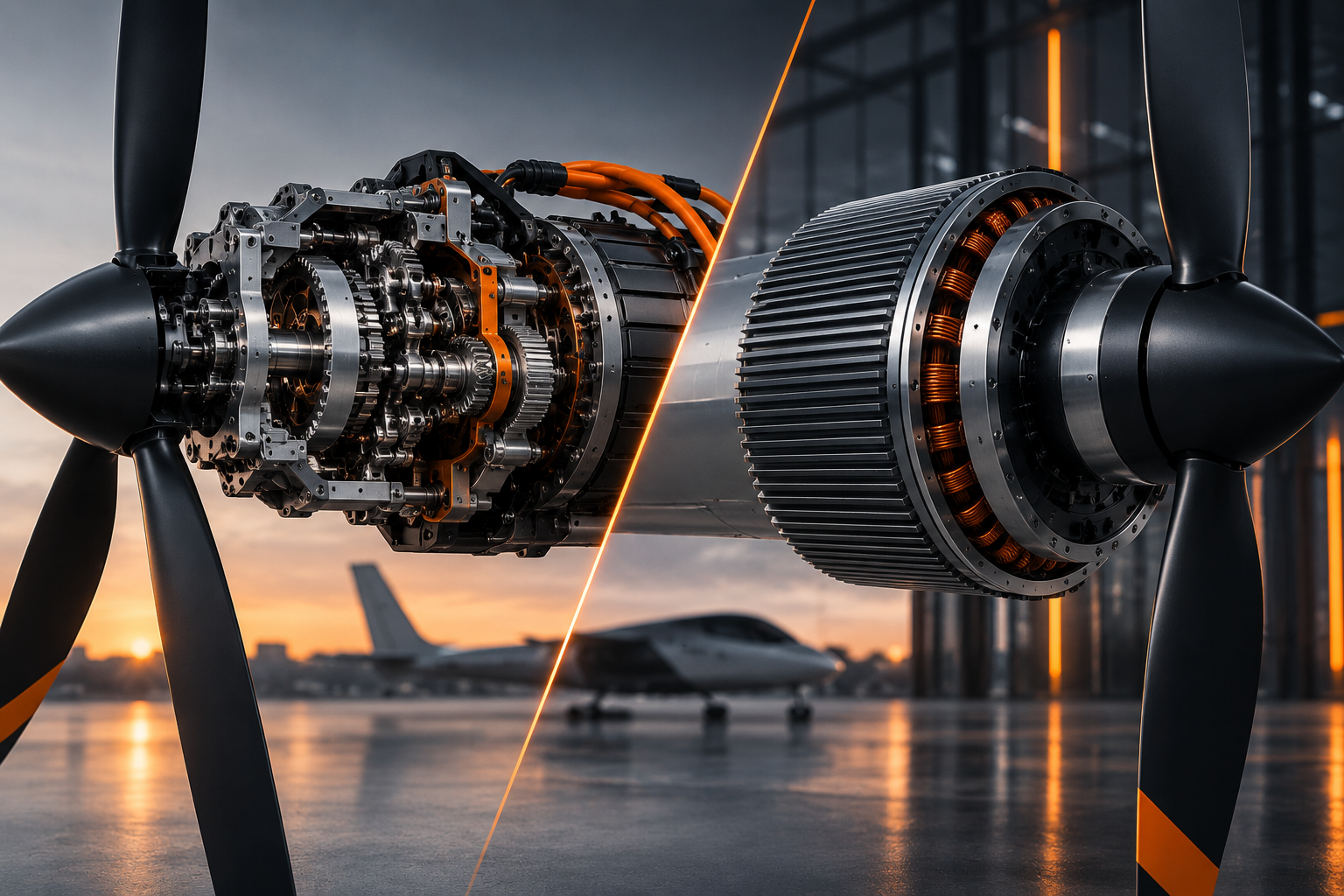
Component efficiency maps can otherwise create false optimism. A motor quoted at 97–98% peak efficiency does not operate at that exact point throughout a mission. The inverter and battery have their own load-dependent losses, and pumps or fans may operate hardest when the propulsion system is already demanding high power.
A certified aircraft needs more than one successful hot-day flight. It needs margins for repeated sectors, component degradation, environmental extremes and foreseeable failure cases. A blocked cooling path, failed pump or degraded heat exchanger can change both propulsion availability and battery charge acceptance.
The most informative future data will therefore be mission-resolved: temperatures, coolant flow, component derating, auxiliary power and recovery time over repeated representative cycles. Thermal management becomes operationally credible when an aircraft can land, turn and depart again with predictable margins rather than relying on a long cooldown that is absent from the commercial schedule.
NASA — High-Efficiency Electrified Aircraft Thermal Research (HEATheR)
NASA NTRS — Thermal Management Ideas and Challenges for Electric Aircraft