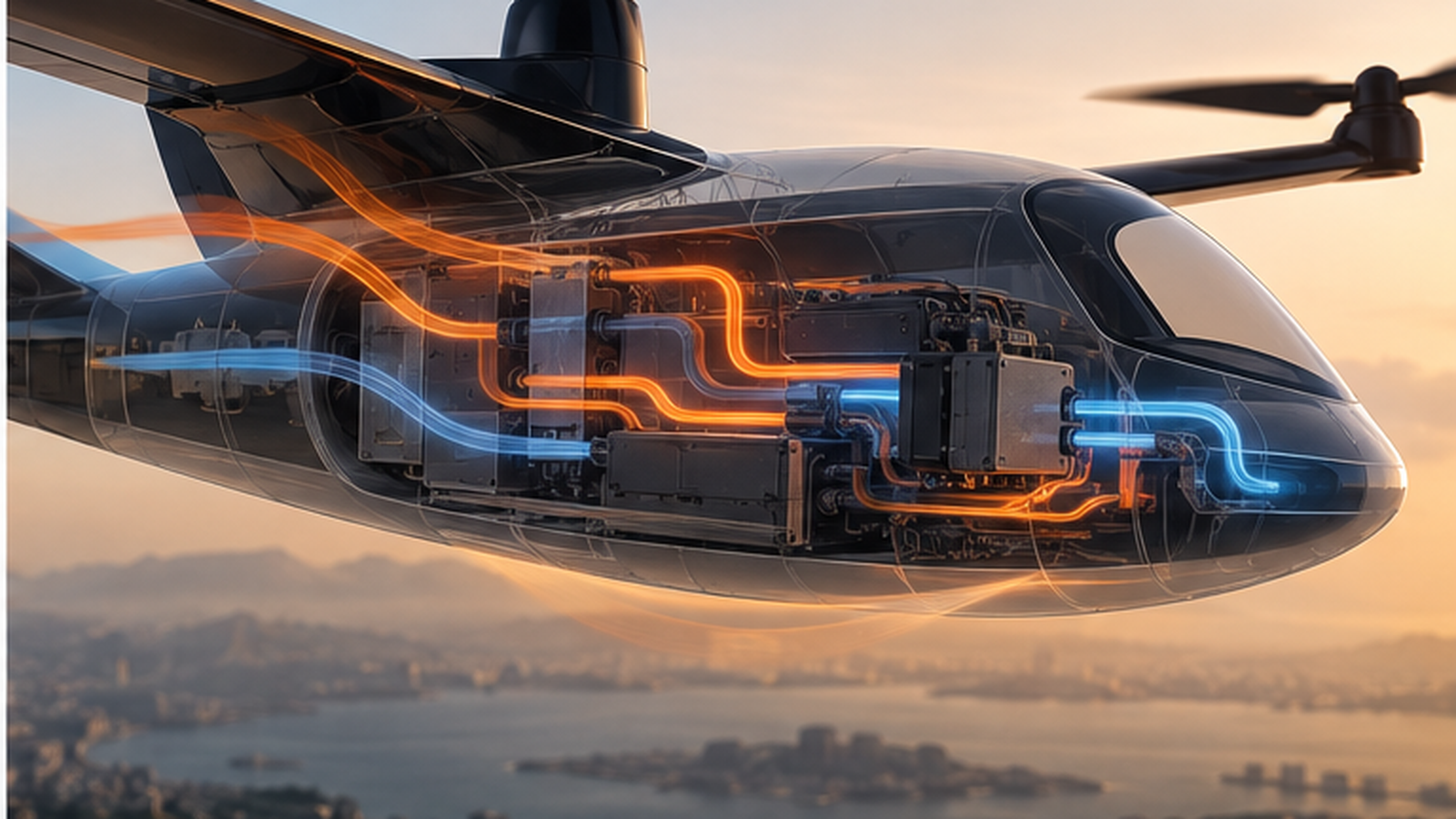
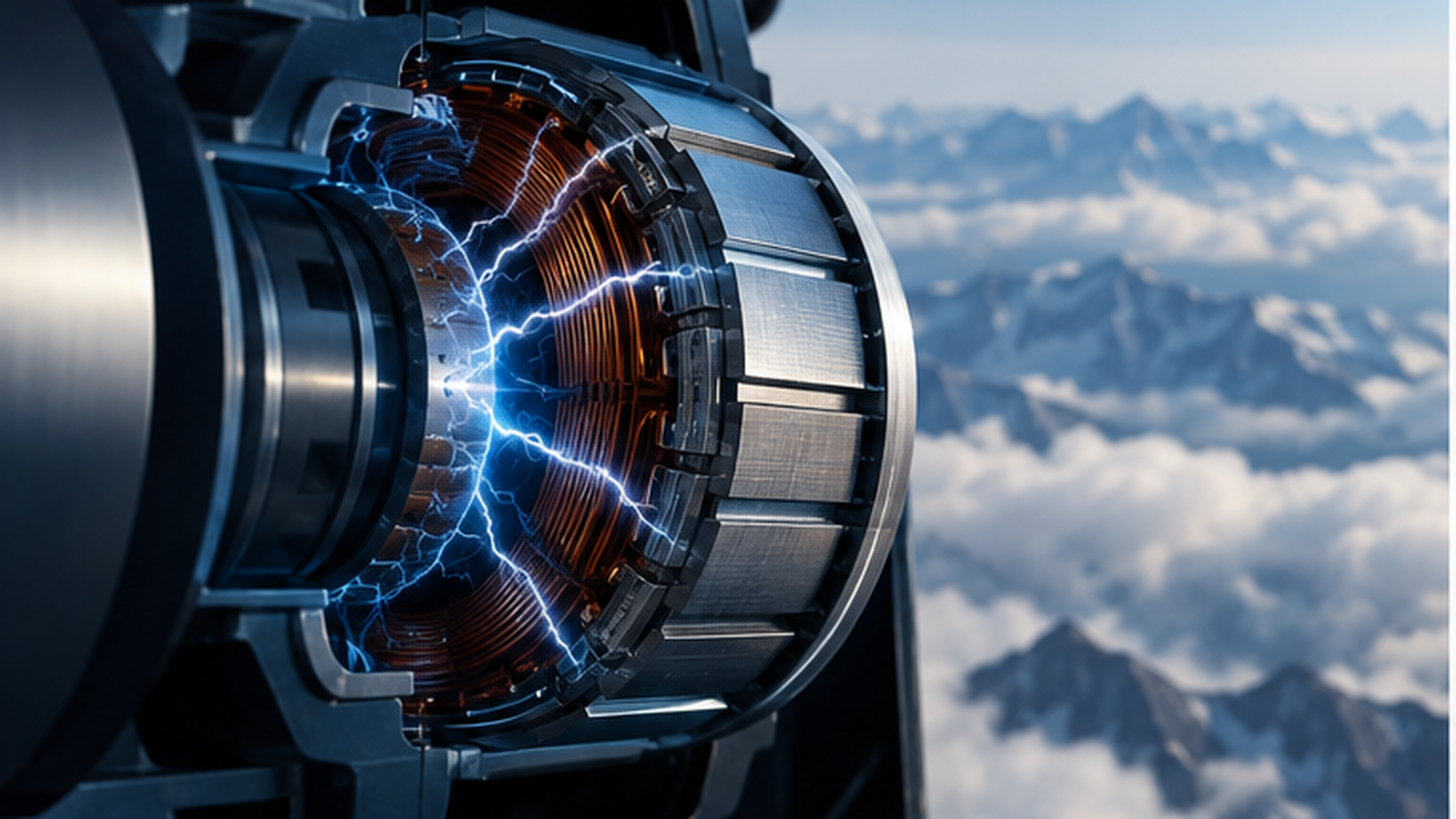
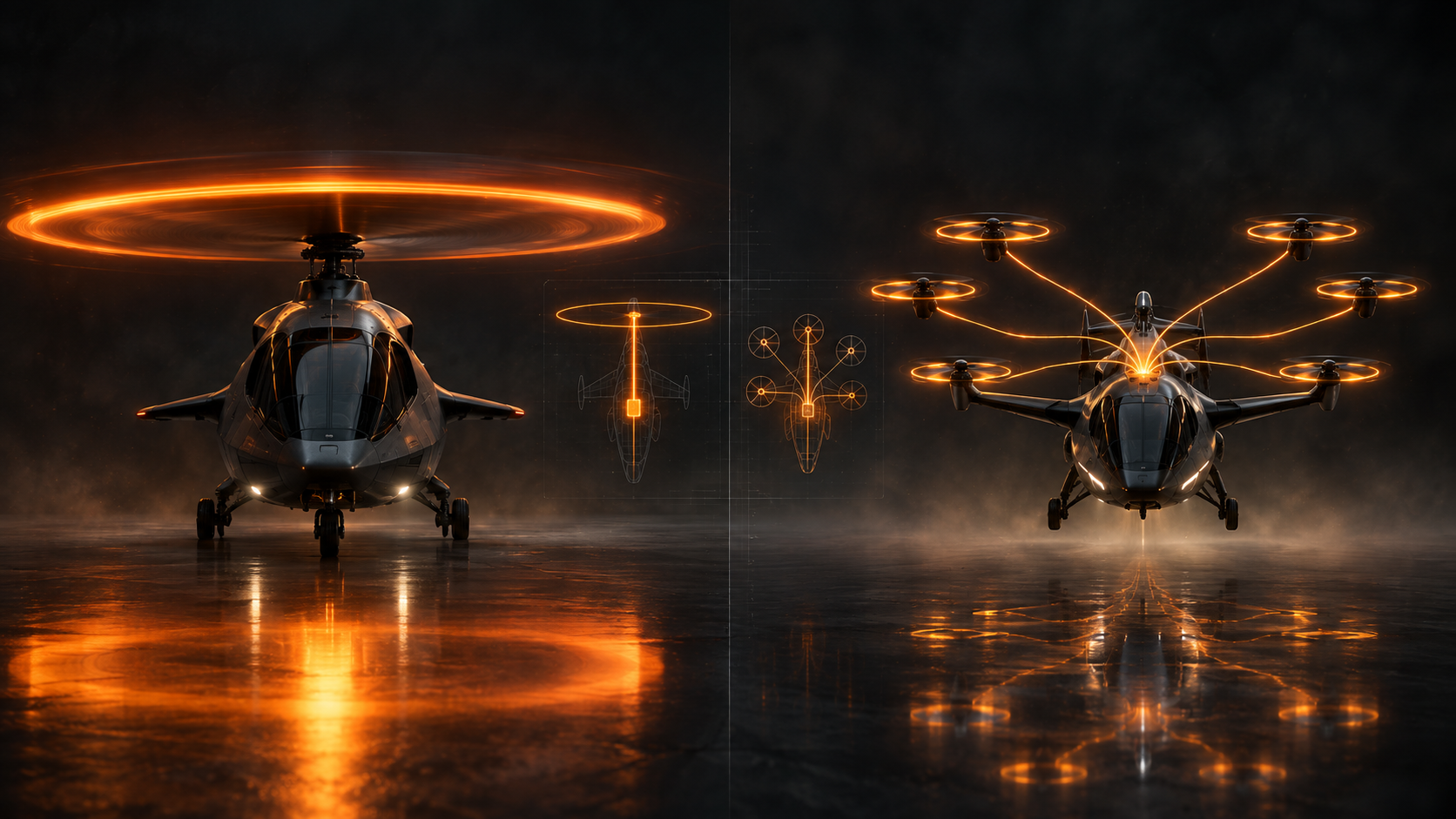
A gearbox adds loss, lubrication and failure modes, but can let an aircraft propeller turn slowly while its electric motor runs faster, smaller and closer to its efficient operating region. The useful comparison is total installed propulsion mass and loss, not motor simplicity alone.
P = Tω — shaft power links torque and rotational speed 374 kg vs 400 kg — geared vs direct-drive main propulsion system in one HorizonUAM study 5:1 — reduction ratio used in that study 250 kW continuous / 400 kW peak — Helix/Zoerkler supplier-reported geared EPU ratings
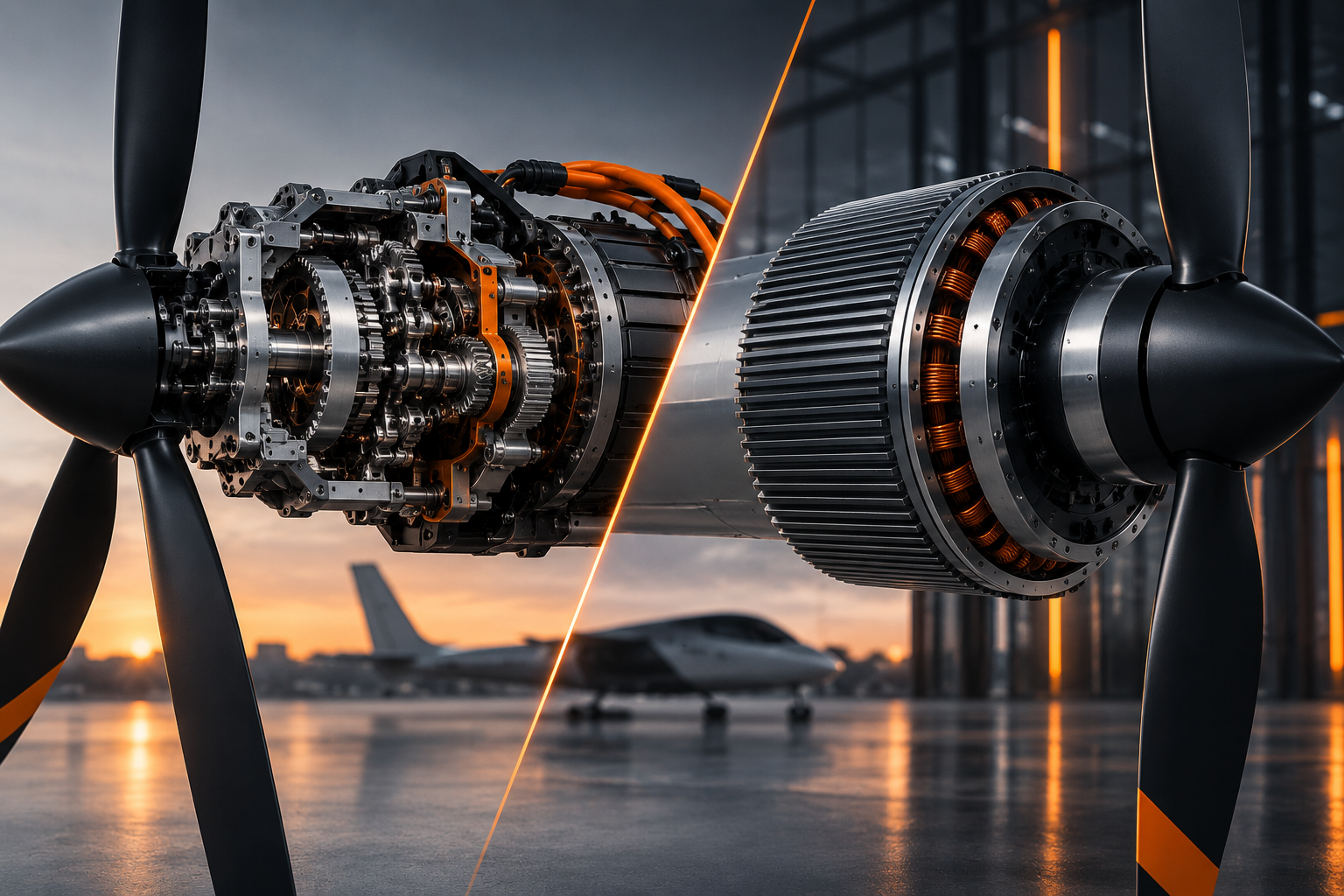
Direct drive removes a transmission, but low propeller RPM can force a motor toward high torque, greater diameter and more active material. A gearbox can reduce motor mass and move its operating point, but adds mechanical loss and certification work. Installed system performance decides the trade.
Comparable flight-representative data for complete geared and direct-drive units: continuous efficiency, installed mass, cooling demand, gearbox durability, acoustic performance and failure behaviour.
A propeller and an electric motor do not naturally want the same shaft speed. Propeller diameter, tip Mach number, noise and aerodynamic loading can favour comparatively low rotational speed. Electric-machine specific power, meanwhile, can improve when torque is reduced and rotational speed rises. Direct drive forces those requirements onto one shaft. A reduction gearbox separates them.
Shaft power is the product of torque and angular speed: P = Tω. For a fixed power requirement, reducing shaft speed increases torque. High torque drives active material, structural loading, motor diameter and cooling requirements. A direct-drive machine therefore avoids a transmission but can become larger and heavier when the propeller's efficient operating speed is well below the motor's preferred speed.
Published aircraft studies show why the answer is architecture-specific. A 2024 HorizonUAM powertrain study using commercial permanent-magnet machines compared direct and 5:1 geared drives for a multirotor concept. In that defined case, the geared main propulsion system was calculated at 374 kg versus 400 kg for direct drive, while modeled motor operating efficiency was 92–96% for the geared architecture versus 85–92% for direct drive. Those numbers belong to that study's components and mission; they are not universal gearbox advantages.
A useful geared design cannot be evaluated by adding a gearbox to the same motor. The transmission changes the motor's required torque and speed, allowing a different electromagnetic design. The system comparison therefore includes motor, inverter, gearbox, shafts, bearings, lubrication and cooling. It also has to include nacelle diameter and propeller integration, because a smaller high-speed motor may reduce frontal area or free packaging volume.
Helix and Zoerkler provide a current hardware example. In June 2026 they reported validation of a geared electric propulsion unit for lift, cruise and tiltrotor applications. The companies publish 250 kW continuous and 400 kW peak power, and say the architecture reduces motor diameter by about 50% relative to their direct-drive comparison. These are supplier-reported subsystem results, not an independently established aircraft-level mass advantage.
The direct-drive case remains strong where the motor can meet propeller torque efficiently without an excessive mass or diameter penalty. Removing gears also removes gear-mesh losses, lubrication requirements, backlash, wear debris and several mechanical failure modes. Fewer rotating interfaces can simplify maintenance and aspects of the safety assessment.
The certification comparison is consequently asymmetric. A geared unit must substantiate transmission life, lubrication behaviour, overspeed and seizure cases alongside electrical failures. A direct-drive unit shifts more of the burden into the motor, inverter and thermal design. Neither architecture eliminates failure management; it changes where the difficult cases reside.
Propeller tip speed limits how freely designers can increase RPM. Noise constraints can tighten that boundary further, particularly for distributed propulsion and urban operations. Research on electric-aircraft motor/propeller co-design therefore treats motor geometry and propeller aerodynamics as a coupled problem rather than optimizing the electric machine in isolation.
This coupling explains why a headline motor kW/kg value is insufficient. A high-speed machine can look exceptional on a dynamometer yet require reduction gearing, cooling and structure that narrow its installed advantage. Conversely, a heavier direct-drive motor can recover some system value through fewer components and lower transmission loss.
The geared case strengthens as required propeller torque rises, propeller RPM falls and motor diameter becomes difficult to accommodate. The direct-drive case strengthens when the motor can deliver that torque at acceptable mass, efficiency and thermal loading without compromising the nacelle or rotor.
The next useful evidence is not another isolated peak-power-density record. It is flight-representative data for complete propulsion units: continuous power, mission-weighted efficiency, cooling demand, gearbox life, acoustic performance and installed mass measured against a direct-drive alternative designed for the same propeller and mission.
Sources: HorizonUAM powertrain study; Helix/Zoerkler geared EPU; Bird, review of electric-aircraft drivetrain motor technology; motor/propeller co-design study.