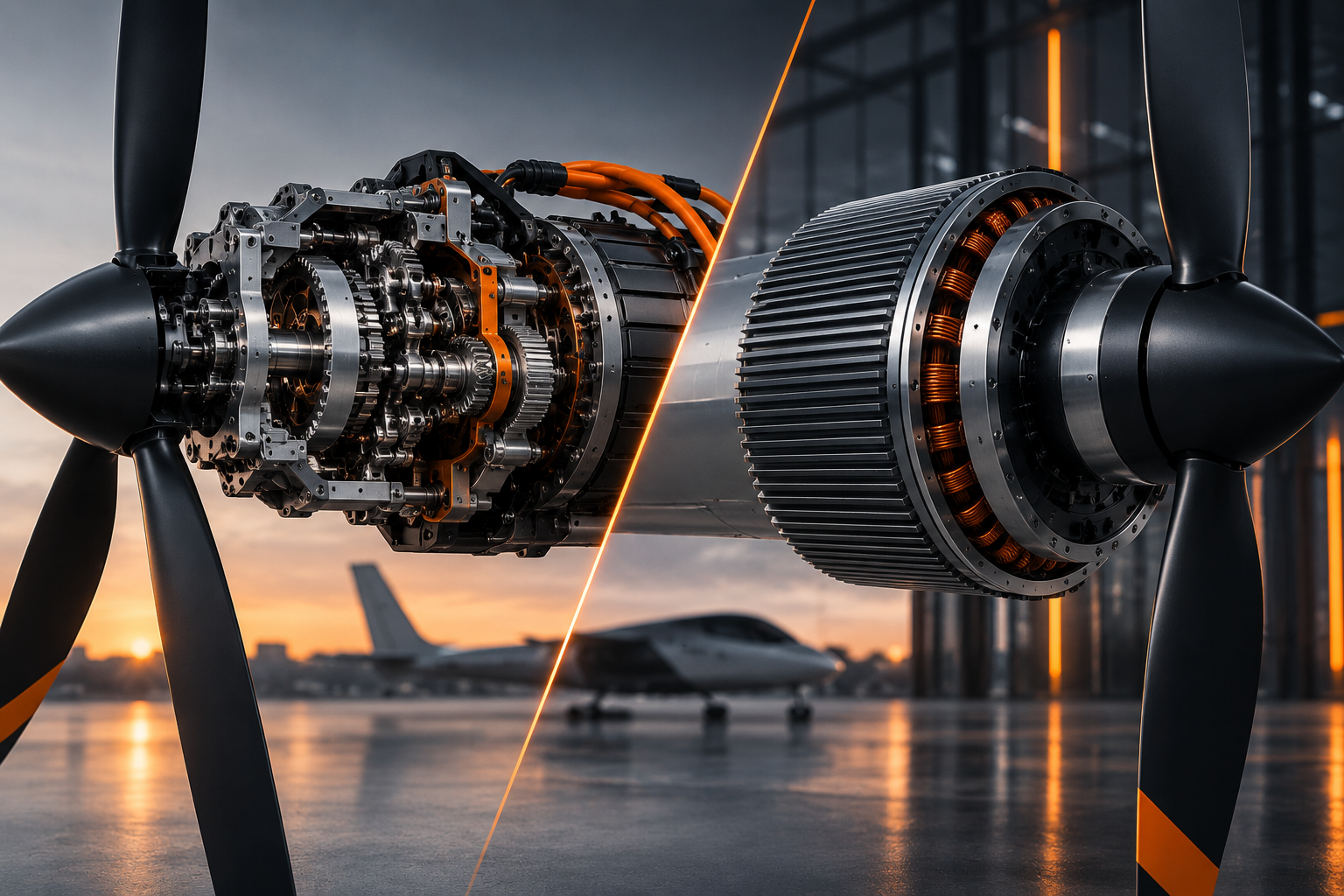
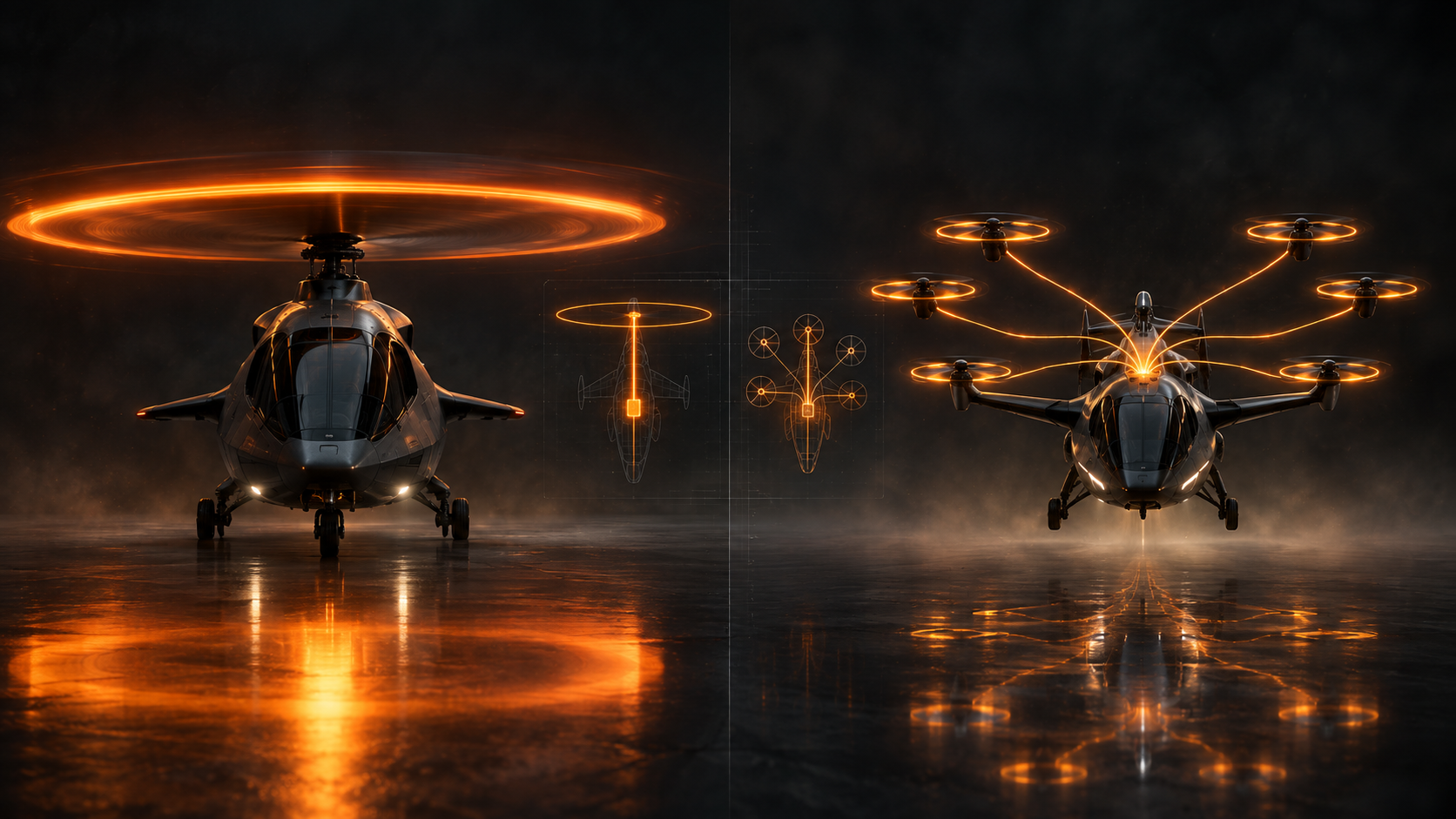
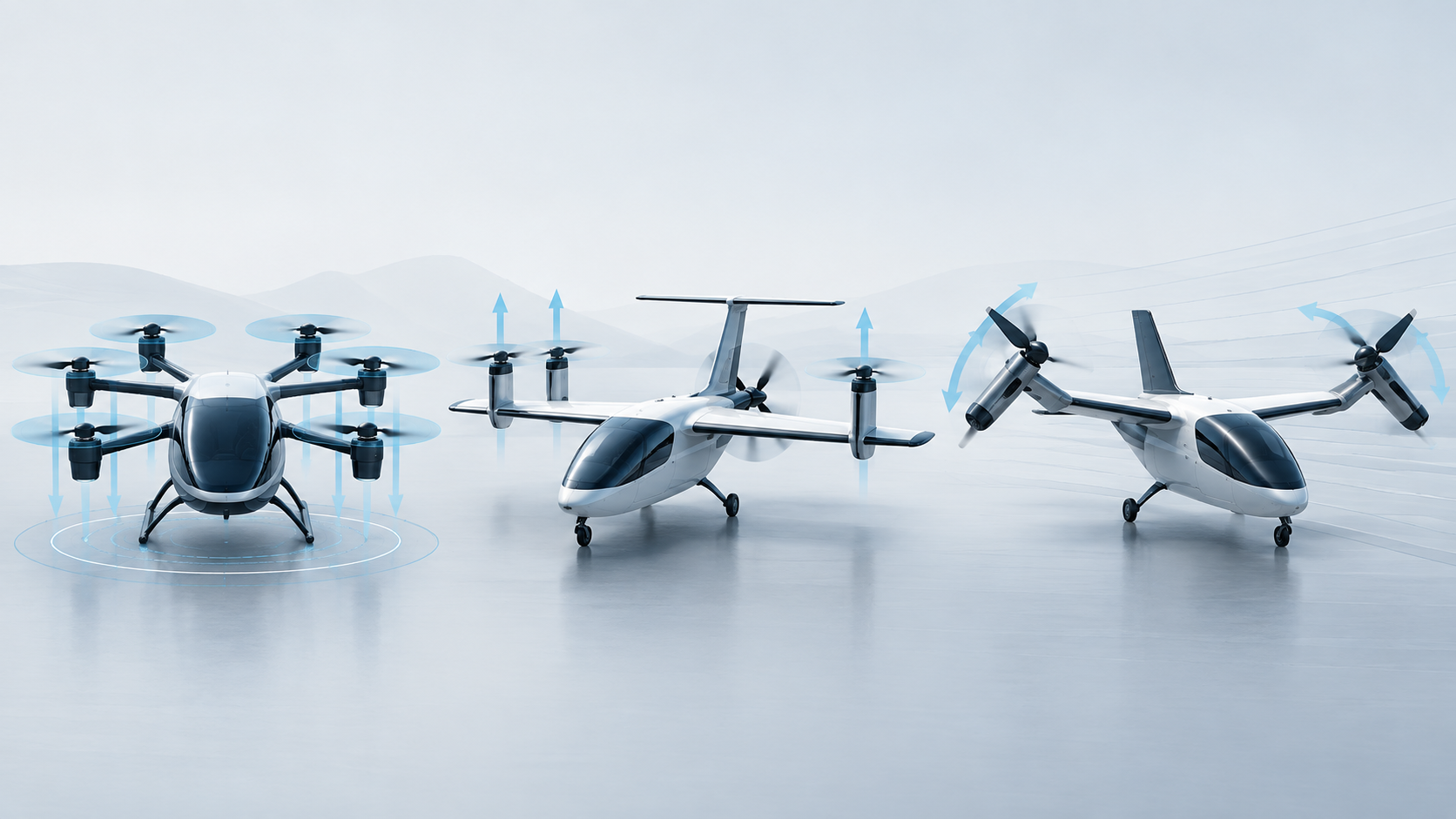
Radial- and axial-flux motors package magnetic loading differently. For eVTOL propulsion, redundancy, thermal management, manufacturability, rotor speed and aircraft integration can outweigh a motor-level torque-density advantage.

6 — propulsion units publicly described by Joby 12 — propulsion units on Archer Midnight, split between tilt and lift roles
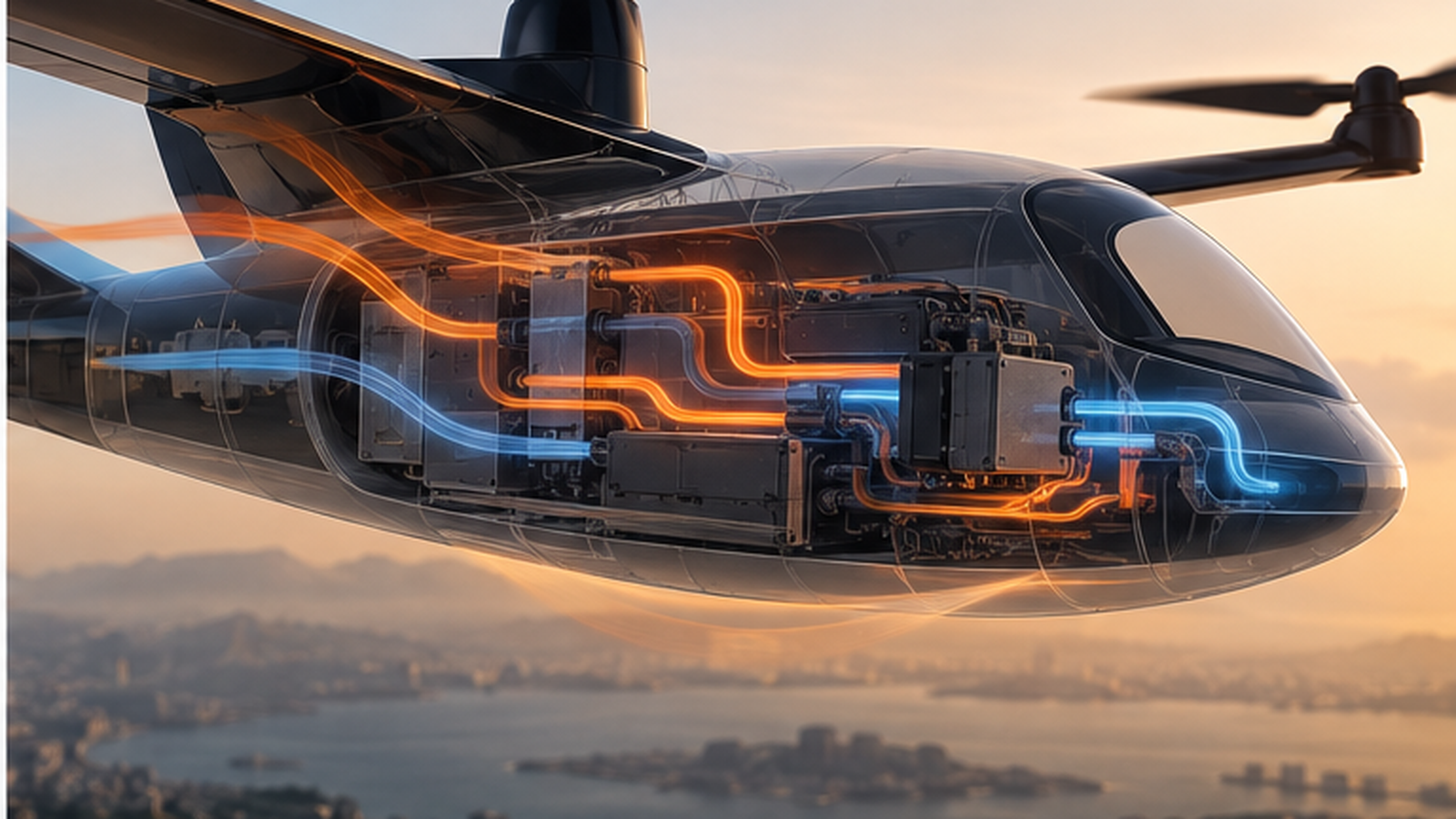
Motor topology is only one layer of eVTOL propulsion design. Packaging, thermal limits, manufacturability, rotor speed and fault isolation can outweigh a headline torque-density advantage, so axial-versus-radial comparisons need aircraft-level context.
Whether flight-qualified axial-flux propulsion units demonstrate competitive continuous power, cooling, durability and fault tolerance at complete-aircraft level—not just attractive motor-level power or torque density.
Joby Aviation and Archer Aviation both use radial-flux motor architectures, yet distribute propulsion differently. That is a useful reminder that “axial versus radial” is only one layer of the design problem. Motor count, winding independence, propeller integration, cooling and fault tolerance can matter as much as electromagnetic topology.
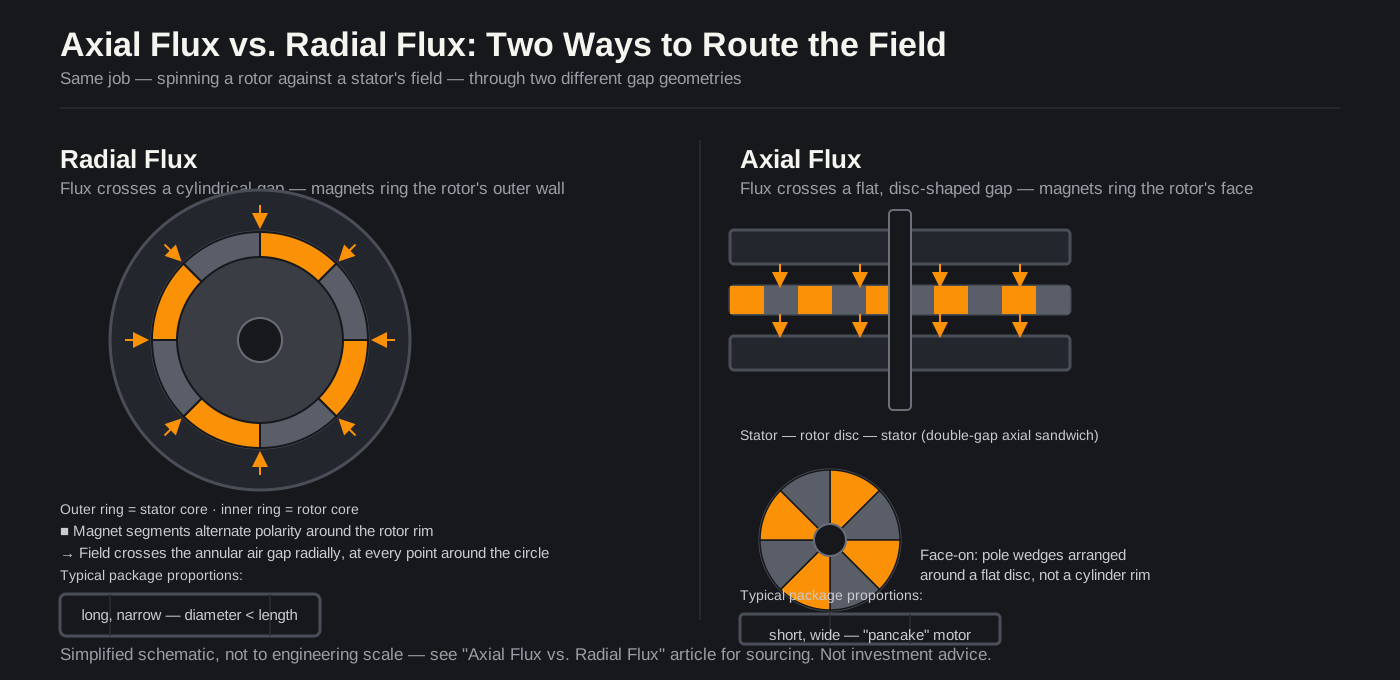
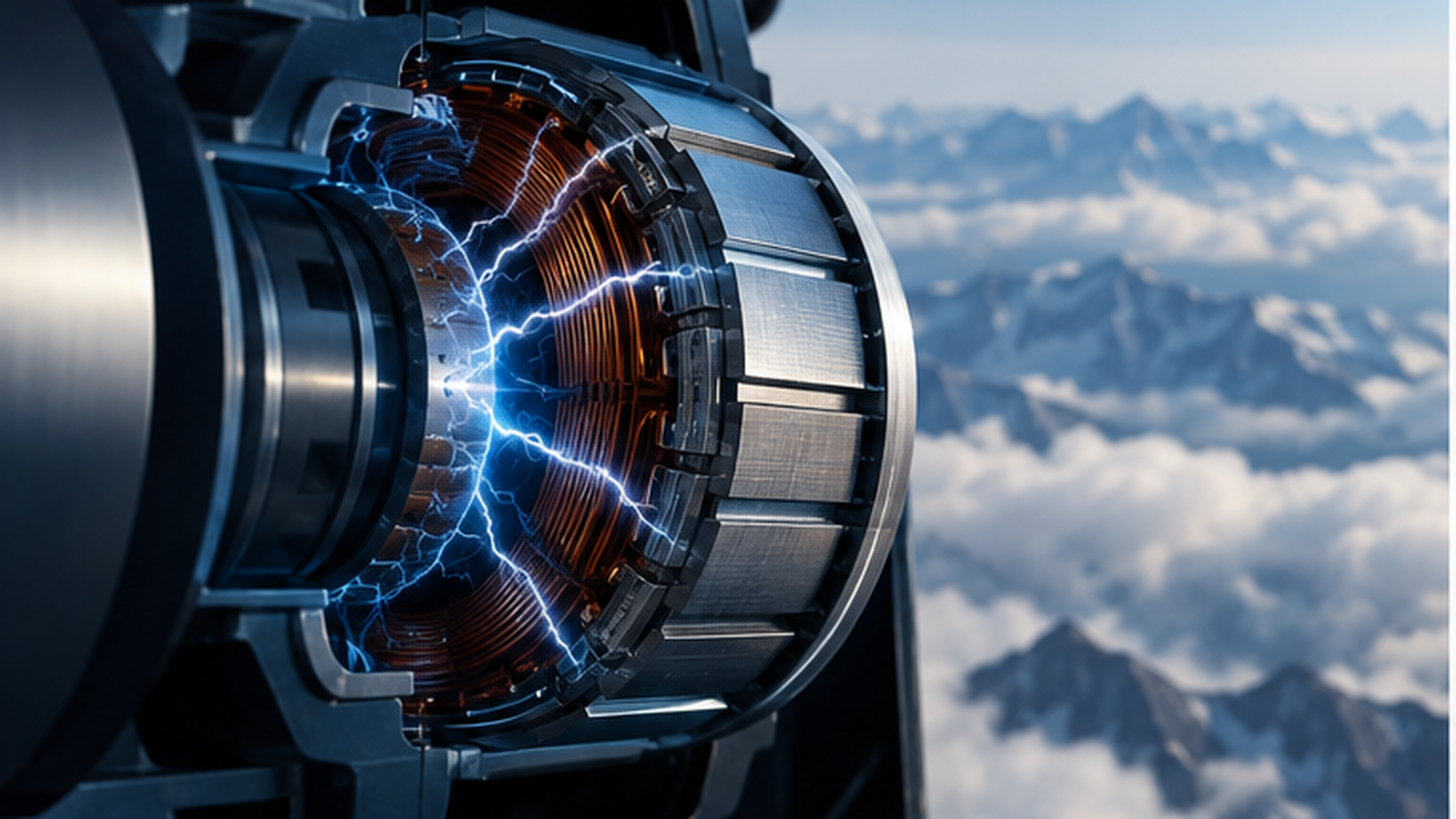
In a radial-flux machine, magnetic flux crosses the air gap approximately radially; in an axial-flux machine it crosses approximately parallel to the shaft. Axial-flux machines can exploit a relatively large effective radius in a short axial package, which can be attractive where torque density and packaging dominate. But simple diameter-scaling rules are not universal performance laws: achievable torque also depends on magnetic loading, electric loading, air-gap area, thermal limits, speed, materials and mechanical constraints.
That qualification matters because an aircraft does not buy “torque density” in isolation. A wider motor can alter nacelle drag and structural integration. Higher torque at lower speed can change gearbox or direct-drive choices. Cooling paths differ, as do manufacturing tolerances and rotor mechanical stresses. A topology that looks superior at machine level can lose part of that advantage once the complete propulsion unit is installed.
Joby has publicly described six propulsion units with dual independent motor windings. Archer distributes propulsion across twelve motors with different tilt and lift functions. These architectures should not be reduced to “six versus twelve”: the safety case depends on which electrical, mechanical and control failures are independent, what thrust remains after a failure, and whether the aircraft retains controllability throughout the flight envelope.
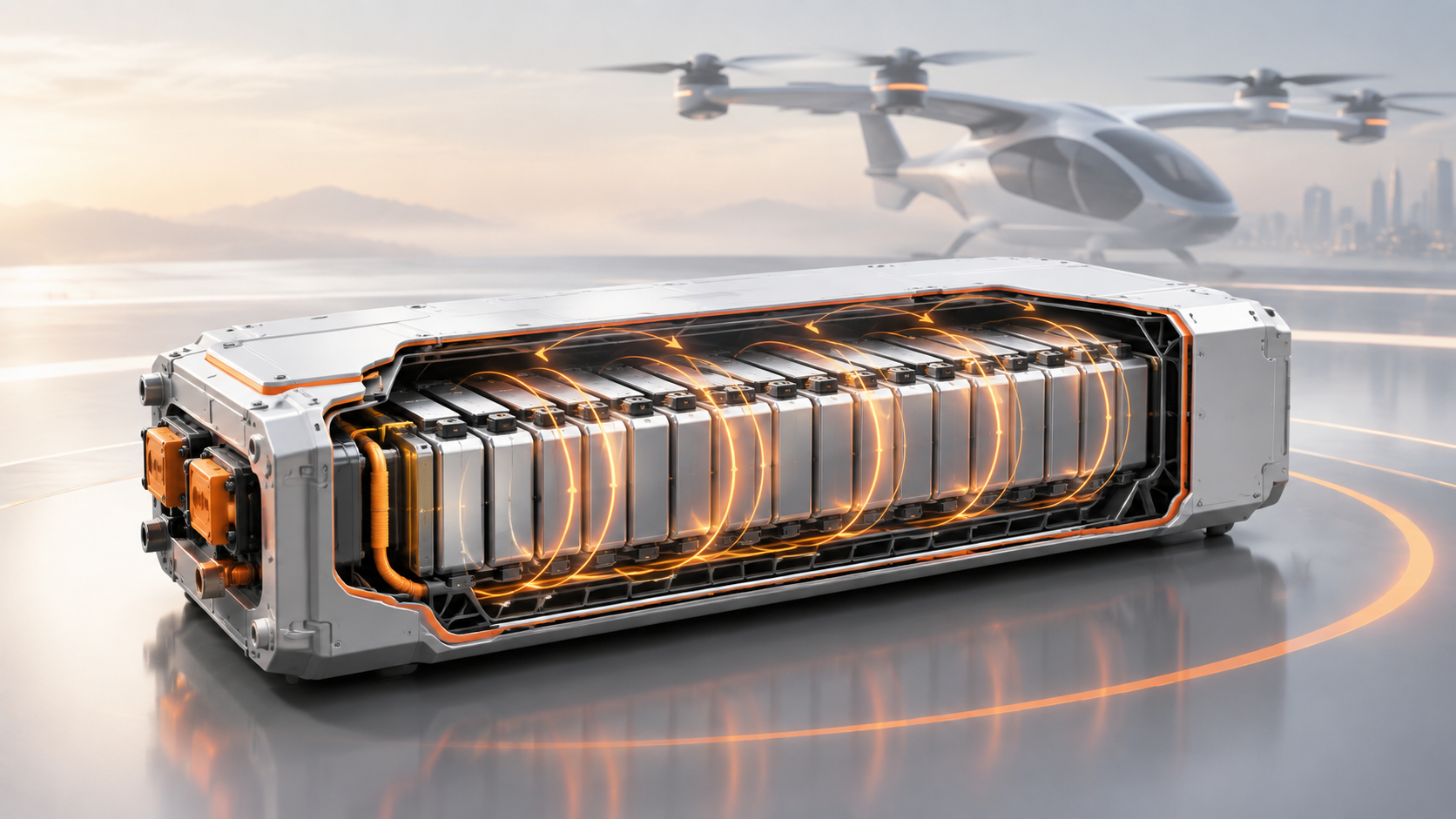
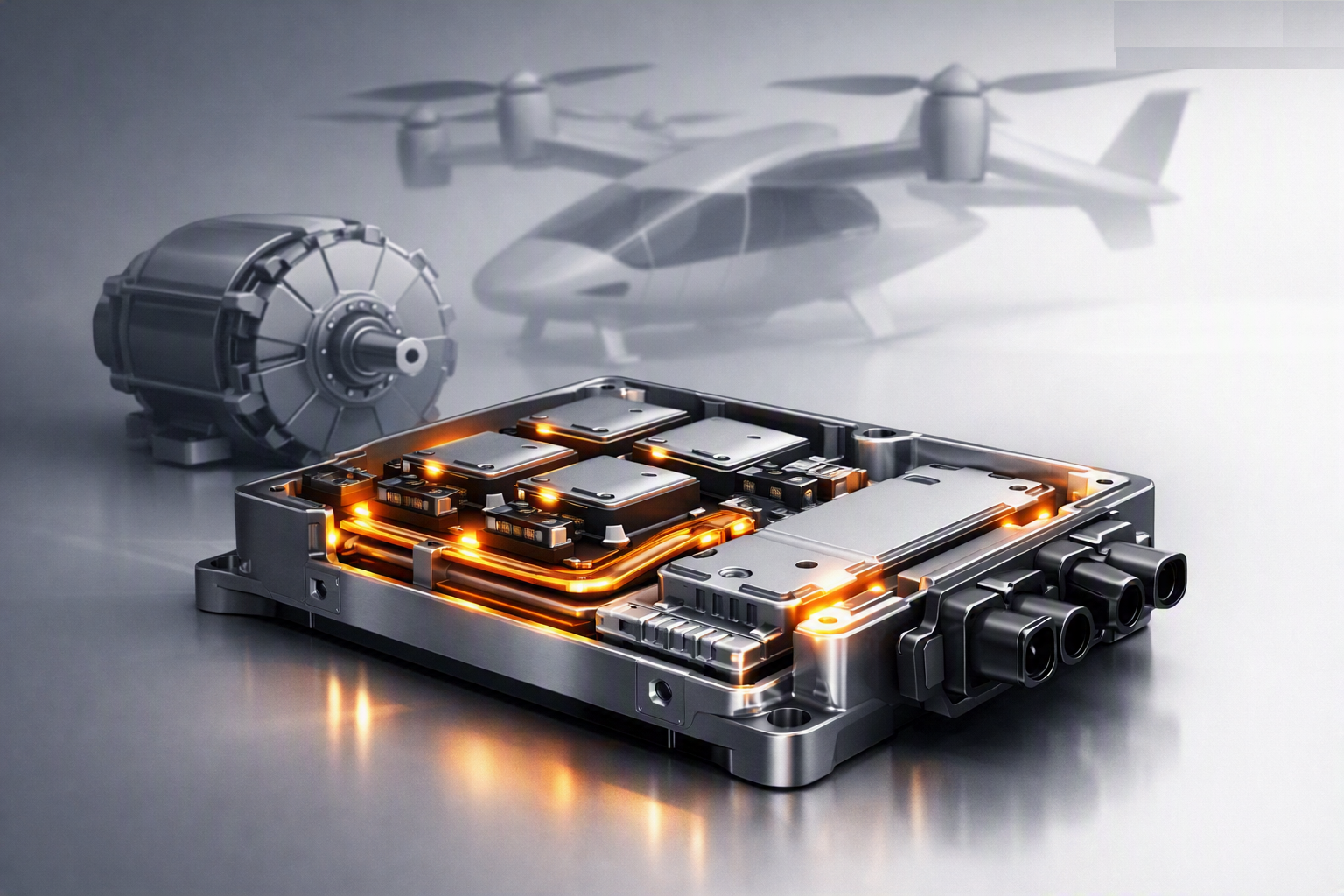
The same logic extends upstream to the inverter and power distribution. A dual-winding motor is only meaningfully redundant if common-mode failures in control electronics, cooling, wiring or the DC supply are addressed. See Inverters and Motor Controllers for that part of the system.
Suppliers including Evolito are developing axial-flux machines for aerospace applications, and the topology can offer attractive packaging and power-to-mass characteristics. That is evidence of engineering interest, not evidence that axial flux is categorically superior or already proven in a certified passenger eVTOL. As of this analysis, the relevant question is whether complete flight-qualified axial-flux propulsion units can demonstrate the required continuous power, cooling, fault tolerance, durability and manufacturability at aircraft level.