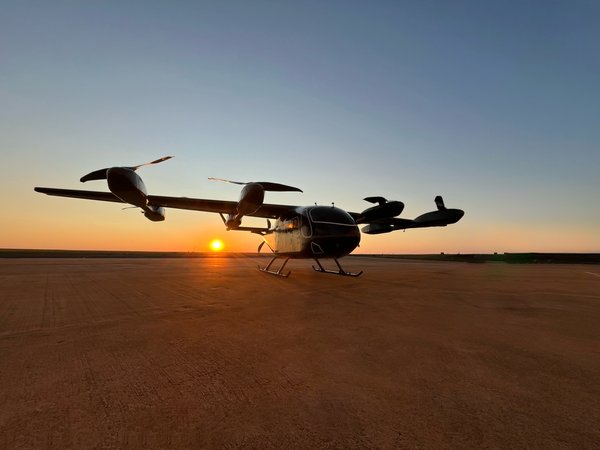
All-electric lift+cruise eVTOL with eight dedicated vertical-lift rotors and a separate rear pusher system powered by dual electric motors; fixed wing carries cruise lift.
Propulsion Unit Count
10
Redundancy Approach
Eight lift rotors plus dual-motor pusher architecture; full certification-level common-mode and electrical partitioning details are not fully public.
Range / Speed
Company target: 100 km (60 mi) range at entry into service; 4 passengers + pilot initially, with up to 6 passengers proposed for future uncrewed operation.
Seat Count
4
Last Updated
September 25, 2026
Eve remains in ANAC-led type certification with FAA engagement and an EASA validation application, and now targets type certification in 2028. Its engineering prototype completed a first partial transition flight on 3 August 2026; full wing-borne transition and conforming-aircraft compliance work remain ahead.
Expand transition flight testing toward wing-borne flight while progressing ANAC compliance evidence and FAA/EASA validation work.
Eve Air Mobility’s current eVTOL is a piloted lift-plus-cruise aircraft designed for urban and regional passenger missions. ANAC is the primary certification authority, with validation activity involving the FAA and EASA.
PropulsionWatch classifies the aircraft as certification-stage and PRE-EIS. The company’s commercialization timing is guidance rather than a regulator approval date.
The aircraft uses eight dedicated vertical-lift rotors and a separate rear pusher system with dual electric motors. A fixed wing carries aerodynamic lift in cruise. Eve has described an all-electric architecture and an initial piloted configuration.
Company targets include approximately 100 km of range at entry into service and four passengers plus a pilot initially.
ANAC remains the primary certification authority. On 20 July 2026 Eve said ANAC had opened consultation on updated Eve 100 airworthiness criteria and that Eve had applied to EASA to begin Type Certificate validation. ANAC also published proposed noise-certification criteria during Farnborough week.
On 3 August 2026 the engineering prototype completed its first partial transition flight: the rear pusher was activated in flight, with 27 kt stabilized speed and 30 kt maximum ground speed reported. This began the transition block; it was not full wing-borne transition or conformity testing by a certified production aircraft.
Eve is developing the aircraft alongside service, support and urban-air-traffic-management capabilities. Announced commercialization plans remain contingent on aircraft certification, validation in relevant jurisdictions and operator approvals.
Documented dependencies include completion of ANAC certification evidence, resolution of updated certification criteria, validation by other target authorities and the operating/infrastructure approvals required for commercial service.
Manufacturer certification update — 20 Jul 2026: Eve, “Eve Advances Global Certification Path for Eve 100,” on ANAC consultation and EASA validation application. Source.
Manufacturer flight-test update — 3 Aug 2026: Eve, “Eve Air Mobility Achieves First Transition Flight Milestone,” documenting the first partial transition flight. Source.
Evidence classification: transition-flight figures are company-reported test data; Type Certification remains outstanding.
September 25, 2026