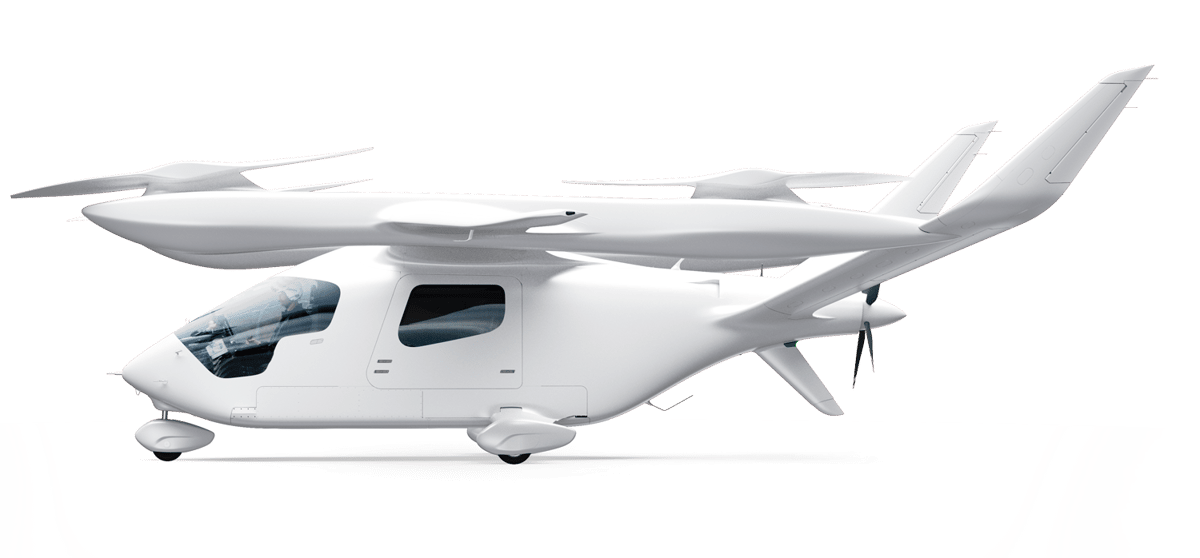
Lift+cruise: four dedicated lift propellers plus one fixed pusher propeller for cruise; lift rotors stop in forward flight. Shares its power system with Beta's CX300 fixed-wing variant.
Propulsion Unit Count
5
Redundancy Approach
Range / Speed
Company-published ALIA VTOL: max speed 153 kt; 5-passenger configuration. No like-for-like certified range figure disclosed on the current aircraft specification page.
Seat Count
5
Last Updated
October 21, 2026
On 21 October 2026 the FAA announced an A250 special airworthiness market-survey certificate, authorizing flights with operators and participants and wider geographic scope. This limited authorization is separate from the active powered-lift Type Certification project; no A250 Type Certificate is established by the announcement.
Document A250 market-survey operations within certificate limitations while continuing the separate powered-lift Type Certification and common-platform work.
ALIA VTOL is BETA Technologies’ piloted electric vertical-takeoff-and-landing aircraft, developed alongside the closely related ALIA CTOL/CX300. The VTOL uses a fixed wing for efficient cruise and separate lift and cruise propulsion rather than tilting its cruise propulsor.
PropulsionWatch classifies the program as certification-stage and pre-entry-into-service. BETA’s public regulatory sequence places the VTOL behind the CX300 CTOL certification program.
The aircraft uses a lift-plus-cruise architecture: four dedicated vertical-lift propellers and a fixed rear pusher for forward flight. The lift rotors stop during wing-borne cruise. BETA develops the electric propulsion and charging ecosystem alongside the aircraft.
Company materials describe a five-passenger configuration and a maximum speed of 153 kt. Public aircraft specifications do not provide a like-for-like certified VTOL range figure.
The FAA powered-lift certification project is active. BETA has reported substantial requirements carryover from the CX300 platform, while its public sequencing targets ALIA VTOL type certification after the CTOL aircraft.
The existing PropulsionWatch certification record remains the authoritative regulatory-status object; the lifecycle label here is an analytical program classification.
21 October 2026 update: The FAA announced an A250 special airworthiness certificate for market surveys with operators and participants, with expanded geographic scope. Full operating limitations are not reproduced in the announcement. This is distinct from a Type Certificate and from unrestricted commercial service.
BETA has disclosed intended cargo, medical and passenger applications and customer commitments for ALIA VTOL. These commercial commitments are distinct from certified entry into service; PropulsionWatch therefore retains PRE-EIS operating status.
The October market-survey authorization permits aircraft evaluation within a defined special-airworthiness scope. It does not establish an unrestricted fare-paying passenger service.
Documented dependencies include completion of the FAA type-certification program, the planned certification sequence following CX300, and the operating approvals required for individual commercial missions.
Regulatory/program evidence: PropulsionWatch Certification Record “Beta ALIA-250 — FAA,” based on BETA regulatory filings and company certification updates.
Technical evidence: BETA aircraft specifications and public filings for architecture, capacity, mission positioning and certification sequencing.
FAA market-survey announcement, 21 October 2026. Regulator-issued evidence for this limited authorization.
October 21, 2026
Reviewed developments appear here when available. If this timeline does not load, use the linked program evidence above.