Joby and Archer report meaningful FAA type-certification progress using different internal stage frameworks. The comparable evidence is regulator-accepted compliance work, conformity testing and issued approvals rather than stage numbers.

5 stages — Joby's FAA Type Certification framework (in Stage 5, the final stage, as of Q2 2026) 4 phases — Archer's FAA Type Certification framework (closed Phase 3 as of Q1 2026) 5 aircraft flying / 12 in production — Joby, per Q2 2026 results 4,900+ test points / 850+ test flights — Joby, per its December 2025 release 0 — eVTOL type certificates issued by the FAA to date
Both companies have disclosed real, document-backed certification progress in their own investor communications, but their frameworks — a five-stage process for Joby, a four-phase one for Archer — aren't structured the same way, so a stage-for-stage comparison isn't apples-to-apples. Neither company holds a type certificate yet.
Each company's next quarterly investor release for updated certification-phase status, and whether either becomes the first to receive an FAA type certificate for a piloted eVTOL — a milestone neither currently holds.
Joby Aviation and Archer Aviation are both pursuing FAA type certification for piloted powered-lift aircraft. Each company publishes progress using its own stage terminology: Joby describes five stages; Archer describes four phases. Those labels are useful for following each program over time, but they should not be treated as a common regulatory scoreboard.
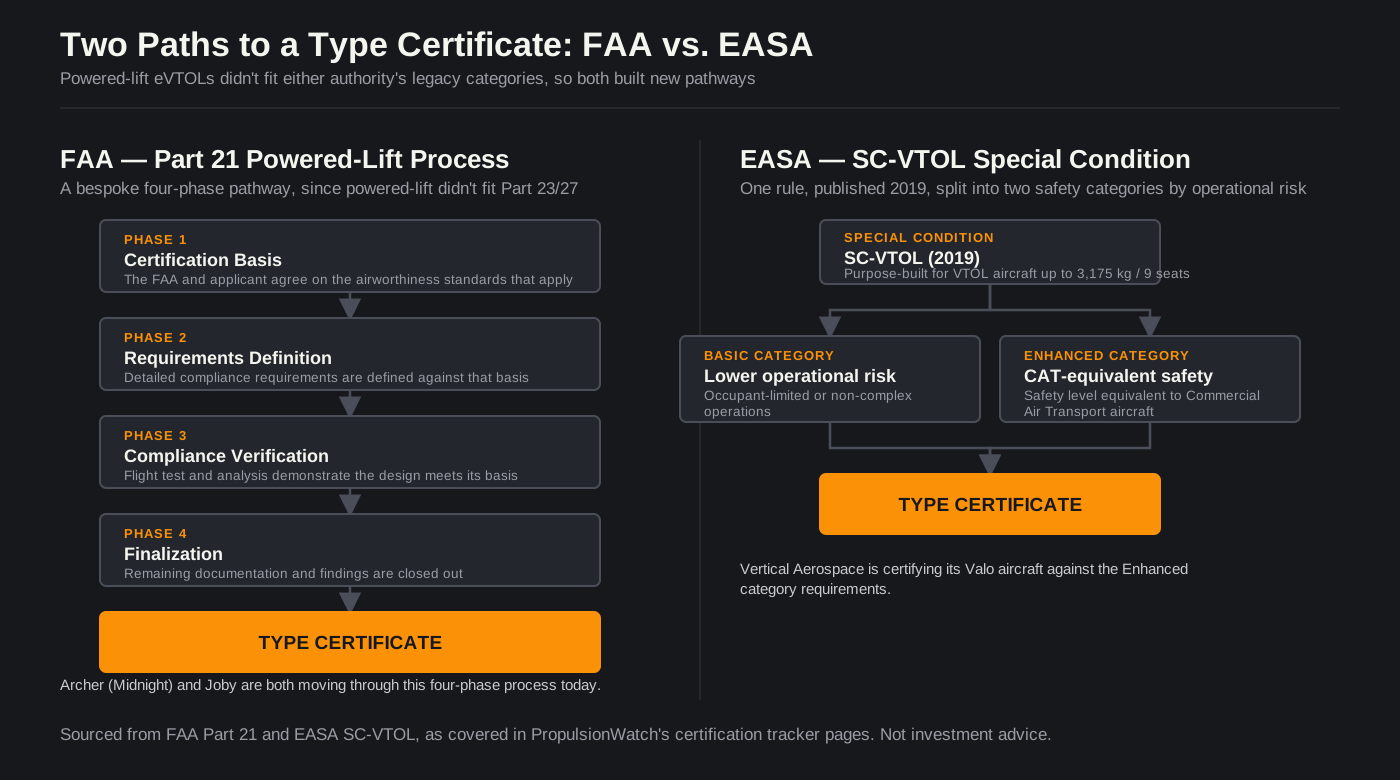
In its Q2 2026 results, Joby reported its strongest quarterly progress in what it calls Stage 5, the final stage of its certification framework. Joby has also reported FAA-conforming aircraft activity associated with Type Inspection Authorization and substantial accumulated test work. These are meaningful indicators that the program has moved beyond paper definition into conformity and compliance demonstration.
They are not, however, a type certificate. Aircraft count, test points and flight hours can indicate program activity without revealing how many compliance findings remain open or how much FAA-witnessed testing is still required.
Archer reported in May 2026 that it had closed Phase 3 of its four-phase framework and was already progressing Phase 4 compliance work. Its later Q2 disclosure described continued flight testing but did not announce Phase 4 completion. The defensible status is therefore the one Archer has actually disclosed: Phase 3 closed and Phase 4 in progress.
Archer's statement that it was the first eVTOL developer to close Phase 3 is company-reported. Because applicants describe their programs differently, that claim should not be converted into a conclusion that Archer is categorically ahead of another applicant.
China's CAAC has certified EHang's pilotless EH216-S and subsequently issued associated production and operating approvals. That establishes that an eVTOL-class aircraft has completed a certification and production-approval pathway outside the US. It is not a direct precedent for Joby or Archer: the vehicle architecture, operating concept, pilot model, regulator and certification basis differ materially.
The next decisive evidence is regulator-accepted compliance work: completion of required conformity testing, closure of findings and ultimately issuance of a type certificate. Until then, company stage labels are progress indicators rather than regulatory approvals.
Not investment advice. This tracker reports disclosed certification milestones and does not forecast which applicant will be approved first.