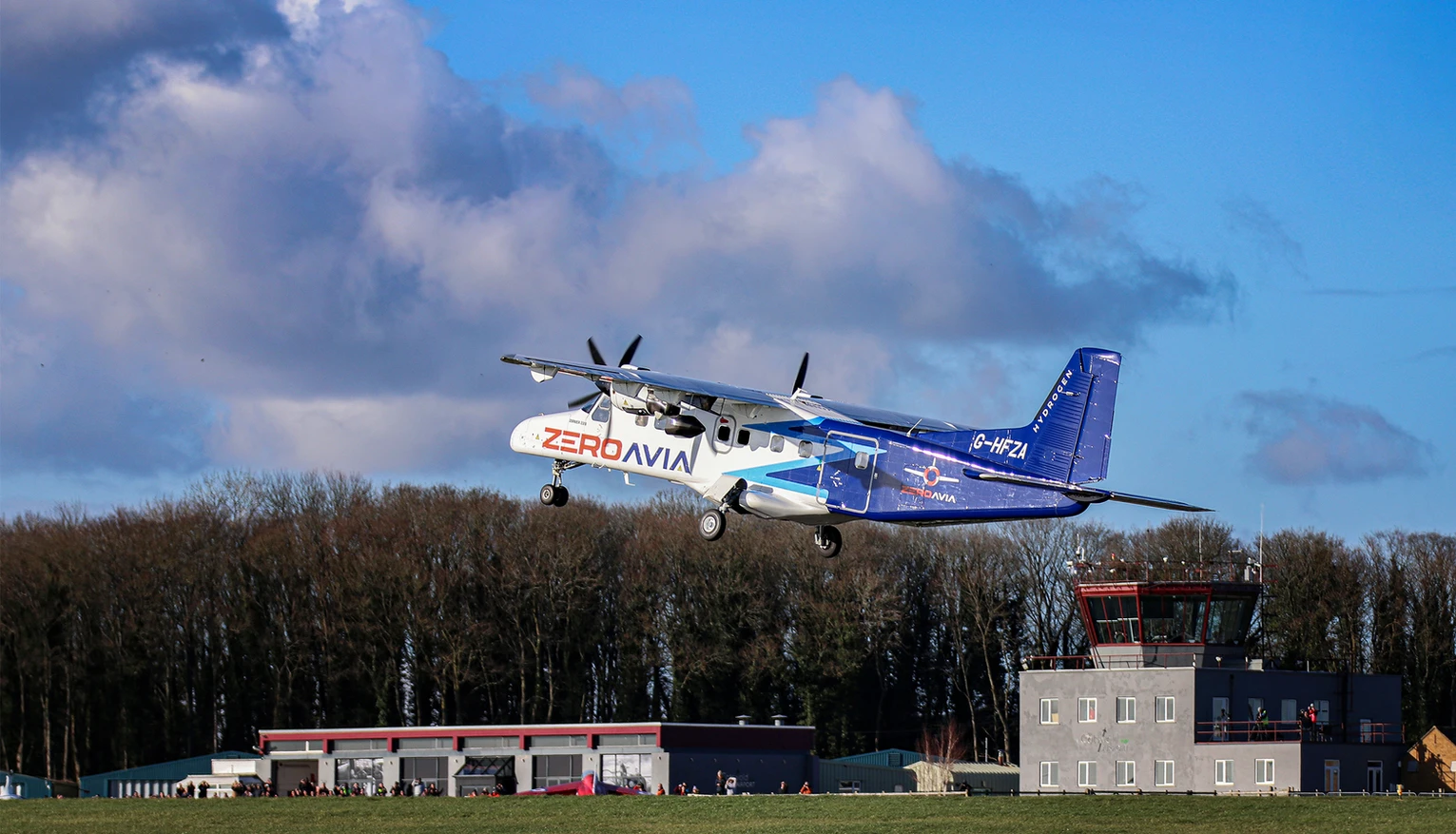
Asymmetric research aircraft: left ZA600 prototype hydrogen-electric drive, right Honeywell TPE331 turboprop. Two tractor propellers; one hydrogen-electric installation.
Propulsion Unit Count
2
Redundancy Approach
Conventional right engine retained for the test programme; lithium-ion batteries assist the prototype fuel-cell drive. This test arrangement is not evidence of commercial dual-hydrogen redundancy.
Range / Speed
Commercial ZA600 targets include 300+ NM plus IFR reserve for up to 20-seat aircraft. Modified Dornier testbed range, payload and certified speed are not normalised.
Seat Count
Last Updated
October 5, 2026
The January 2023 testbed configuration and CAA-permitted flights are documented. FAA final ZA601 electric-engine special conditions took effect on 18 March 2026. Complete ZA600 powertrain and aircraft installation approval remain separate, unresolved gates in the reviewed evidence.
Substantiate the certification-intent fuel-cell power system, demonstrate engine compliance and approve the hydrogen installation for a specified commercial aircraft.
ZeroAvia develops power and propulsion equipment rather than the Dornier airframe. This record follows G-HFZA as a documented ZA600 research testbed and places current supplier certification progress in context.
The demonstrator pairs a hydrogen-electric drive on the left wing with a stock Honeywell TPE331 on the right. Its test configuration houses hydrogen storage and fuel-cell equipment in the cabin and uses lithium-ion assistance. The original airframe’s nominal 19 seats are not its installed test payload.
The Explorer uses the base D228’s 16.97 m span as a dimensional reference. External shapes follow company photographs; coloured internal volumes are conceptual, with no asserted tank count, fuel inventory or installation dimensions.
First flight was reported on 19 January 2023. The UK CAA independently confirms test flying under a permit. ZeroAvia subsequently reported Design Organisation Approval; the announcement date is recorded separately from the inconsistent award-month references.
FAA special conditions 33-031-SC concern the ZA601 electric engine under Part 33. The rule identifies a 3 May 2024 TC application and specifies separately certificated airplanes. Its March 2026 publication establishes requirements rather than an issued TC.
ZA600’s current advertised 600 kW rating and 300+ NM range plus IFR reserve concern the intended commercial product. Those figures do not establish Dornier testbed mission performance. Aircraft-specific installation, hydrogen refuelling and operating approval are needed for commercial service.
Hydrogen containment, leakage detection, ventilation, fuel-cell cooling, high-voltage isolation and propulsion control need integrated safety evidence. A retained turboprop provides a test safeguard; it does not validate the final fuel-cell architecture. Approval scope must remain explicit between the engine, power generation system, organisation and aircraft installation.
October 5, 2026