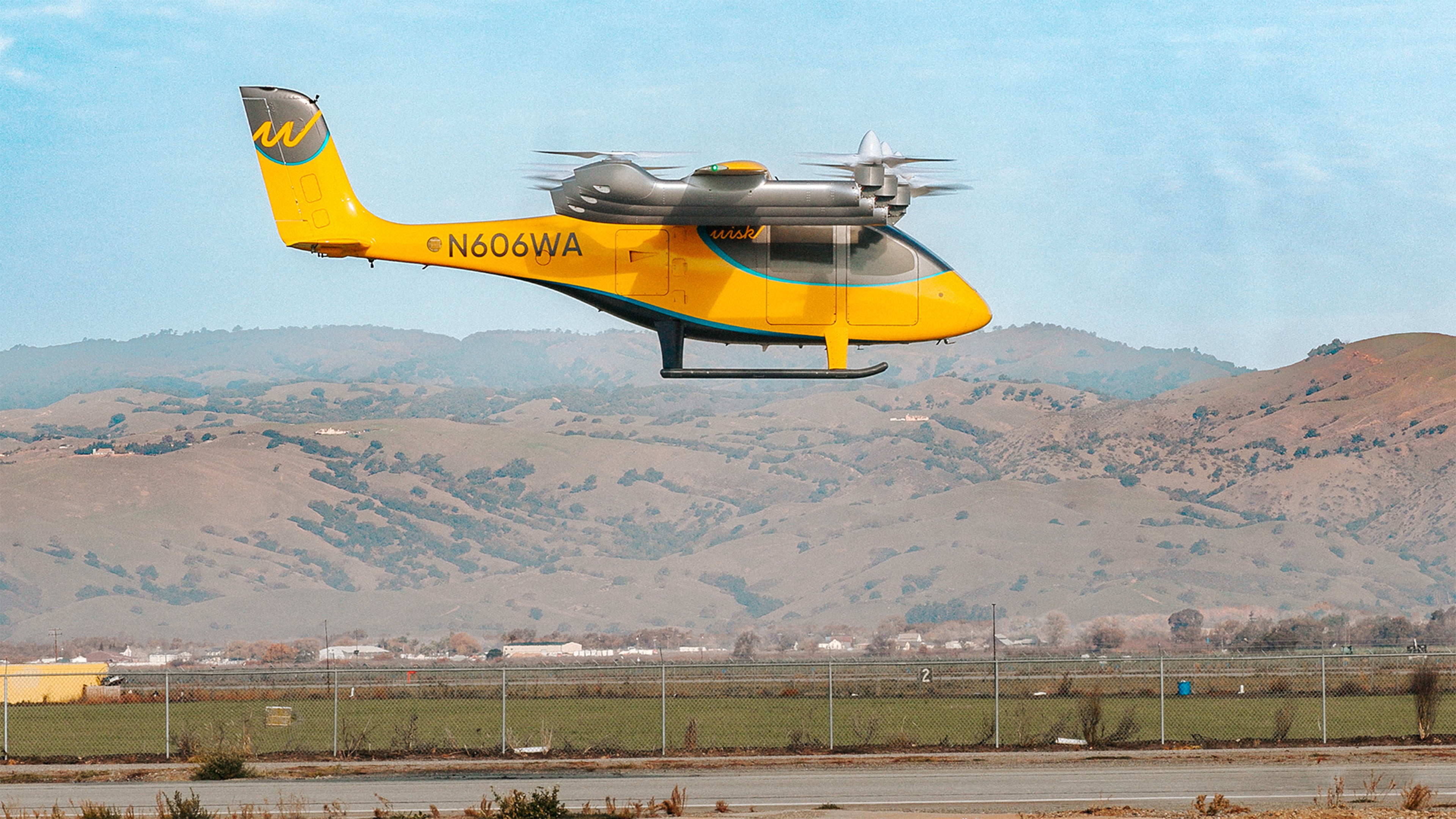
All-electric autonomous eVTOL with a fixed high wing and 12 propellers on six under-wing booms: the six forward propellers tilt to provide cruise thrust, while the six aft propellers are fixed lift units that stop and lock in cruise (a tilt + lift layout).
Propulsion Unit Count
12
Redundancy Approach
Autonomous flight architecture with human ground oversight; Wisk describes certifiable redundant systems derived from five earlier aircraft generations.
Range / Speed
Company-published range: 90 mi. Four-passenger cabin. Current public materials do not provide a directly comparable certified cruise-speed figure.
Seat Count
4
Last Updated
September 25, 2026
Generation 6 remains in FAA type-certification flight testing with two aircraft. Boeing agreed in August 2026 to sell Wisk to Archer; the U.S. antitrust waiting period has expired and closing is expected by end-2026, with no public statement yet on the post-deal Gen 6 certification plan.
Close the Archer acquisition and publish the Gen 6 certification plan while continuing compliance flight testing.
Generation 6 is Wisk Aero’s four-passenger autonomous eVTOL aircraft and the company’s current FAA type-certification design. It combines a fixed wing with distributed electric lift-and-cruise propulsion and is designed without an onboard pilot.
PropulsionWatch treats the program as certification-stage and PRE-EIS. Public evidence shows flight-test aircraft operating, while type certification remains outstanding.
Wisk describes Generation 6 as an all-electric lift-and-cruise aircraft with 12 propellers and a fixed wing. The autonomous concept uses human ground oversight rather than an onboard pilot and builds on systems developed through five earlier aircraft generations.
The company publishes a four-passenger cabin and approximately 90 miles of range. These are manufacturer specifications, not certified operating minima.
Generation 6 entered flight testing in December 2025 and Wisk reported a second flight-test aircraft flying in May 2026. On 16 September 2026, Wisk reported completion of a high-fidelity autonomous-eVTOL airspace simulation with the FAA’s William J. Hughes Technical Center and SkyGrid, focused on integration into complex Houston-area airspace.
The simulation is operational-integration evidence, not a Type Certificate milestone. The aircraft and autonomous operating concept still require the applicable FAA approval and compliance evidence.
Wisk’s intended service model is autonomous passenger transport with ground-based human oversight. Operational deployment therefore depends not only on aircraft type certification but also on approval of the operating concept and supporting ground/communications architecture.
Documented dependencies include completion of aircraft compliance demonstration, FAA acceptance of the autonomous operating architecture, and the operating approvals needed to place a pilotless passenger service into routine operation.
Ownership is changing: Boeing agreed on 10 August 2026 to sell Wisk to Archer. How the combined company resources and schedules Gen 6 certification after closing has not been published.
Manufacturer evidence — 16 Sep 2026: Wisk, “Unlocking the Sky: How Our Latest FAA Tech Center Simulation Advances Autonomous Air Mobility,” describing a joint high-fidelity simulation with the FAA Technical Center and SkyGrid. Source.
Manufacturer flight-test evidence: Wisk Generation 6 first-flight and second-aircraft updates remain the basis for the current full-scale flight-test assessment.
Evidence classification: the September simulation demonstrates operational-integration work; it is not regulator issuance of the aircraft Type Certificate.
September 25, 2026