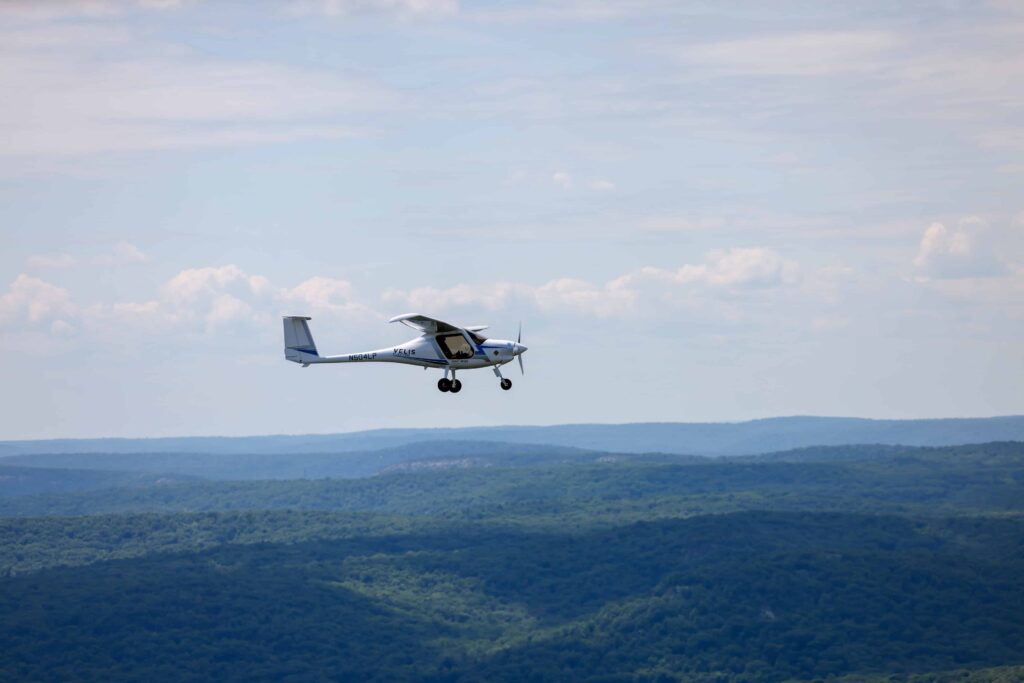
Conventional high-wing electric trainer with one nose-mounted E-811 motor and tractor propeller.
Propulsion Unit Count
1
Redundancy Approach
Pipistrel describes a liquid-cooled dual-battery electric powertrain. Two packs do not create two independent propulsion motors.
Range / Speed
Manufacturer: 57.6 kW maximum takeoff power, 88 KTAS typical cruise, 50 min typical endurance, 600 kg MTOW. Mission endurance depends on reserve and approved operating limitations.
Seat Count
2
Last Updated
October 1, 2026
EASA.A.573 lists Virus SW 128 (Velis Electro) as certified on 10 June 2020. Pipistrel markets the aircraft for approved Day VFR training; permissions and limitations remain jurisdiction-specific.
Track operator adoption, battery lifecycle, charging turnaround and continued-airworthiness evidence within approved limitations.
Velis Electro is a certified two-seat conventional electric trainer. It does not hover or transition between lift and cruise modes.
The exterior follows a high wing, T-tail, enclosed cockpit and fixed tricycle gear. Power comes from a single electric motor; the two battery markers in the Explorer are conceptual volumes.
The model's initial certification is recorded under EASA.A.573. This issued aircraft-model approval is distinct from development-stage electric trainers.
Flight training is the primary mission. Runway access, charger availability and duty-cycle planning shape utilization.
Aircraft certification does not grant universal operator permission. Endurance, reserve policy, battery condition and approved manuals constrain dispatch and training schedules.
Pipistrel: Pipistrel Velis Electro — technical product page. Reviewed 1 Oct 2026.
EASA: EASA.A.573 — Velis Electro model certification. Reviewed 1 Oct 2026.
October 1, 2026