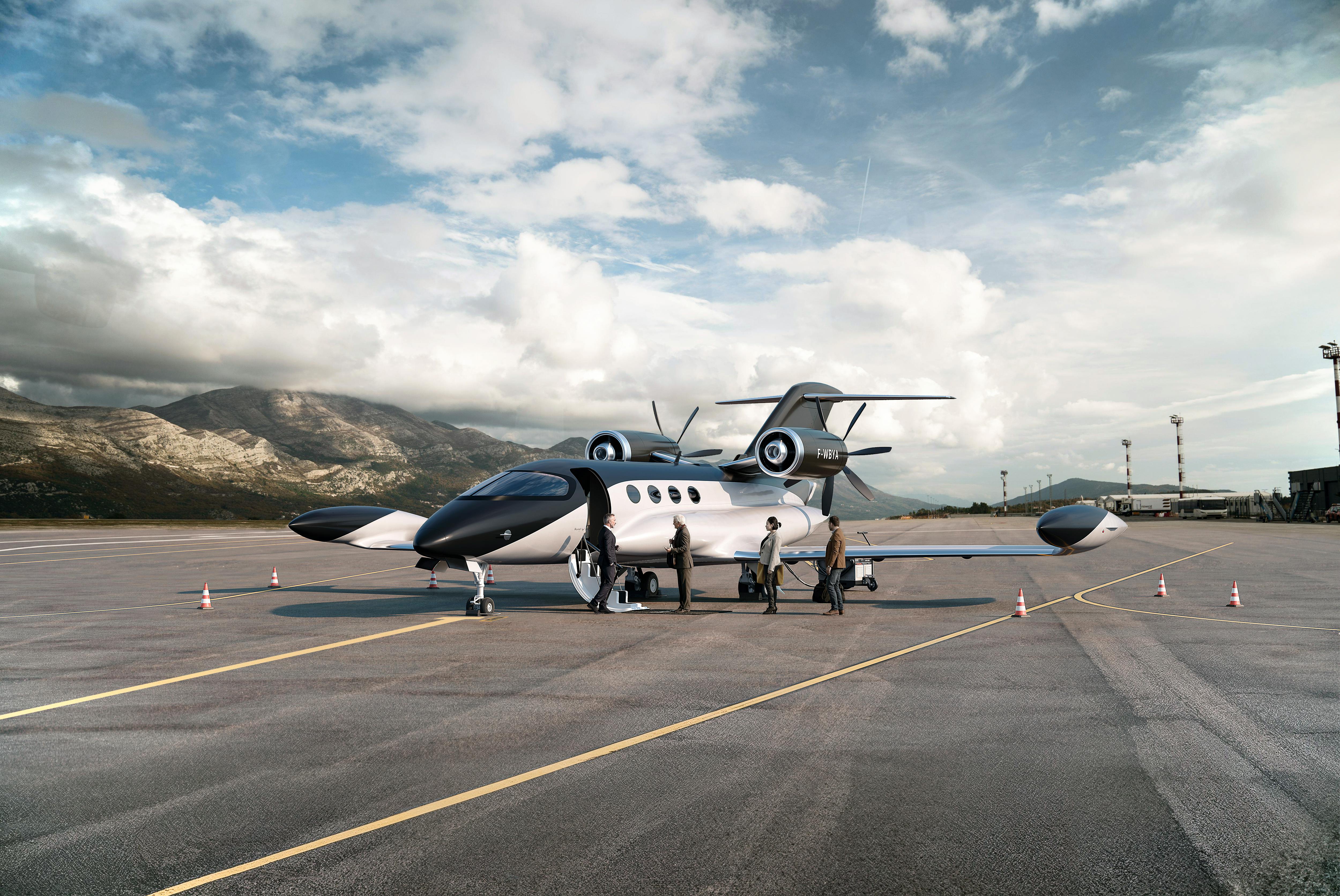
Gaseous-hydrogen fuel cells supply two aft-mounted electric propfans; the current public design uses external 700-bar hydrogen storage and a T-tail.
Propulsion Unit Count
2
Redundancy Approach
Manufacturer describes two independent powerplant channels with fuel-cell and multiple-tank modularity. Certification-level fault containment and the complete electrical architecture are not independently established.
Range / Speed
Manufacturer design figures: 800 NM (approximately 1,482 km) with a six-passenger configuration at 300 KTAS; 360 KTAS maximum at 26,000 ft. Configuration and reserves must be checked against final approved data; these are not certified figures.
Seat Count
6
Last Updated
October 12, 2026
Beyond Aero reports completed PDR, wind-tunnel validation and EASA pre-application engagement for a CS-25 / Part 25 hydrogen-electric business aircraft. One aircraft first flight and an issued Type Certificate are not established. Blériot flights and acquired Universal Hydrogen flight data are separate development evidence.
Detailed design and integrated verification, further regulator-defined certification work, DOA progression and full-aircraft test evidence for the current One configuration.
One / BYA-I is Beyond Aero's purpose-designed hydrogen-electric business aircraft in development. The current architecture uses gaseous hydrogen and two aft electric propfans. Its runway-operated exterior combines a low swept wing, a T-tail and external tank fairings.
The company’s smaller Blériot demonstrator and propulsion test facilities support research. Their flight and ground-test results must remain separate from readiness of the One production configuration.
Beyond Aero describes hydrogen stored at 700 bar above the wing/primary structure. Its public ghost view shows six tank volumes, including two wingtip tanks. The manufacturer publishes 6 × 400 kW fuel-cell electrical generation and a six-passenger 800 NM mission. These are design claims, not issued aircraft performance or a demonstrated 2.4 MW aircraft installation.
The Explorer follows current official CAD/renders. Nacelle pylons, propfans, windows, wingtip fairings and T-tail are representative; tank volumes, stack shapes, electronics and distribution paths are schematic. Exact blade geometry, motor/inverter/gearbox installation and fault isolation are not asserted.
The manufacturer reports completion of Preliminary Design Review in its March 2026 program update, followed by detailed design, engineering and verification planning. It also describes wind-tunnel correlation work, an active EASA pre-application contract and a DOA application progressing through Phase 2.
The program update identifies CS-25 / Part 25 as the current development pathway. Older references to CS-23 are historical and are not used as the current pathway. Neither PDR completion nor pre-application work establishes a Type Certificate.
The target is business aviation with gaseous-hydrogen airport supply and alternative cabin configurations. Manufacturer mission assumptions specify an 800 NM flight with six passengers. The raw seat field here records that passenger reference, not an approved total occupant count. Commercial commitments, costs and entry-into-service timing remain company claims and require separate evidence.
Integration dependencies include fuel-cell cooling, pressure-vessel and fuel-line safety, crashworthiness, electrical fault isolation, weight growth, conforming aircraft and the hydrogen certification case. Ground-test maturity is not full-aircraft maturity. Approved performance, flight limitations and certified cabin configuration remain ahead.
Beyond Aero — current One architecture and official imagery, reviewed 12 October 2026. Figures are manufacturer design claims; the model uses the current gaseous-hydrogen / twin-propfan design.
Manufacturer PDR release linked from its newsroom, reviewed 12 October 2026. Describes transport-category development, pre-application work, DOA process and the boundary between One and demonstrator evidence.
October 12, 2026